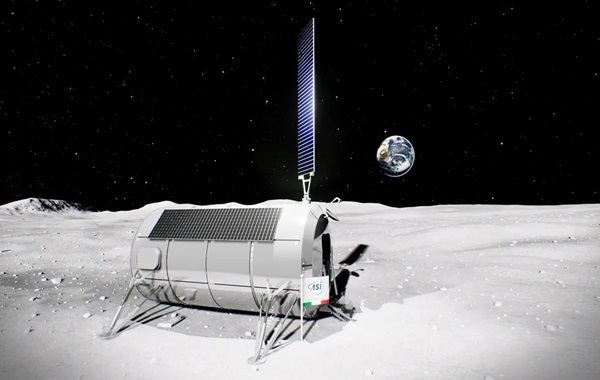
This cylindrical module could be first home of astronauts on the Moon
After decades, humanity is preparing to return to the Moon and planning to establish a more permanent presence.
NASA is actively seeking technological solutions to construct a safe haven for future astronauts as well as investigate the feasibility of long-term settlements.
Now, a startup based in France is aiming to create a lunar module called the Multi-Purpose Habitat (MPH), which could be the “first permanent outpost on the Moon.”
Thales Alenia Space has signed an agreement with the Italian Space Agency (ASI) to begin designing this habitation module.
“MPH will mark a historic milestone as the first Italian habitation module to operate on the lunar surface. This is a matter of great pride for our company, which has the unique technical and organizational skills to overcome challenges of this kind,” said Franco Fenoglio, Head of human planetary exploration and robotics programs at Thales Alenia Space, in an official press release.
Mission Concept Review in 2024
In mid-October, the MPH completed NASA’s Element Initiation Review.
As per the release, this review recognized the “crucial functionalities” of the module within the Artemis program’s lunar surface architecture.
The Artemis program aims to establish a sustainable human presence on the Moon as a foundation for future missions to Mars.
The startup is now preparing for the next step, which includes the completion of the Mission Concept Review (MCR). This stage is expected to take place in the first quarter of 2024 and must align with the stipulated requirements of both ASI and NASA.
“This will be a key milestone to move the project forward to the next phases of critical technology design and development of the module,” noted the release.
Reportedly, NASA and ASI joined forces in 2020 to support the Artemis program.
Cylindrical design of the habitat module
Establishing a lunar habitat presents numerous challenges, especially considering the harsh lunar environment and the scarcity of essential resources for astronaut survival.
Therefore, the development of a lunar habitat necessitates the provision of essential life-support solutions, even for brief stays lasting a week.
It is imperative to protect inhabitants from high levels of space radiation, the extreme cold of the lunar night, and the pervasive regolith. Prolonged exposure to these extreme elements could result in severe health risks for the explorers.
This underscores the immense responsibility of designing a technologically advanced and secure habitat module.
The company aims to deliver a “secure, comfortable, and multifunctional habitation module for astronauts.”
The press release mentions: “Our purpose is to lead scientific and technological development in constructing the first Italian human outpost on the lunar surface to enhance and support human space exploration on the Moon and beyond.”
Currently, there is limited information available about the configuration of the module.
Thales Alenia Space has revealed a prototype cylindrical design for the MPH — with sleek legs and solar arrays.
Moreover, no costs or timelines for deployment have been disclosed, but the launch is not expected to happen before the 2030s.
Source: Interesting Engineering
Spiral galaxies like the Milky Way are surprisingly rare. Astronomers may finally know why.
Spiral galaxies like the Milky Way are surprisingly rare. Astronomers may finally know why.
This cylindrical module could be first home of astronauts on the Moon