The Prehistoric Chemistry of Death: 60,000-Year-Old Relics Reveal Mankind’s First Poisoned Arrows
Long before the dawn of civilization, our ancestors weren’t just sharpening stones; they were mastering the art of chemical warfare. New archaeological evidence suggests that Stone Age hunters were far more sophisticated—and lethal—than we ever imagined.
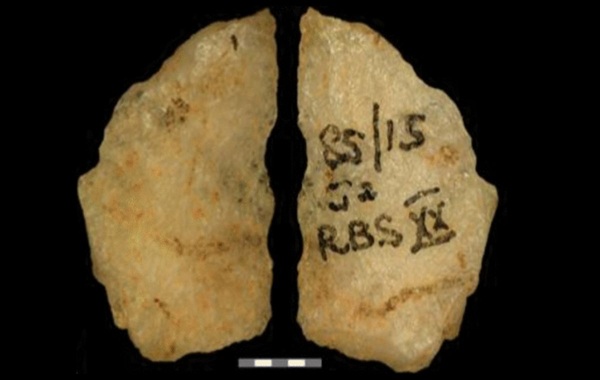
For decades, the image of the prehistoric hunter was one of brute force: a desperate human lunging at a mammoth with nothing but a sharpened stick. However, a groundbreaking discovery in South Africa’s Border Cave has shattered this primitive stereotype. Researchers have uncovered 60,000-year-old bone points that carry the unmistakable chemical signatures of deadly toxins.
This isn’t just a discovery of a tool; it is the earliest direct evidence of humans using poison to conquer the food chain.
The Lethal Innovation
While a simple arrow might wound an animal, a poisoned arrow guarantees a kill. The relics found at the site contain traces of ricinoleic acid, a key component of castor oil. While castor oil itself has various uses, the presence of these compounds on notched bone points suggests a deliberate attempt to create a “biological delivery system.”
By coating their arrows in toxic substances, early humans could take down massive prey without needing to engage in high-risk, close-quarters combat. This technological leap allowed our ancestors to hunt more efficiently, reduce the risk of injury, and ultimately survive in some of the harshest environments on Earth.
Why This Changes Everything
This discovery pushes back the timeline of advanced human cognition by millennia. It proves that 60,000 years ago, Homo sapiens possessed:
Complex Botanical Knowledge: They understood which plants contained deadly secrets.
Strategic Planning: They weren’t just reacting to nature; they were manipulating it to their advantage.
Chemical Processing: The ability to extract and apply these toxins requires a level of abstract thinking previously thought to belong to much later eras.
A Legacy of Survival
These 60,000-year-old artifacts are more than just museum pieces; they are the “smoking guns” of human evolution. They tell the story of a species that refused to rely on muscle alone. We didn’t survive because we were the strongest; we survived because we were the deadliest thinkers.
The next time you think of the Stone Age, don’t think of “cavemen.” Think of the first chemists, the first engineers, and the silent, poisoned shadows that once stalked the African savannah.
Source: Science Alert
Beyond the Cradle: How a Moroccan Cave Rewrote the History of Humankind
The Prehistoric Chemistry of Death: 60,000-Year-Old Relics Reveal Mankind’s First Poisoned Arrows