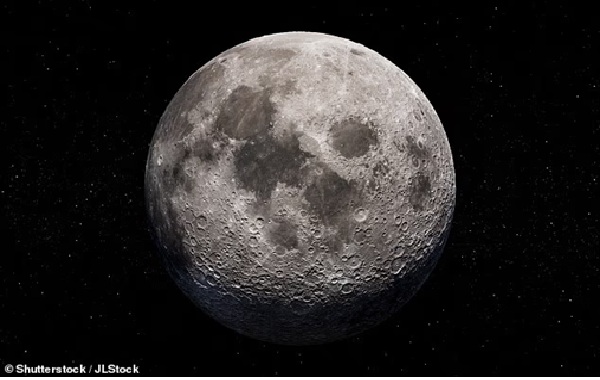
THE MOON IS SHRINKING: New Cracks on the Lunar Surface Spark Urgent Warnings for Future Missions
A Giant Leap Backwards? Earth’s Only Natural Satellite is Contracting, and the Consequences Could Be Shifting the Very Ground Beneath Our Feet.
For billions of years, we’ve looked up at the Moon as a static, unchanging celestial body. But new, groundbreaking research has confirmed a startling reality: The Moon is getting smaller. Scientists have discovered that as the Moon’s interior slowly cools, it is shriveling like a drying grape, causing its brittle surface to buckle and crack. This “lunar shrinkage” isn’t just a cosmetic change; it’s triggering powerful Moonquakes and creating massive fault scarps that could pose a significant threat to NASA’s upcoming Artemis missions and the dream of a permanent lunar base.
The Science Behind the Shink
As the lunar core loses heat, the Moon has thinned by more than 150 feet (50 meters) in circumference over the last several hundred million years. Unlike Earth, the Moon doesn’t have tectonic plates; instead, it has a single “shell” that breaks as the interior retreats.
Recent high-resolution imagery and data analysis have revealed a network of fresh cracks and faults across the lunar south pole—the exact region targeted by global space agencies for future human settlement.
Why This Matters for Astronauts
“This is not just a theoretical concern,” experts warn. These newly formed faults are geologically active. Moonquakes can last for hours, unlike the short bursts we experience on Earth. For a lunar habitat built near these fault lines, a single tremor could lead to:
Structural Failures: Compromising the integrity of pressurized domes.
Regolith Landslides: Massive shifts in lunar dust that could bury equipment.
Mission Hazards: Risking the safety of astronauts during extravehicular activities.
The Future of Lunar Exploration
As we prepare to return to the Moon, this discovery serves as a vital “wake-up call.” Architects of future lunar colonies must now factor in seismic zoning just as we do on Earth. The southern pole, once thought to be a pristine sanctuary for ice-mining, may actually be one of the most unstable places in the solar system.
The Moon is no longer a “dead” rock—it is a shrinking, cracking, and active world that demands our caution as much as our curiosity.
Source: daily mail
The Cosmic Stew: Scientists Recreate the Big Bang’s Aftermath and It’s Not What You’d Expect
THE MOON IS SHRINKING: New Cracks on the Lunar Surface Spark Urgent Warnings for Future Missions