The Dawn of Molecular Mechanics: How DNA Robots Are Rewriting the Future of Medicine
Move over, silicon chips. The next revolution in robotics isn’t happening in a factory—it’s happening inside a test tube, at a scale invisible to the human eye.
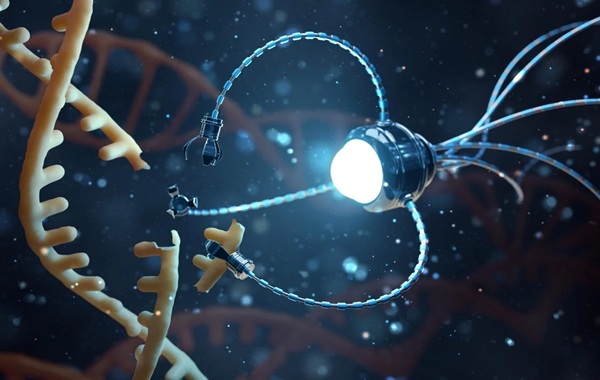
For decades, the concept of “nanobots” swimming through our bloodstream to repair damage or fight disease was the stuff of science fiction. However, thanks to groundbreaking advancements in DNA origami and molecular engineering, that fiction is rapidly becoming a clinical reality. Researchers have now developed programmable DNA robots—tiny, autonomous machines capable of performing complex tasks with surgical precision.
Why DNA? The Ultimate Biological Building Block
While we typically think of DNA as the blueprint of life, scientists are now treating it as the ultimate structural material. Because DNA strands bind together in highly predictable ways, engineers can “program” these sequences to fold into specific 3D shapes.
The result? Tiny mechanical devices—complete with arms, hinges, and fuel-driven motors—that can navigate the complex environment of the human body.
The Transformation of Modern Medicine
The implications for healthcare are nothing short of revolutionary. These DNA robots are not just passive delivery vehicles; they are intelligent agents:
Targeted Cancer Therapy: Unlike traditional chemotherapy that affects the whole body, DNA robots can be programmed to recognize specific cancer markers, attaching only to malignant cells and releasing their payload directly into the tumor.
Precision Surgery at the Cellular Level: Imagine machines that can clear arterial blockages or repair damaged tissue from the inside out, reducing the need for invasive procedures.
Real-time Diagnostics: These nanomachines can act as “sentinels,” patrolling the body to detect the very first signs of a viral infection or a chemical imbalance before symptoms even appear.
Beyond Biology: A New Era of Technology
The impact of DNA robotics extends far beyond the hospital ward. In the world of technology, these machines are paving the way for:
Molecular Manufacturing: Building new materials atom-by-atom to create ultra-lightweight and super-strong substances.
Biocomputing: Creating biological processors that can store vast amounts of data within a single drop of liquid, far exceeding the capacity of today’s hard drives.
The Road Ahead
While we are still in the early stages of deploying these microscopic wonders, the message is clear: the boundary between biology and machinery is blurring. DNA robots represent a paradigm shift in how we interact with the physical world. We are no longer just observing the building blocks of life; we are teaching them how to work for us.
The future isn’t just coming; it’s being assembled—one base pair at a time.
Source: SciTechDaily
Beyond the Void: The Secret Architecture Hidden Within Cellular “Liquid Droplets”
The Dawn of Molecular Mechanics: How DNA Robots Are Rewriting the Future of Medicine