Researchers use live brain to expose Alzheimer’s effects before symptoms start
Alzheimer’s disease is the most common form of dementia, currently affecting over 55 million people worldwide. Despite decades of research, there is still no cure.
Scientists have long known that two proteins, amyloid beta and tau, play central roles in damaging the brain’s communication network.
Now, a groundbreaking study has provided the clearest evidence yet of how even minor shifts in these proteins can disrupt healthy brain function.
Toxic protein causes synapse failure
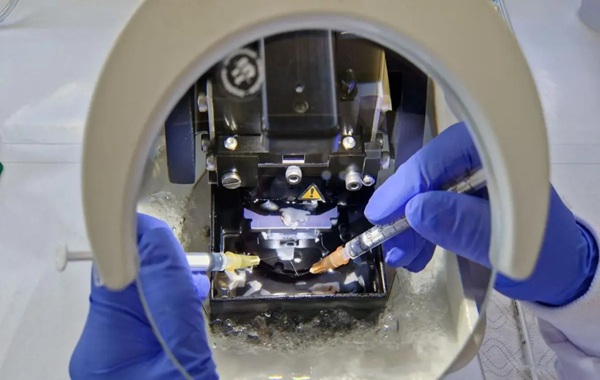
Researchers at the University of Edinburgh exposed small pieces of healthy human brain tissue to amyloid beta proteins, both in their normal and toxic forms.
The tissue, collected with patient permission during routine neurosurgery, responded very differently depending on the form of the protein.
While normal amyloid beta did not harm the brain samples, exposure to the toxic form led to damage that the tissue could not repair.
Even slight fluctuations in amyloid beta levels, either too high or too low, were enough to trigger disruptions in brain cell activity.
“Working alongside the neurosurgical team at the University of Edinburgh, we have shown that living human brain slices can be used to explore fundamental questions relating to Alzheimer’s disease,” said Dr Claire Durrant, RAD Dyson Fellow and UK DRI Emerging Leader at the Centre for Discovery Brain Sciences.
“We believe this tool could help accelerate findings from the lab into patients, bringing us one step closer to a world free from the heartbreak of dementia.”
Alzheimer’s damages brain before symptoms appear
The research marks a breakthrough in experimental methods. Using an innovative lab technique, the team was able to keep tiny fragments of human brain tissue alive for weeks.
This allowed them to observe early-stage Alzheimer’s-like changes in real-time, offering new insights that would be impossible with traditional mouse models.
Several samples already showed the presence of amyloid plaques and tau tangles, known as classic signs of Alzheimer’s, even though the donors had no visible symptoms of the disease.
These findings highlight the potential to study Alzheimer’s before it becomes clinically apparent.
Temporal lobe tissue shows early tau spread
Tissue taken from the temporal lobe, a brain region often affected early in Alzheimer’s, released significantly higher levels of tau protein.
This release may accelerate the spread of tau’s toxic form between cells, potentially explaining why this part of the brain is especially vulnerable.
High-speed drug testing could follow
By using real human brain tissue, the team hopes to speed up the development of drugs that can protect synapses, the connections through which brain cells communicate.
Synapse loss is closely linked to declines in memory and cognition.
Sir Jackie Stewart OBE, founder of Race Against Dementia, said: “Our collaboration across industries allows us to think keener and faster… Our unique program is enabling us to test potential treatments which are bringing us closer to a world without dementia.”
Source: Interesting Engineering
We Emit a Visible Light That Vanishes When We Die, Says Surprising New Study
Researchers use live brain to expose Alzheimer’s effects before symptoms start