Oldest human skeleton in Thailand dating back to 29,000 years could rewrite history
A remarkable discovery in Thailand has rewritten the story of human habitation in the region. Archaeologists have unearthed the oldest human skeleton ever found in the country.
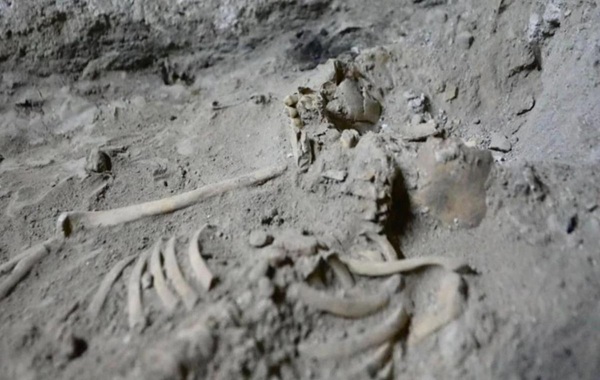
This finding pushes back the established timeline of human presence by tens of thousands of years, opening a new window into the ancient past. The skeleton was discovered in Din Cave at Khao Sam Roi Yot National Park, a site already renowned for its prehistoric art.
The cave first gained attention in 1996 with the discovery of prehistoric cave paintings, and again in 2022 when even more remarkable images were found.
This latest find, a 29,000-year-old human skeleton, is perhaps the most significant yet. The young child, who lived during the last Ice Age, offers a unique glimpse into life in a long-vanished era.
The oldest human in Thailand was a child
The Fine Arts Department of Thailand (FAD) began investigating the site in 2022. Prior to this, in 2020, archaeologists had documented impressive cave paintings, including depictions of people hunting deer and monkeys, as well as red ochre images that may represent blood and power, according to Live Science.
Deciding to explore further near the cave walls, the team excavated through layers of animal bones, shells, and stones. About 6.5 feet (2 meters) below the surface, they found a human burial, according to a press release. However, little did they know just how old this individual was.
The child was buried in a supine position, suggesting a deliberate ritual had been performed before the burial.
“The body was carefully placed and surrounded by stones, indicating a level of respect and care in the burial process,” a FAD archaeologist told Thai PBS World. “The positioning of the limbs, with the toes touching, suggests the body may have been wrapped or tied before burial.”
The skeleton, nicknamed “Pangpond,” was sent to the United States for analysis and dating. According to Thai PBS World, the bones had a “reddish-brown hue” and contained traces of ash.
Radiocarbon dating of charcoal and shell samples from the layers above the body revealed that it belonged to a 6-8-year-old child who lived approximately 29,000 years ago, during the late Pleistocene era.
Further tests will be conducted
This discovery has significant implications for our understanding of early human migration. During the last Ice Age, sea levels were much lower, creating a large landmass known as Sundaland that connected much of Southeast Asia. This child lived in a world vastly different from today’s.
“Further research and analysis will undoubtedly shed more light on the lives of these ancient people and their contributions to the region’s rich history,” researchers said in Thai PBS World.
Southeast Asia is known to be home to some of the earliest human populations. This unprecedented discovery highlights the importance of continued archaeological exploration in the region, as per Live Science.
In recent years, Din Cave has yielded numerous artifacts that have enriched our understanding of human adaptation and survival.
“The Din Cave site offers a unique window into the past, documenting the evolution of human societies over thousands of years,” a FAD spokesperson said in Thai PBS World.
Geologists and speleologists, working with the Fine Arts Department, will now analyze soil layers and conduct further tests to learn more about the child’s age and the environment in which they lived, the press release concludes. There are even plans to develop a tourist route at the site in the near future.
Source: Interesting Engineering
Europeans Were Mostly Dark-Skinned Until Roman Times, Ancient DNA Suggests
Oldest human skeleton in Thailand dating back to 29,000 years could rewrite history