Nano-Pearls or Cylinders: What’s Really Driving Brain Communication?
New research challenges long-held beliefs about axon structure, revealing a revolutionary “pearls-on-a-string” model. This discovery suggests action potential speed is modulated by local changes in the size of nano-pearls, influenced by factors such as cholesterol, with profound implications for understanding neurodegenerative diseases.
Rethinking Axon Structure: From Cylinders to Pearls
For over 70 years, neuroscience textbooks depicted axons as thin, cylindrical cables transmitting electrical signals at a consistent speed. This steady, uniform model originates from pioneering studies by Alan Hodgkin and Andrew Huxley, including work on squid giant axons in the mid-20th century. But recent findings are dismantling this classic framework.
In a groundbreaking study published in Nature Neuroscience on December 5, scientists led by Shigeki Watanabe at Johns Hopkins School of Medicine challenge this traditional view. Their research unveils a novel perspective on axons, describing them as having a “pearls-on-a-string” morphology. This discovery suggests that the shape and local dynamics of axons can dramatically influence how signals travel in the brain.
Pearls-on-a-String: A Nano-Level Revolution in Axon Morphology
How Axons Really Look
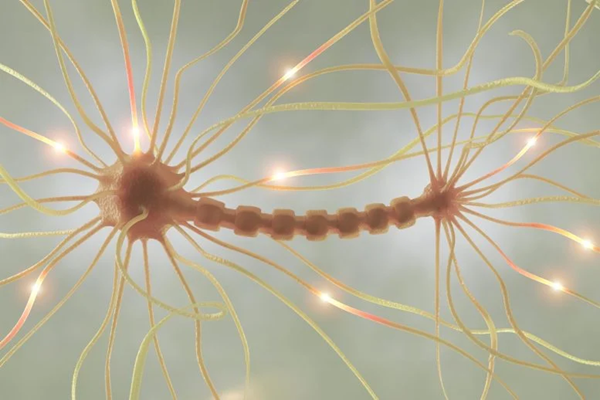
Unlike the smooth, uniform cables once assumed, axons at the nanoscale resemble a string interspersed with bulges called “nano-pearls” or nonsynaptic boutons. These pearls measure approximately 200 nanometers in diameter, while the cable stretches about 60 nanometers in width.
Traffic on a Winding Highway
This new model likens the flow of electrical signals to cars navigating a highway that alternates between narrow and wide lanes. “The axon structure is not like a straight tunnel but rather a winding road with fluctuating widths,” Watanabe explains. As the axon narrows or expands, the conduction speed of action potentials fluctuates accordingly.
Cholesterol’s Role in Axonal Flexibility
The Dynamic Size of Nano-Pearls
One of the most striking aspects of the study is the discovery that nano-pearl sizes can change. Local environmental factors, particularly cholesterol in the neuronal plasma membrane, influence these fluctuations. When cholesterol moves into or out of the axon membrane, it alters the size of the pearls, thereby modulating signal speed.
“Think of cholesterol as a traffic regulator on the axonal highway,” Watanabe adds. “Small changes in cholesterol distribution can have significant effects on how efficiently information is transmitted.”
Cryo-Preservation: Unlocking Hidden Axonal Secrets
A Revolutionary Imaging Technique
Traditional methods of preparing axon samples for electron microscopy often distort their true shape. Chemical processing dehydrates tissues, akin to turning grapes into raisins. However, Watanabe’s team used cryo-preservation to flash-freeze mouse nervous tissue, preserving its natural structure as if it were a “frozen grape.”
This breakthrough imaging method revealed axon morphology at an unprecedented level of detail, capturing the dynamic pearls-on-a-string pattern for the first time.
Implications for Neurodegenerative Diseases
Cholesterol Misregulation and Brain Health
This discovery holds significant implications for understanding diseases like Alzheimer’s, which are linked to cholesterol misregulation in the brain. Watanabe’s team found that changes in cholesterol levels directly influence the size of nano-pearls and, consequently, the speed of action potentials.
If this delicate mechanism breaks down, axonal plasticity could diminish, potentially leading to axon death and contributing to neurodegeneration.
Future Directions
“We now have a new lens to explore how mutations linked to neurodegenerative diseases might alter axonal morphology and plasticity,” Watanabe notes. Future research could shed light on whether the pearls-on-a-string structure is compromised in affected neurons and how restoring this dynamic might prevent or slow disease progression.
Redefining How We Understand the Brain
Watanabe’s findings reshape our understanding of neural communication, emphasizing the role of structural flexibility and local biochemical factors in brain function. By challenging traditional views, this research opens new avenues for exploring how subtle changes at the nanoscale can have profound impacts on cognition and health.
In the years ahead, this pearls-on-a-string model could prove vital in developing novel therapies for neurodegenerative diseases, offering hope for millions affected by conditions like Alzheimer’s.
Source: Nano-Pearls or Cylinders: What’s Really Driving Brain Communication?
World’s first vision-restoring stem cell treatment marks major eye care breakthrough
World’s first vision-restoring stem cell treatment marks major eye care breakthrough