How Did People Build Streets Ten Thousand Years Ago?
The Ancient Street of Karaman and Its Impact on World Archaeology
Anatolia’s First Street Plan Older Than Çatalhöyük
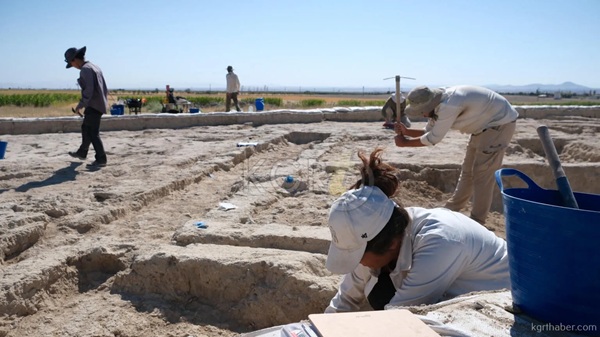
In the village of Alaçatı near Karaman, the Canhasan Üç Höyüğü mound has revealed one of the most remarkable archaeological discoveries of recent years: a ten-thousand-year-old street plan. Dating back nearly eight centuries earlier than the world-famous Çatalhöyük, this finding forces us to rethink the origins of urban life in Anatolia. Could this discovery reshape our understanding of how the first settled communities designed their living spaces?
Excavations Under the Legacy for the Future Project
The excavations are carried out as part of the Ministry of Culture and Tourism’s “Legacy for the Future Project”, under the leadership of Associate Professor Adnan Baysal from Ankara University. Entering their fifth season, the digs are part of a long-term, twenty-year research plan. What began in 2000 with surface scraping has grown year by year, revealing house walls, floor plans, and now a street-like network of passages that elevates the site’s importance in world archaeology.
Central Anatolia’s First Street Concept Comes to Light
For the first time in Central Anatolia, archaeologists have encountered a street concept dating back to the Neolithic period. Unlike earlier settlements where houses were clustered side by side, here narrow gaps one meter wide were deliberately left between buildings. According to Baysal, these passages functioned as streets—primitive yet revolutionary. Could these gaps represent one of the earliest attempts at organized urban planning?
Clues About Neolithic Daily Life and Social Organization
The discovery provides more than just physical evidence of settlement planning. These narrow paths tell us about how people moved, interacted, and shared space nearly 10,000 years ago. Did these early communities intentionally design their settlement to improve accessibility, or did social structures and rituals dictate the need for separation between houses? By examining these clues, archaeologists gain rare insights into the daily lives and social habits of early Neolithic societies.
Dating Studies Reveal a 9,750-Year-Old Timeline
Carbon samples originally collected in the 1960s and new data confirm that the site dates back to around 7,750 BC—nearly 9,750 years ago. Rounded up, this makes the Canhasan street nearly 10,000 years old. Could such an early and deliberate street plan become a unique milestone in the global history of urbanization? And if so, how will it alter the established narrative that credits later civilizations with the first urban planning achievements?
Karaman’s Ancient Streets and the Future of Tourism
Beyond its scientific significance, the Canhasan Mounds could also transform Karaman’s cultural identity. Plans for a visitor center and excavation house aim to open the site to both researchers and the public, potentially turning Karaman into a hub of prehistoric tourism. Will Karaman, with its newly uncovered street, become known as the birthplace of urbanization in Anatolia—perhaps even in the world?
Source: How Did People Build Streets Ten Thousand Years Ago?
What can a 5,000-year-old cow tooth tell us about the secrets of Stonehenge?
What can a 5,000-year-old cow tooth tell us about the secrets of Stonehenge?