How Did Chile’s Atacama Desert Reveal Secrets of Cosmic Dawn?
For decades, astronomers believed that only space telescopes like Hubble and James Webb could peer back to the Universe’s Cosmic Dawn—the epoch when the first stars ignited some one billion years after the Big Bang. However, advances in adaptive optics, coronagraphs, interferometry, and high‑resolution spectrometers have empowered terrestrial observatories in Chile to challenge that assumption.
Adaptive Optics and Interferometry: Pushing the Limits of Early Galaxy Imaging
Thanks to adaptive optics systems that correct atmospheric turbulence in real time, Chile’s high‑altitude sites now deliver unprecedented clarity. Moreover, interferometric arrays combine multiple telescopes into a single, ultra‑sharp instrument. Consequently, ground teams can resolve faint patches of starlight that belong to galaxies formed mere hundreds of millions of years after the Big Bang.
CLASS Observatory Chile: Detecting CMB Polarization from First Stars
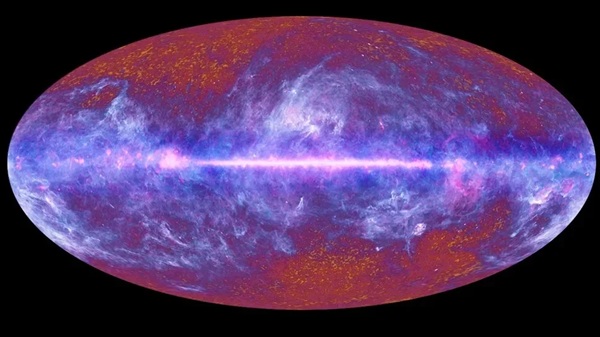
In landmark research published in The Astrophysical Journal, an international collaboration led by Yunyang Li (Kavli Institute, University of Chicago & JHU) announced the first ground‑based detection of polarized cosmic microwave background (CMB) light interacting with the Universe’s earliest stars. By isolating millimeter‑wavelength radiation scattered off free electrons—a process known as reionization—the team has opened a new window on the reionization epoch.
Overcoming Atmospheric Noise: The Challenge of Polarized Microwave Signals
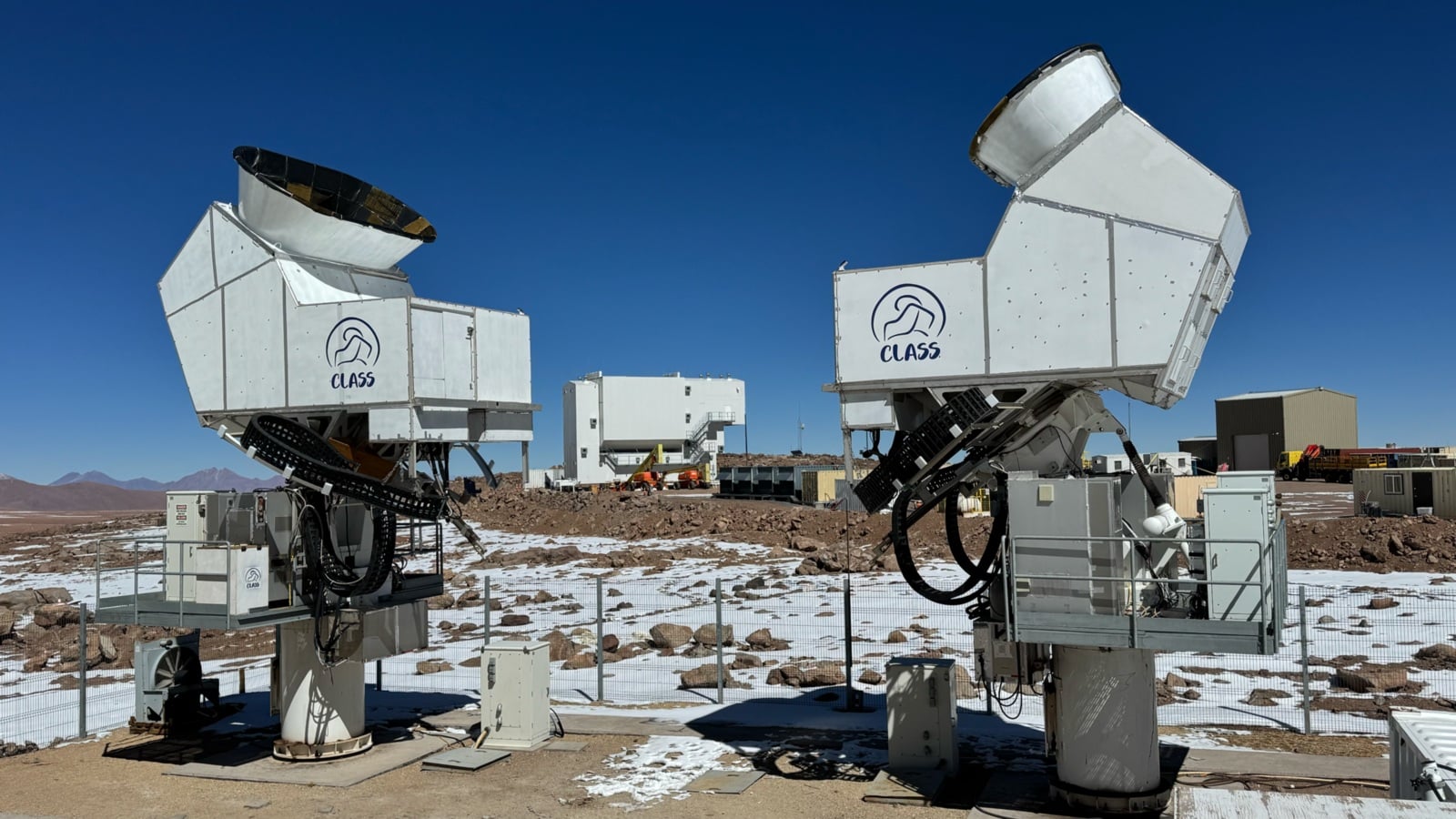
Why is detecting polarized CMB so difficult from Earth? First, the polarized component is roughly a million times fainter than the CMB’s total intensity. Second, terrestrial radio‑frequency interference—from satellites, radar, and microwaves—floods the same bands. Therefore, the CLASS telescope in the Parque Astronómico Atacama employs state‑of‑the‑art cryogenic detectors and precision shielding to isolate the cosmological signal.
Comparative Analysis: CLASS, Planck, and WMAP Unite for Clarity
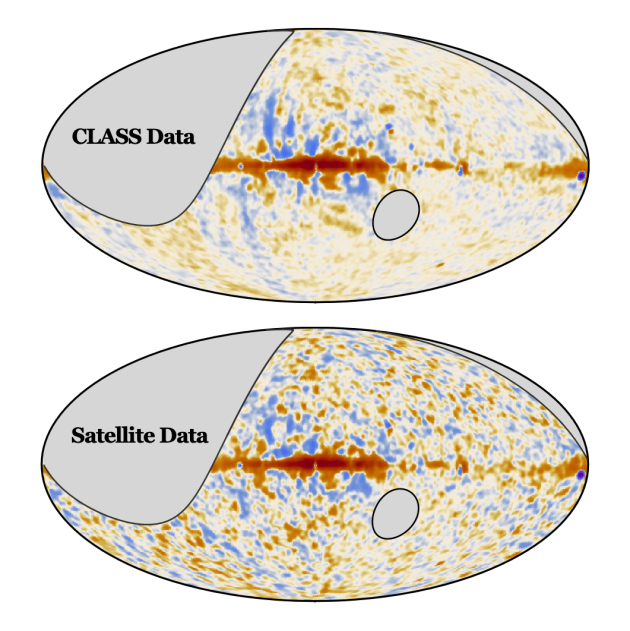
Rather than working in isolation, researchers cross‑referenced CLASS data with NASA’s WMAP and ESA’s Planck results. This multi‑mission approach enabled them to filter out foreground noise and confirm that the detected polarization indeed originated from early ultraviolet photons bouncing off ionized gas. As Tobias Marriage of JHU remarked, “Ground‑based detection of Cosmic Dawn polarization proves what cutting‑edge technology can achieve.”
Mapping 75% of the Sky: Building on Last Year’s CLASS Survey
This study builds on a previous effort in which CLASS mapped 75 percent of the night sky in polarized light. By enhancing data‑processing algorithms and extending observing time, the team has now achieved far finer precision. What could these sharper measurements reveal about dark matter and neutrino properties?
Implications for Cosmology: Refining Dark Matter and Neutrino Models
Charles Bennett, Bloomberg Distinguished Professor at JHU and former WMAP leader, emphasizes that “more accurate reionization signals refine our cosmic laboratory.” Indeed, better polarization measurements constrain the timeline of structure formation, improve estimates of neutrino mass, and test theories of dark energy.
What’s Next for Cosmic Dawn Research? Probing Beyond the Reionization Horizon
Looking forward, the CLASS collaboration aims to push sensitivity even further. Will next‑generation ground arrays detect subtle B‑mode polarization patterns imprinted by gravitational waves? And how might these discoveries reshape our understanding of the Universe’s first billion years?
Source: How Did Chile’s Atacama Desert Reveal Secrets of Cosmic Dawn?
Empty space is a lie: Scientists reveal secret to making light out of thin air
Empty space is a lie: Scientists reveal secret to making light out of thin air