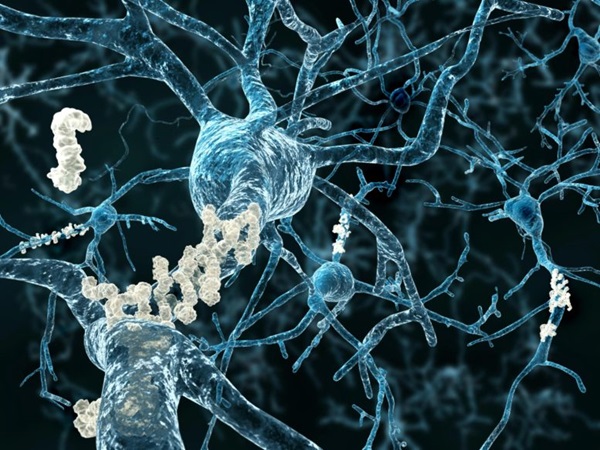
Have Scientists Found the Key to Stopping Alzheimer’s in Its Tracks?
Researchers have uncovered a crucial mechanism in Alzheimer’s development involving the growth and interruption of amyloid β fibrils. A new antibody can “freeze” these fibrils in a paused state, introducing a potential pathway for future treatments.
Breakthrough Discovery in Alzheimer’s Research
In a groundbreaking study, a collaboration of Japanese researchers from the Exploratory Research Center on Life and Living Systems, the Institute for Molecular Science, and universities including Nagoya City University, Nagoya University, and the University of Tsukuba has shed light on how amyloid β (Aβ) fibrils develop. Utilizing advanced high-speed atomic force microscopy (HS-AFM), the team observed the molecular-level formation of Aβ fibrils in real time, providing novel insights that could transform Alzheimer’s treatment strategies.
Understanding the Key Role of Aβ Fibrils in Alzheimer’s Disease
Alzheimer’s disease, a debilitating condition marked by memory loss and cognitive decline, is closely linked to the buildup of Aβ proteins in the brain. These proteins clump together, forming fibrils that interfere with normal brain function. Identifying how these fibrils grow and finding ways to interrupt their formation is essential for developing effective therapies.
Uncovering the Mechanism: Alternating Growth and Pause in Aβ Fibrils
The research team discovered that Aβ fibrils are composed of two interwoven strands known as protofilaments. These protofilaments grow in an alternating sequence, with Aβ molecules attaching one at a time to the ends. Importantly, when the ends of the protofilaments align, the fibril enters a “paused state,” temporarily halting further growth. This critical finding could help explain the progression of Alzheimer’s disease.

The Game-Changer: A New Antibody That Locks Fibrils in a Paused State
A significant breakthrough from the study was the identification of a specialized antibody, 4396C. This antibody binds exclusively to the ends of Aβ fibrils during their paused state, locking them in place and preventing further growth. This discovery could be a game-changer in Alzheimer’s treatment, offering a new strategy to stop Aβ fibril progression and potentially slow the disease.
Looking Ahead: Implications for Alzheimer’s and Beyond
The high-resolution insights gathered through HS-AFM technology have opened up a new path in Alzheimer’s research, highlighting the potential to target the paused state of Aβ fibrils. Future studies will focus on exploring how the 4396C antibody functions in greater detail, with the goal of applying this knowledge to develop new therapeutic options.
Beyond Alzheimer’s, this discovery might extend to other amyloid-related diseases. Understanding how protein aggregation can be halted offers hope for a range of conditions linked to similar mechanisms, potentially leading to broader therapeutic applications.
This breakthrough provides a glimpse of a future where the progression of Alzheimer’s disease can be slowed or even halted, improving the quality of life for millions affected by this devastating disorder.
Source: Have Scientists Found the Key to Stopping Alzheimer’s in Its Tracks?
Ultra-Rare Case of Man With Three Penises Unlike Anything on Record
Ultra-Rare Case of Man With Three Penises Unlike Anything on Record