Google AI makes breakthrough to crack Roman texts to unearth secrets of the past
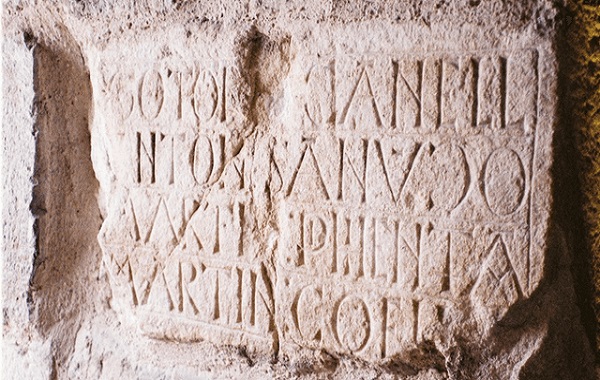
Each year, archaeologists uncover approximately 1,500 Latin inscriptions—etched into stone, metal, or pottery—that provide rare insights into the everyday lives, beliefs, and customs of ancient Romans. Yet interpreting these texts is no easy task.
Many inscriptions are incomplete, weathered, or broken, making them difficult to read and contextualize. To tackle this problem, a team of researchers has developed a generative neural network capable of analyzing patterns in fragmented Latin inscriptions and predicting missing sections.
The AI model, named Aeneas after the Trojan hero of Roman mythology, was designed to understand the complex relationships between language, context, and historical usage.
Bringing clarity to the fragmented voices of ancient Rome
According to Yannis Assael, a researcher at Google’s AI lab DeepMind and co-author of the study, these inscriptions are so precious to historians because they offer first-hand evidence of ancient thought, language, society and history.
To help decode the fragmented remnants of ancient Roman inscriptions, researchers developed a generative neural network—an AI system designed to recognize complex relationships between pieces of information.
The model was trained using data about the dates, locations, and meanings of Latin inscriptions found across the vast Roman Empire, which lasted for more than two thousand years.
Thea Sommerschield, an epigrapher at the University of Nottingham and co-developer of the model, likened the work to assembling a massive jigsaw puzzle. One fragment alone isn’t enough, so understanding its shape, color, and features is only useful if you can determine how it connects to surrounding pieces, she noted.
Training AI on 176,000 Roman texts to aid historical analysis
To assist with this challenge, researchers trained their AI model on a dataset of 176,861 inscriptions—equivalent to roughly 16 million characters—with around 5% containing images. The model can now predict the likely origin of a given inscription among 62 Roman provinces, estimate the decade it was produced, and even reconstruct missing portions of the text.
As a test of its capabilities, the researchers had their AI model, Aeneas, analyze the Res Gestae Divi Augusti—a well-known inscription in which Emperor Augustus lists his achievements.
Despite the text containing exaggerations, ambiguous timelines, and geographical inaccuracies, Aeneas was able to identify subtle linguistic features, such as the use of archaic spelling, to narrow down its origin to the two time periods currently debated by scholars. The result, the team noted, suggests the model can pick up on nuances that even experienced historians find difficult to interpret.
According to DeepMind, more than 20 historians who tested the model found it provided a useful starting point in 90% of cases, with the study highlighting that the best results came when historians combined the AI’s insights with their own expertise rather than relying solely on one or the other.
Source: Interesting Engineering
Google AI makes breakthrough to crack Roman texts to unearth secrets of the past