Did the Milky Way Have a Cosmic Twin in the Early Universe?
The early Universe continues to surprise us with new discoveries, and the latest observation of a distant galaxy is no exception. Astronomers have found a surprisingly Milky Way-like galaxy, REBELS-25, that existed more than 13 billion years ago. This discovery challenges current understandings of galaxy formation and evolution. How could such a well-formed galaxy exist in an era when most galaxies were still in their infancy?
A Milky Way Twin in the Early Universe
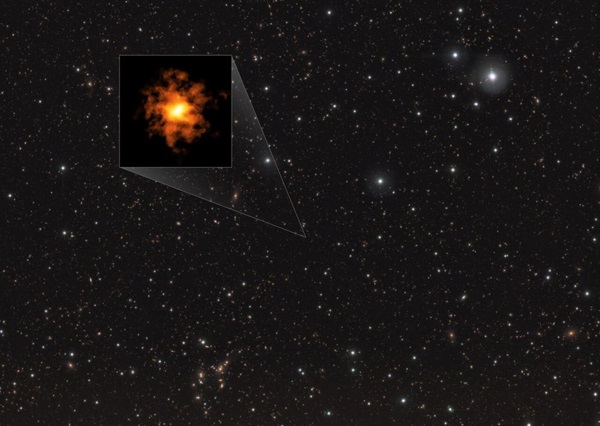
REBELS-25, a massive disc-like galaxy with structures resembling spiral arms, was discovered through the Reionization Era Bright Emission Line Survey (REBELS) using the Atacama Large Millimeter Array (ALMA) in Chile. This galaxy is unique because it appears to be well-organized despite forming less than a billion years after the Big Bang. Like our own Milky Way, which began as a chaotic proto-galaxy before evolving into a structured spiral, REBELS-25 is an enigma for astronomers.
Early Spirals and Their Unusual Formation
The discovery of REBELS-25 raises a significant question: why is it so massive and well-evolved when galaxies like the infant Milky Way were still disorganized clumps? According to our current models, early galaxies should be small and chaotic. Yet, REBELS-25 seems to defy this expectation.
Interestingly, this is not the first early spiral galaxy observed. Data from the James Webb Space Telescope (JWST) have already revealed that up to a third of early galaxies had spiral structures within the first 700 million years of cosmic history. REBELS-25 adds more intrigue to this mystery, with its surprising features showing that early galaxies may have evolved more quickly than we previously thought.
ALMA’s Detailed Observations of REBELS-25
ALMA’s observations confirmed that REBELS-25 has a rotating disk and spiral arm structures—both hallmarks of more modern galaxies. There’s also evidence of a central bar, much like what we see in the Milky Way today. ALMA’s sensitivity made it the perfect tool to detect these features in such a distant galaxy.
“Seeing a galaxy with such similarities to our own Milky Way challenges our understanding of how quickly galaxies in the early Universe evolve,” said Lucie Rowland, a doctoral student at Leiden University. This discovery may lead to significant revisions in our model of galaxy formation.
What REBELS-25 Means for Our Understanding of Galaxy Evolution
Traditional models of galaxy evolution suggest that young galaxies started as clumps of stars and gas, gradually merging to form larger, more organized structures over billions of years. These mergers and collisions were thought to be chaotic, leading to a slow process of galaxy formation.
However, the rapid development of REBELS-25 suggests that some galaxies evolved much faster. This galaxy’s “warp-speed” evolution implies that certain unknown factors might be accelerating galaxy formation in the early Universe.
The Future of Galactic Discovery with REBELS
The REBELS survey is poised to provide a wealth of data about high-mass galaxies like REBELS-25. This will allow astronomers to investigate more of these early, evolved galaxies and determine what drives their accelerated growth. With the power of ALMA and JWST, astronomers will continue to study these distant galaxies in more detail, helping to rewrite our understanding of the early Universe and the birth of galaxies.
The discovery of REBELS-25 and its mature structure only 13 billion years ago raises exciting questions about the speed and mechanisms behind galaxy formation. As new data emerges, astronomers are closer than ever to uncovering the secrets of our Universe’s earliest days.
Source: Did the Milky Way Have a Cosmic Twin in the Early Universe?
What Triggered the Transformation of Early Mars Into a Cold Desert?
What Triggered the Transformation of Early Mars Into a Cold Desert?