Dark Oxygen: A New Clue in the Search for Extraterrestrial Life?
The discovery of “dark oxygen” on the ocean floor has sparked curiosity. Could this mysterious oxygen support life in Earth’s deep oceans? And if so, what does it imply for the icy moons of Europa and Enceladus?
What Does This Mean for Habitability?
Oxygen is essential for complex life on Earth, largely produced through photosynthesis. The Great Oxygenation Event (GOE), which occurred 2.5 billion years ago, paved the way for life as we know it. Until now, we believed that habitable conditions depended on proximity to a star, allowing liquid water and sunlight to fuel life.
However, dark oxygen doesn’t follow these rules. It is strictly abiotic, formed without sunlight or life. This discovery challenges our previous understanding of how and where life can exist.
Could Dark Oxygen Exist on Other Worlds?
Recent research suggests that other bodies in the Solar System, like Europa, Ganymede, and Enceladus, might harbor warm oceans beneath their icy surfaces. If dark oxygen forms on Earth’s ocean floors, perhaps it exists in these distant oceans too.
A study titled “Dwellers in the Deep: Biological Consequences of Dark Oxygen” explores the potential for dark oxygen to support life. Lead researcher Manasvi Lingam and his team from Florida Institute of Technology are studying whether this oxygen could allow organisms to thrive in extreme conditions—both on Earth and beyond.
How Is Dark Oxygen Produced?
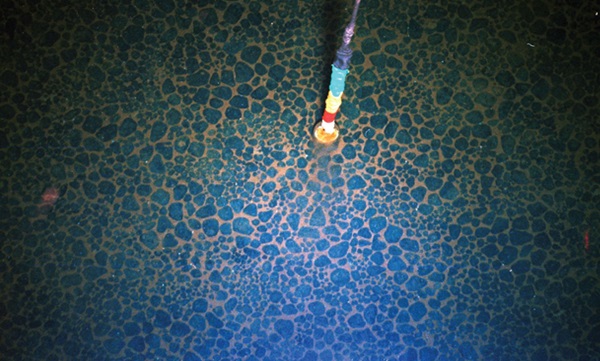
On Earth, dark oxygen comes from polymetallic nodules, which generate electricity through electrolysis, splitting water molecules and releasing oxygen. Though the amount of oxygen produced is small, it could still sustain tiny organisms.
The study found that the amount of oxygen limits the size of these organisms. For unicellular and multicellular organisms relying on diffusion, sizes are restricted to 0.1-1 mm. For organisms with circulatory systems, the maximum size could reach up to 10 cm.
Implications for Life on Icy Moons
Scientists are intrigued by how dark oxygen could impact life on moons like Europa. There are other ways oxygen might form in these distant oceans. For example, radiolysis—caused by ionizing radiation—could split water molecules, producing oxygen.
Additionally, Europa’s icy shell may allow briny liquids to flow, potentially transporting oxygen to the ocean below. Could this enable life, even without sunlight?
A New Perspective on Habitability
Dark oxygen may also be produced through microbial dismutation, a biotic process that doesn’t depend on photosynthesis. This pathway might provide another source of oxygen for life on these moons.
While we’ve always believed Earth-like conditions were rare, dark oxygen suggests that other environments could also support life. According to the research, if dark oxygen is common, it could revolutionize our understanding of where life might arise.
Broadening Our Search for Life
The discovery of dark oxygen reminds us how much we still have to learn. It’s possible that dark oxygen exists in distant, icy moons and could sustain alien ecosystems. If confirmed, this would expand our definition of habitability beyond the need for sunlight, deepening the mystery of life in the cosmos.
Source: Dark Oxygen: A New Clue in the Search for Extraterrestrial Life?
Two Super-Earths Orbiting Nearby Stars: What Secrets Do They Hold?
Two Super-Earths Orbiting Nearby Stars: What Secrets Do They Hold?