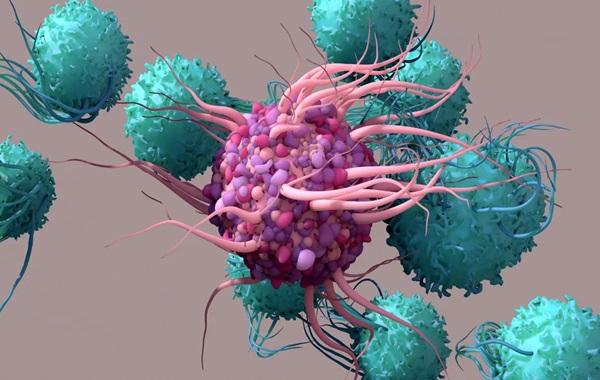
CRISPR just made it easier for the immune system to destroy cancer
Scientists have created a new method using CRISPR technology to help the immune system better recognize and fight cancer cells.
In our bodies, there’s something called major histocompatibility complex (MHC) class I molecules present on the surface of all cells in our body. These molecules are like red flags that help the immune system identify and eliminate cancer cells.
But cleverly, when cancer cells sense the activated immune system, they try to hide in open sight by reducing the MHC class I molecules in their makeup. This also helps the cancer cells avoid the attention of CD8+ T cells, the immune system’s primary cancer-fighting cells.
This is catastrophic because a delay in fighting off cancer cells only elongates the disease to stay in the body.
Easier for the immune system to destroy cancer cells
Researchers from Japan and the United States have devised a way to increase the number of MHC class I molecules in cancer cells to boost the immune system’s capability to detect and eliminate cancer cells.
“Our discovery has the potential to transform the way we approach cancer treatment,” said Professor Koichi Kobayashi, Hokkaido University and Texas A&M Health Center. “Our technology enables us to specifically target immune responsive genes and activate the immune system against cancer cells, offering hope to those who are resistant to current immunotherapy.”
Kobayashi and his team discovered a gene named NLRC5 that controls the levels of MHC class I. They also realized that in cancers, this gene gets suppressed when certain molecular switches on DNA are turned off.
This turning off, called DNA methylation, reduces the levels of MHC class I, helping cancer cells hide.
Their new method, TRED-I (Targeted Reactivation and Demethylation for MHC-I), can reverse the DNA methylation of the NLRC5 gene and activate it again.
Doing this increases the levels of MHC class I in cancer cells without causing serious side effects. It’s like flipping a switch to make the immune system see and fight against cancer cells more effectively.
“New modalities for fighting cancer like this are desperately needed because we have few solutions to fight some cancer types,” said Dr. Paul de Figueiredo, Bond LSC principal investigator and NEXTGEN Precision Health endowed professor at the University of Missouri.
The researchers tested their model TRED-I on animals who had cancer. It made tumors smaller and boosted the activity of helpful CD8+ T cells.
When used with existing immunotherapy, TRED-I made the treatment work much better. Surprisingly, it even worked on tumors far away from the main one, suggesting it might help treat metastasized cancers.
Next, researchers want to find a way to enable the delivery of the TRED-I system directly to humans with cancer. These drugs could help the immune system fight cancer better and improve how well other treatments work.
Source: Interesting Engineering
World First Partial Heart Transplant Is Growing With a Baby
CRISPR just made it easier for the immune system to destroy cancer