Could This Ancient Flood Evidence Prove Noah’s Ark Was Real?
What Does Recent Flood Evidence Near Mount Ararat Really Reveal?
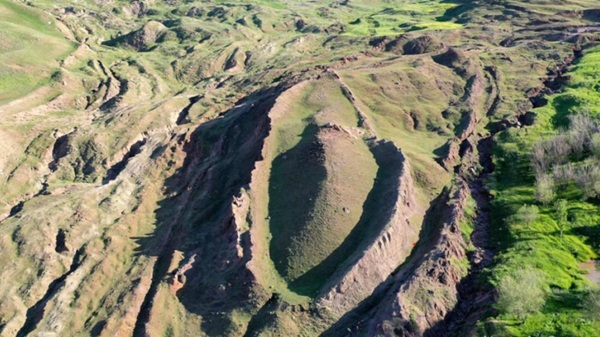
Researchers from the Mount Ararat and Noah’s Ark Research Team have announced an intriguing discovery at the Durupinar formation in eastern Turkey. This geological structure, resembling the shape of Noah’s Ark, has long been associated with the biblical account of the ark’s final resting place. Recent findings now suggest that the area once experienced catastrophic flooding thousands of years ago, aligning with the timeline of the Genesis flood narrative.
Geological Discovery Supports the Theory of a Catastrophic Flood
The team collected 30 rock and soil samples from the Durupinar formation, located 19 miles south of Mount Ararat, in the Doğubayazıt district of Ağrı, near the Turkey-Iran border. After analysis at Istanbul Technical University, the samples revealed the presence of marine deposits, clay-like materials, and remnants of sea life, including mollusks. These findings suggest the region was submerged in water between 1,500 and 3,000 BC, which corresponds with the Chalcolithic period — the same era often linked to the biblical flood.
The researchers emphasized that the evidence points to the possibility of a large-scale, catastrophic event that submerged this region. “This discovery reinforces the idea that a significant disaster took place in the past,” they stated. Their study was presented at the 7th International Symposium on Mount Ararat and Noah’s Ark, further fueling the ongoing debate regarding the historical accuracy of the Genesis account.

The Durupinar Formation: A Ship-like Geological Enigma
The Durupinar formation has fascinated both scholars and explorers due to its ship-like shape and dimensions. Discovered in 1948 by a Kurdish farmer and later brought to the attention of the international community by Turkish Army Captain Ilhan Durupinar in 1951, the formation’s size and location — just 19 miles from Mount Ararat — have led some to believe it could be the remains of Noah’s Ark.
In Genesis 8:4, it is described that “the ark rested in the seventh month, on the seventeenth day of the month, upon the mountains of Ararat,” making the proximity to Mount Ararat significant in this context. While mainstream geologists argue that the Durupinar formation is purely a result of natural geological processes, the shape and size of the structure still attract attention from those who support the Ark’s historicity.

Debunking Myths: Skepticism Surrounds the Ark Claim
Despite the allure of the Durupinar formation, most geologists dismiss the idea that it is the fossilized remains of Noah’s Ark. They point out that wood cannot fossilize in a few thousand years, and the rock formation’s current appearance can be explained by well-understood geological processes. Furthermore, past research conducted by David Fasold in the 1980s, which used ground-penetrating radar to detect potential structures beneath the surface, has been criticized as inconclusive.
Interestingly, Fasold later dismissed the idea of the Ark’s discovery at the site, calling the claim “absolute BS.” However, reports indicate that he may have reconsidered his stance before his death. Regardless, the theory persists, with some researchers citing the discovery of unique stones, dubbed drogue stones, which may have been used as anchors on the Ark, further fueling speculation.
Significant Findings but No Definitive Proof of Noah’s Ark
The Mount Ararat and Noah’s Ark Research Team’s findings do not offer definitive proof of Noah’s Ark’s existence. Yet, their research presents a valuable contribution to the ongoing exploration of the ancient flood narrative. The discovery of marine evidence in the Durupinar region, once thought to be dry land, strengthens the argument that a global flood could have occurred around the same time the Ark is believed to have landed.
The team remains committed to gathering more evidence to support the theory, acknowledging that while their findings are significant, they do not yet confirm the existence of Noah’s Ark. However, their work provides a compelling glimpse into the possible historical reality behind one of the most famous biblical stories.

Could the Genesis Flood Be Based on Historical Events?
While skeptics may continue to doubt the findings, there is a growing belief that the biblical flood story could have some basis in reality. The researchers caution against jumping to conclusions but acknowledge the importance of their discovery, which aligns with the timeframe and geographical location associated with the Genesis flood.
The discovery of evidence suggesting a massive flooding event in ancient times raises fascinating questions about the connections between myth, history, and geology. Could this be the missing link that confirms the Genesis flood as more than just a legend? Only further research and exploration will reveal the true nature of these findings.
The research continues, with the team planning to expand their studies to the surrounding regions of Cudi and Ararat, areas known for their ancient significance. For now, the Durupinar formation remains a captivating mystery — one that invites both believers and skeptics to reconsider the possibility of Noah’s Ark.
Source: Could This Ancient Flood Evidence Prove Noah’s Ark Was Real?
Were Early Humans Making Advanced Tools 1.5 Million Years Ago?
Were Early Humans Making Advanced Tools 1.5 Million Years Ago?
Could This Ancient Flood Evidence Prove Noah’s Ark Was Real?