Cosmic Cocoon Unveiled: James Webb Cracks the Mystery of the Universe’s ‘Little Red Dots’
The Red Enigma of the Deep Universe
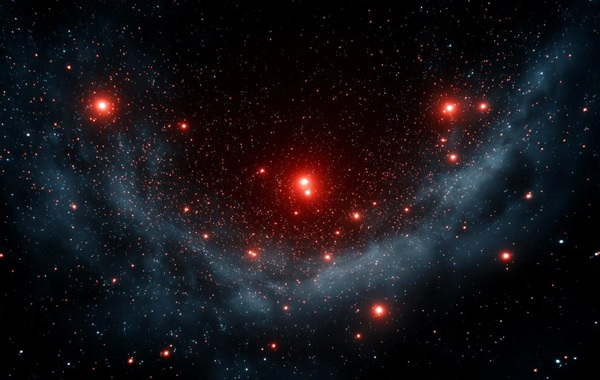
Since the James Webb Space Telescope (JWST) began its journey to the dawn of time, one specific phenomenon has left astronomers both mesmerized and baffled: “Little Red Dots.” These tiny, ruby-colored points of light, scattered across the ancient cosmic landscape, defied conventional explanation. For years, scientists debated whether they were massive prehistoric galaxies or something far more volatile. Now, a groundbreaking study published in Nature by the University of Copenhagen has finally revealed the truth, and it’s more dramatic than anyone imagined.
Messy Eaters in the Cosmic Nursery
These mysterious red dots aren’t galaxies at all; they are “messy eaters” of the highest order. The research confirms that these objects are actually young, supermassive black holes caught in the act of a violent growth spurt. Each black hole is encased in a thick, rotating cocoon of ionized gas. As the black hole’s immense gravity pulls this gas inward, the material spirals at such extreme speeds and densities that it generates temperatures in the millions of degrees.
Why the Red Glow?
The signature red color is not just a visual quirk—it’s a byproduct of a cosmic struggle. The intense heat radiates from the center, but as it passes through the dense, dusty gas cocoon, the light is filtered and reddened, much like how the sun appears deep red during a sunset on Earth. This “infrared signature” allowed the James Webb telescope to see through the veil that had kept these young giants hidden from our view for 13 billion years.
Rewriting the Timeline of the Big Bang
This discovery solves one of the most frustrating puzzles in modern astrophysics: How did supermassive black holes grow so large so quickly? We see giants weighing a billion times more than the Sun just 700 million years after the Big Bang. By capturing these black holes in their “teenage” growth phase—smaller than previously thought but growing at an explosive rate—astronomers now have the missing link. We are literally watching the building blocks of the universe’s most powerful objects as they feed and expand within their protective gas cradles.
Source: SciTechDaily
Cosmic Alchemy: Unlocking the Secrets of Dark Matter’s Violent Collapse
Cosmic Cocoon Unveiled: James Webb Cracks the Mystery of the Universe’s ‘Little Red Dots’