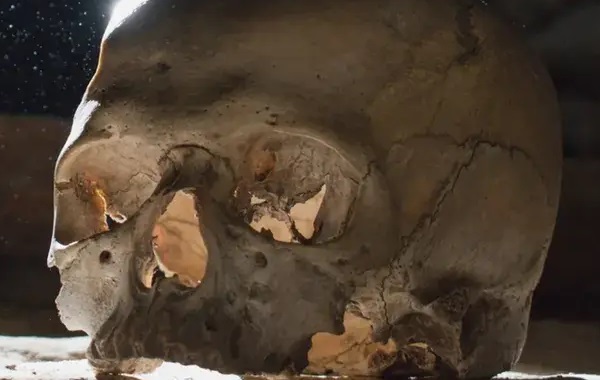
China: Shamanic doctor performed complex skull surgery 2700 years ago
An ancient evidence of complex brain surgery has been unearthed in Xinjiang, China.
Surprisingly, this well-preserved human skull shows signs of a surgical procedure that involved the opening of a hole in the cranium to treat a head injury.
The authors postulate that the shamanic doctors in China likely conducted this procedure around 2700 years ago.
Shamanic doctors, often referred to as shamans, are traditional healers and spiritual leaders in various indigenous cultures around the world.
This remarkable finding suggests that shamanic physicians of that era were capable of performing complex brain surgery. However, the evidence indicates that the patient survived for only eight weeks after the surgical procedure.
Surgery was performed to treat hematoma
The skull was discovered at the Yanghai cemetery in Xinjiang, China, a region recognized for its historical relevance in shamanism during the Late Bronze Age. The skull belonged to a man, likely aged between 30 and 35 years.
“In this study, the trepanned cranium of an adult male (M31:C) from the Late Bronze Age (800–750 BCE) was investigated for its unusual injury pattern and surgical procedures,” the authors from Texas A&M University wrote in their research paper.
A trepanned cranium is a skull that has undergone the medical operation of trepanation, which involves creating a hole or opening in the skull. This surgery is performed for a variety of purposes, including the treatment of head traumas, the relief of intracranial pressure, or addressing certain medical conditions.
M31:C clearly shows evidence of trepanation. The significance of this revelation rests in the specifics of the surgical method and the patient’s astonishing survival for eight weeks.
“Results indicated that the individual suffered from blunt force trauma on the left side of the head during his lifetime. Subsequently, a surgeon performed a therapeutic craniotomy including trepanation and bone flap to treat the hematoma,” mentioned the study.
It is a condition where blood starts to collect outside of blood vessels.
Surprisingly, the surgical site showed evidence of well-preserved healing, indicating that the patient lived for at least eight weeks following the procedure.
Moreover, this intricate surgery attempted to relieve pressure on the brain also showcases the ancient surgeon’s competence.
The find not only gives crucial archeological evidence of complex neurosurgery but also sheds light on the shamanistic approach to medicine. It showcases the “relationship between ritualistic trepanation and its medicinal properties” during the Bronze Age.
Source: Interesting Engineering
Snake bite spell protects this 6th century BC tomb in Egypt
China: Shamanic doctor performed complex skull surgery 2700 years ago