Can Winter Solstice At Karahan Tepe Explain A Shamanic Christmas Origin?
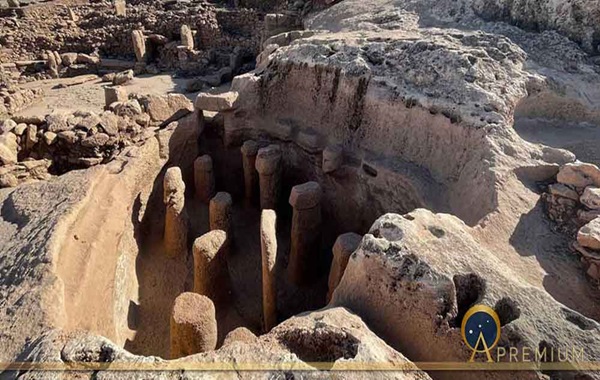
Ancient megalithic sites all over the world are still visited in celebration of winter solstice, to welcome the sunrise on the shortest day of the year in the northern hemisphere. From Newgrange in Ireland and Gavrinis in France, to Stonehenge, Karnak and Chaco Canyon in Arizona, the ancients built distinct alignments into their structures. The most ancient example, and without doubt the most visually impressive winter solstice phenomenon, is found at Karahan Tepe in southeast Turkey. The problem is, Karahan Tepe is 11,400 years old, and it is commonly believed that the ‘primitive hunter-gatherers’ were not supposed to have been able to construct such megalithic temples nor could they have had a sophisticated understanding of solar astronomy. Yet they did, and they exhibited a touch of class that impresses even modern-day observers. These early origins of celebrating this ‘turning of the year event’ has held its place in human consciousness through the millennia and gradually it morphed into what is today celebrated as Christmas.
Tracing Winter Solstice
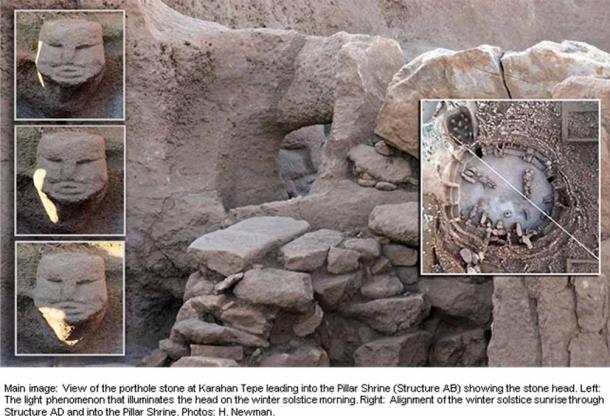
Karahan Tepe is an 11,400-year-old megalithic complex in remote southeast Anatolia. The author, along with American researcher JJ Ainsworth, have discovered a remarkable light effect at Karahan Tepe which utilizes a porthole stone between the main enclosure (Structure AD) and the Pillar Shrine (Structure AB). At ten minutes after sunrise on the winter solstice, the right side of the protruding head becomes illuminated from a beam of light coming through the hole, with the shard of light moving around to the front of the face for 45 minutes. After a period of darkness, the sun rises higher in the sky and manifests a ‘halo’ of light around the top of the head. This had not been witnessed by anyone since Karahan Tepe was deliberately covered over c.10,000 years ago.
Prehistoric people built great monuments to align with the movement of the sun on this special date. Throughout the world these monuments were places of wild celebrations on the winter solstice; a place where observers recorded the sun’s movements; great feasting took place as shamans pronounced the turning of the year; the warmth of the sun yearning to be felt. This time of year symbolised death, regeneration and rebirth. Evidence of rituals, sacred dances and incantations were known to have been performed in an attempt to fertilize the land, the crops, the animals and the people. This was the end, and the beginning. The death of the year, the rebirth of another.
Source: ancient-origins
Ancient Mesopotamian Bricks Captured a Mysterious Blip in Earth’s Magnetic Field
Can Winter Solstice At Karahan Tepe Explain A Shamanic Christmas Origin?