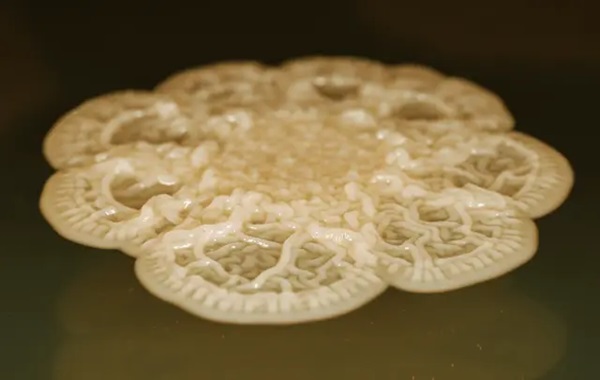
‘Bushy tree’: Your mouth hosts rare bacteria that split into 14 cells at once
New research from the Marine Biological Laboratory and ADA Forsyth presents an extraordinary though common bacterium living in the human mouth that splits into multiple cells at once, a rare phenomenon.
Home to over 500 different bacteria, the human mouth turns out to be one of the most diverse ecosystems on the planet, with a very special type of microorganism that makes up dental plaque. The ordinary film we brush away every morning and evening turns out to be mind-blowing.
“Who would have thought that our familiar mouths would harbor a microbe whose reproductive strategy is virtually unique in the bacterial world?” Co-author and principal investigator Gary Borisy asks in a press release.
Normally, bacteria divide into two cells, but Corynebacterium matruchotii can reproduce themselves up to 14 times in an unusual process called multiple fission. Even when we brush our teeth, this biofilm returns without fail, and amazingly, C. matruchotii can grow up to half a millimeter a day.
Scientists now want to know what role this otherworldly bacterium plays in the health of our mouths and bodies, as per the press release.
“This discovery sheds light on how these bacteria proliferate, compete for resources with other bacteria, and maintain their structural integrity within the intricate environment of dental plaque.”
The extraordinary “biogeography” of dental plaque
Building on previous research that enabled researchers to image the spatial organization or “biogeography” of healthy dental plaque, they decided to penetrate the behavior of the C. matruchotii further after observing a unique hedgehog structure.
Using time-lapse microscopy, they studied how these filamentous cells grow in threads that don’t simply divide but multiply up to 14 times, depending on the length of the original mother cell. Remarkably, “these cells also only grow at one pole of the mother filament—something called “tip extension.”
Because they lack flagella, which allows bacteria to move, researchers hypothesize that this “unique elongation and cell division” might be their way of exploring their environment, almost like a mycelial network in fungi.
These threads of bacteria act as scaffolding within the dental plaque, a biofilm. All 500 species of bacteria living in our mouths thrive in these distinct, structured communities called biofilms, according to the press release. Dental plaque is only one microbial community in the immense ecosystem known as the human body.

What do these microbial rainforests do?
Co-author Jessica Mark Welch compares the Corynebacterium in our mouths to coral in reef structures and trees in the forest. “The Corynebacterium cells in dental plaque are like a big, bushy tree in the forest; they create a spatial structure that provides the habitat for many other species of bacteria around them.”
Thus, “these biofilms are like microscopic rainforests,” Scott Chimileski continues, a lead author of the paper. “We think that the unusual C. matruchotii cell cycle enables this species to form these very dense networks at the core of the biofilm.”
But they didn’t just snap a picture of this microbial rainforest; researchers captured this ecosystem’s bacterial growth dynamics and interactions in real time.
Furthermore, these bacteria live nowhere else in the human mouth, though other species of C.matruchotii also live in the skin and nose. They do not, however, exhibit multiple fission or tip extension, which might suggest some necessity behind the function.
“Something about this very dense, competitive habitat of the dental plaque may have driven the evolution of this way of growing,” Chimileski concludes, in a press release. “The next challenge is to understand the meaning of this strategy for the health of our mouths and our bodies.”
The study, “Tip extension and simultaneous multiple fission in a filamentous bacterium,” has just been published in the Proceedings of the National Academy of Sciences.
Source: Interesting Engineering
There Are 50,000 Knots In Your DNA And They’ve Just Been Mapped
‘Bushy tree’: Your mouth hosts rare bacteria that split into 14 cells at once