Arizona’s mysterious clock of ancient times
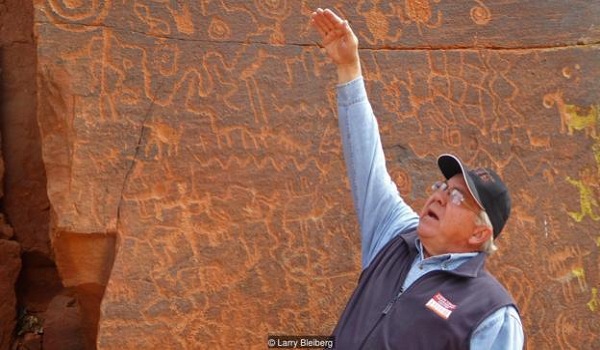
Every month, as the sun interacted with the art, the rock, it seemed, was speaking to him. On the summer solstice, which falls on 21 June this year, shadows interplayed with half a dozen images on the stone. Six months later, on the shortest day of the year, the sun shone directly through a notch between two rocks.
It was agriculture that likely inspired the so-called imaging calendar, Zoll said. The Sinagua people, who researchers believe lived and farmed here between the 7th and 15th Centuries, grew corn, cotton, squash and beans. Their descendants, the Hopi people, now live about 150 miles away.
When Zoll spoke to the Hopi, he learned that the panel appeared to mark religious celebrations and important dates for farmers. On 21 April, a day associated with the first planting, a shadow’s bottom edge touches a carving resembling a corn stalk. One of the most compelling findings comes on 8 July, the end of a 16-day Hopi period of prayer and meditation. On that day, the sun perfectly outlines a figure that appears to be dancing.
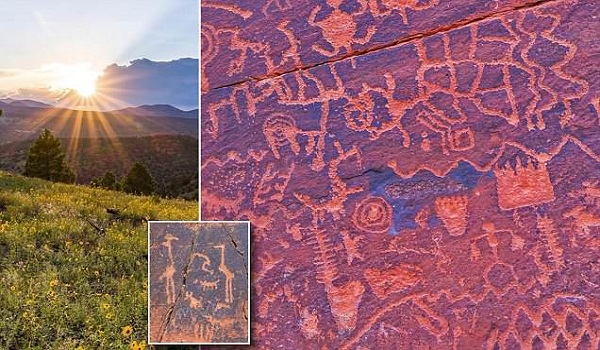
“It’s a time machine for the gods to tell you it’s time for a ceremony,” said Scott Newth, an officer with the Arizona Archaeological Society, who tracks rock art across the region.
Hopi elder Floyd Lomakuyvaya, 65, said that some of the petroglyphs are the familiar symbols of tribal clans. “I feel proud because our ancestors left these marks. Every month we have different ceremonies, and different things happen. That’s our calendar. It guides us.”
And on this year on the vernal equinox, Hopis were in full-force at the rock art site. They had brought a youth group to learn about their heritage and to help with demonstrations, including an agave pit roast. The sizeable head of the desert plant was a staple for the tribe, providing sustenance throughout the year.
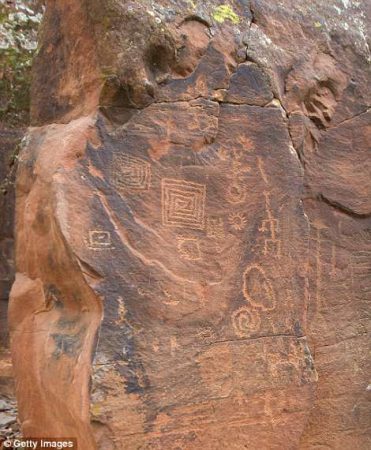
Zoll has documented a dozen sites in the Verde Valley area of central Arizona that are likely to be calendars, and more than 30 others have been found in the region around the city of Phoenix, he said. Most have rock art with concentric circles, which appear to align with shadows at specific times of year. “We always wondered why we’d see the exact same images.”
He says one working theory is that outsiders travelled through the region, teaching locals how to construct the calendars. This is based on the discovery of a northern Arizona burial of a man who appeared to be a visitor because his body was larger than others found in the area. He was buried with a medallion etched with concentric circles.
Researchers have also discovered several observation sites in the area that appear to have been used by sun watchers, tribal members who were tasked with observing the daily rise and setting of the sun. It’s a position of honour that still exists in Hopi communities, where members of the Water Clan attend to that duty. Indeed, turtles, which are their clan symbol, appear to be carved above the V Bar V rock. As the minutes ticked by that afternoon, the shadows grew more distinct on the rock face, and then they slowly started to fade away.
Zoll didn’t seem surprised that the sky had cleared just in time for the display. Early in his research, something similar occurred during a solstice. It had been overcast all day and then suddenly the sun emerged, just in time for him to record its shadow. A few minutes later, the clouds returned.
When he recounted the story later, a Hopi man offered an explanation: “The creator wanted you to see that.”
Forest ranger Terrilyn Green, who was supervising the equinox event, said she’s pleased how the rock art’s fame is growing, but notes there are many ways to track time.
Every year, the common black hawk returns from its winter migration to Arizona’s Verde Valley in late March. “It’s amazing. It’s like a wonderful harbinger of spring,” Green said.
And that morning, like clockwork, she heard the raptor’s call for the first time this year.
Join more than three million BBC Travel fans by liking us on Facebook, or follow us on Twitter and Instagram.
If you liked this story, sign up for the weekly bbc.com features newsletter called “If You Only Read 6 Things This Week”. A handpicked selection of stories from BBC Future, Earth, Culture, Capital and Travel, delivered to your inbox every Friday.
Source:BBC