Are We Alone? How Plate Tectonics Could Answer the Fermi Paradox
How did complex life emerge and evolve on Earth, and what does this mean for finding life beyond our planet? A recent study published in Nature addresses this question. Researchers investigated how plate tectonics, oceans, and continents have contributed to the emergence and evolution of complex life on Earth, and how this could help address the Fermi Paradox and improve the Drake Equation, which estimates the number of extraterrestrial civilizations. This study aims to enhance our understanding of the criteria for finding life beyond Earth, particularly in relation to geological processes.
Motivation Behind the Study
Dr. Taras Gerya, a Professor of Earth Sciences at the Swiss Federal Institute of Technology (ETH-Zurich) and co-author of the study, explained the motivation behind it in an interview with Universe Today. He stated, “It was motivated by the Fermi Paradox (‘Where is everybody?’), highlighting that the Drake Equation often predicts between 1,000 to 100,000,000 actively communicating civilizations in our galaxy, which is too optimistic. We aimed to identify corrections needed to make the Drake Equation’s predictions more realistic.”
Key Findings
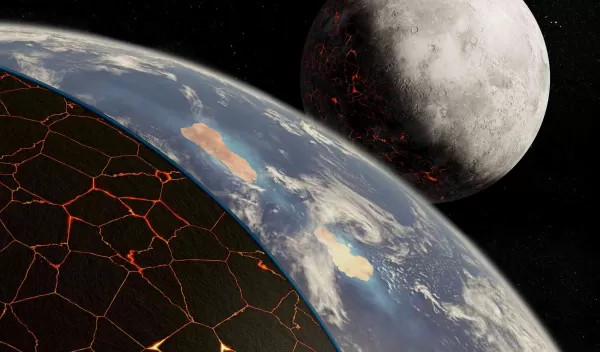
The researchers compared two types of planetary tectonic processes: single lid (stagnant lid) and plate tectonics. Single lid tectonics occurs when a planetary body does not exhibit plate movement due to a strong, dense lid that cannot break apart. The study estimated that 75 percent of active silicate bodies in the galaxy exhibit single lid tectonics, with Earth being unique in having plate tectonics. The study concluded that single lid tectonics likely dominates the tectonic styles of active silicate bodies in our galaxy.
The researchers also examined the role of continents and oceans in the evolution of intelligent life. They noted that life initially thrived in oceans, shielded from harmful space weather. However, dry land provided numerous benefits for the evolution of intelligent life, including adaptations like eyes and new senses, which helped animals evolve and adapt to various terrains. Dry land facilitated the development of abstract thinking, technology, and science.
Significant Results and Follow-up Studies
Dr. Gerya highlighted a critical result: “A very special condition (>500 million years coexistence of continents, oceans, and plate tectonics) is needed for a planet with primitive life to develop intelligent technological communicative life. This condition is rarely realized, with only <0.003-0.2% of planets with any life satisfying it.”
Future research plans include studying water evolution in planetary interiors to understand the stability of surface ocean volumes, investigating the survival time of technological civilizations based on societal collapse models, and examining the oxygenation state evolution of planetary interiors and atmospheres to understand the formation of oxygen-rich atmospheres essential for technological civilizations.
Implications for the Drake Equation
The study proposes adding two new variables to the Drake Equation:
foc: The fraction of habitable exoplanets with notable continents and oceans.
fpt: The fraction of habitable exoplanets with notable continents and oceans that also exhibit plate tectonics functioning for at least 500 million years.
These additions aim to refine the estimate for fi (the fraction of planets that develop life and evolve into intelligent life). Originally, fi was estimated to be very high (100%). The study suggests a much lower estimate (<0.003-0.2%), which might explain why we haven’t been contacted by other civilizations.
Including these variables results in a far smaller number of actively communicating civilizations (ACCs), estimated at <0.006 to 100,000, compared to the original estimate of 200 to 50,000,000. Dr. Gerya explained, “This redefinition of fi makes the probability of contact with other civilizations very low and emphasizes the rarity and importance of preserving our own planet and civilization.”
Implications for the Search for Extraterrestrial Life
This study suggests three key consequences for the search for extraterrestrial life:
The likelihood of contacting other civilizations is very low, partly because their lifetimes may be shorter than previously expected.
Remote sensing should focus on identifying planets with oceans, continents, and plate tectonics (COPT planets) based on their distinct atmospheric and surface reflectivity signatures.
It highlights the importance of preserving our rare and unique planet and civilization.
As of now, NASA has confirmed the existence of 5,630 exoplanets, with almost 1,700 classified as Super-Earths and 200 as rocky exoplanets. Despite these numbers, humanity has yet to detect any signals from extraterrestrial civilizations. The study’s findings may help scientists refine their search criteria using the new variables in the Drake Equation.
Conclusion
Dr. Gerya concluded, “This research is part of an emerging new science—Biogeodynamics—which aims to understand and quantify the relationships between the long-term evolution of planetary interiors, surfaces, atmospheres, and life.”
How will these new variables help scientists find life beyond Earth in the coming years and decades? Only time will tell, and this is why we science!
Source: Are We Alone? How Plate Tectonics Could Answer the Fermi Paradox
Could dark matter behave like waves? Study proposes new hypothesis
Could dark matter behave like waves? Study proposes new hypothesis
Are We Alone? How Plate Tectonics Could Answer the Fermi Paradox