Are Mars’s Noctilucent Clouds a Sign of Unexpected Atmospheric Phenomena?
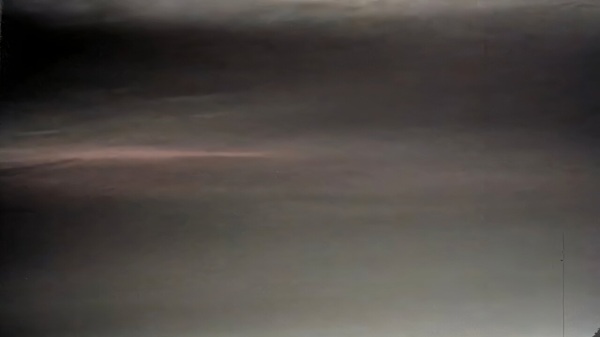
NASA’s Curiosity rover has recently captured a series of stunning images showcasing colorful clouds drifting over Mars. These observations, taken on January 17, 2025 (the 4,426th Martian day, or sol, of Curiosity’s mission), provide valuable insights into the atmospheric phenomena of the Red Planet.
Observing Noctilucent Clouds on Mars
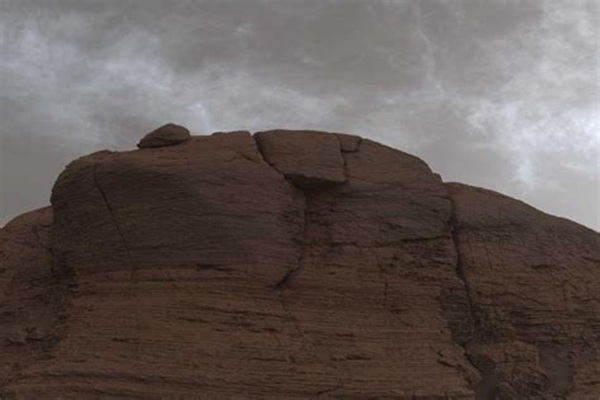
The images reveal red-and-green-tinted clouds, known as noctilucent or twilight clouds, illuminated by the scattering light from the setting sun. These clouds are particularly captivating when they display iridescence, creating a “mother-of-pearl” effect. Such phenomena occur when the clouds are situated at high altitudes and are visible during the twilight hours.
Composition and Altitude of Martian Clouds
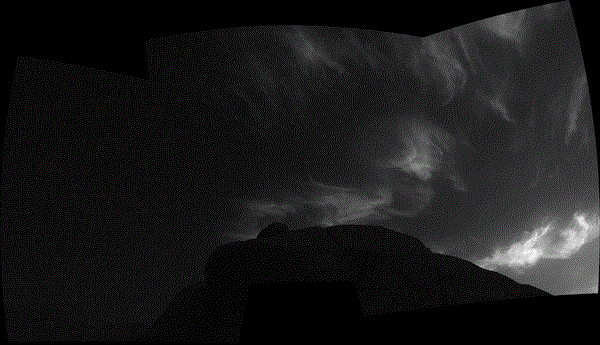
Martian clouds are composed of either water ice or carbon dioxide ice, depending on their altitude and the prevailing temperatures. The iridescent clouds captured by Curiosity are believed to be composed of carbon dioxide ice and are located at altitudes ranging from approximately 37 to 50 miles (60 to 80 kilometers) above the Martian surface. These clouds can be observed as white plumes descending through the atmosphere, reaching as low as 31 miles (50 kilometers) before evaporating due to rising temperatures. In contrast, water-ice clouds have been observed traveling in the opposite direction at similar altitudes.
Historical Context of Twilight Cloud Observations
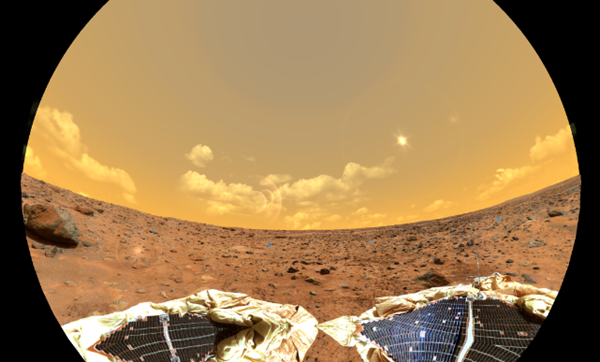
Twilight clouds were first detected on Mars by NASA’s Pathfinder mission in 1997. Curiosity began observing these phenomena in 2019, capturing its inaugural images of iridescent clouds. This marks the fourth Martian year that the rover has documented such occurrences, which typically manifest during early fall in the planet’s southern hemisphere.
Investigating the Formation of Iridescent Clouds
The consistent appearance of these iridescent clouds offers scientists opportunities to study particle size and growth rates within Martian clouds, thereby enhancing our understanding of the planet’s atmospheric conditions. Mark Lemmon, an atmospheric scientist with the Space Science Institute in Boulder, Colorado, noted the predictability of these events, stating, “Now it’s become so predictable that we can plan our shots in advance; the clouds show up at exactly the same time of year.”
Unraveling the Mysteries of Martian Cloud Formation
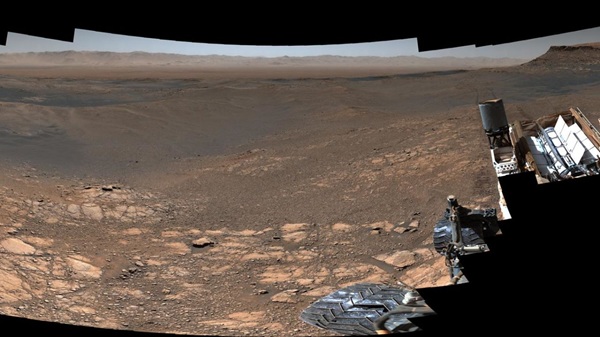
A significant question that remains is why carbon dioxide ice twilight clouds have not been observed in other regions of Mars. While Curiosity, located on Mount Sharp in Gale Crater just south of the Martian equator, has documented these clouds, other missions such as NASA’s Perseverance rover in the northern hemisphere’s Jezero Crater have not reported similar observations. Researchers hypothesize that specific areas of Mars may have conditions conducive to the formation of these clouds, potentially influenced by atmospheric gravity waves that can cool the atmosphere sufficiently for carbon dioxide to condense into ice.
Technical Aspects of Curiosity’s Imaging Capabilities
The recent images of twilight clouds were captured using Curiosity’s Mast Camera (Mastcam). Due to a filter wheel issue with the left 34 mm focal length Mastcam, the images appear framed in a partially open circle. Despite this, the rover’s team at NASA’s Jet Propulsion Laboratory continues to utilize both the left and the higher-resolution right 100 mm focal length cameras for color imaging.
Curiosity’s Ongoing Exploration and Scientific Endeavors
Beyond atmospheric studies, Curiosity has been actively exploring various geological features on Mars. The rover recently concluded an investigation of the Gediz Vallis channel and is en route to a new location characterized by boxwork formations—fractures created by groundwater that resemble giant spiderwebs when viewed from space. Additionally, Curiosity examined an impact crater dubbed “Rustic Canyon,” capturing images and analyzing the surrounding rock compositions. Studying such craters is crucial, as the impact process can expose subsurface materials that may have preserved organic molecules, offering insights into the ancient Martian environment and its potential to have supported microbial life billions of years ago.
These comprehensive observations by Curiosity not only enhance our understanding of Martian atmospheric phenomena but also contribute to the broader quest to determine the planet’s habitability in its ancient past.
Source: Are Mars’s Noctilucent Clouds a Sign of Unexpected Atmospheric Phenomena?
Largest structure in known universe discovered, 13,000 times longer than Milky Way
Largest structure in known universe discovered, 13,000 times longer than Milky Way