Antarctica’s ‘Pyramid’: Natural Wonder or Ancient Civilization Remnant?
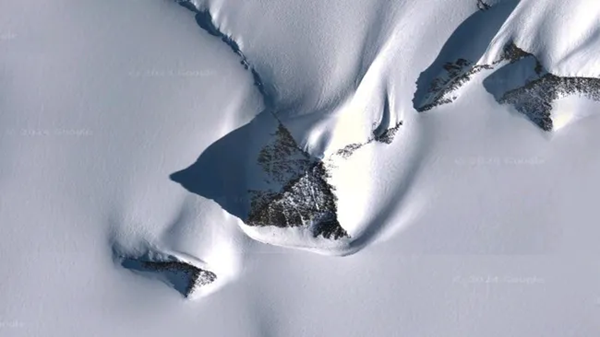
Antarctica is home to a peak shaped like a near-perfect pyramid. Though its symmetry has fueled speculation about ancient civilizations and alien architects, scientists assert that natural erosion is the true artist behind this geological wonder.
The Striking Symmetry of Antarctica’s Pyramid-Shaped Peak
Hidden within the icy expanse of Antarctica lies a mountain that resembles a pyramid so closely that it has sparked wild theories since its internet debut in 2016. This unnamed peak, located in the southern Ellsworth Mountains, features four steep, symmetrical faces, making it look like something pulled straight from ancient Egyptian architecture.
Standing at 4,150 feet (1,265 meters), the mountain’s shape is not the result of human or extraterrestrial intervention but rather the product of Earth’s natural geological processes. The mountain’s intriguing appearance has captivated researchers and conspiracy theorists alike, but its formation story is firmly rooted in science.
Natural Erosion: The True Architect of the Antarctic Pyramid
Geologists explain that the pyramid’s striking symmetry is the result of freeze-thaw erosion, a natural weathering process. During the day, water and snow seep into the mountain’s tiny cracks. At night, the freezing temperatures cause this water to solidify and expand, gradually widening the cracks. Over millions of years, this process caused large pieces of rock to break away, carving the mountain’s angular sides.
Interestingly, three of the mountain’s four faces appear to have eroded at a similar rate, creating a triangular symmetry. The eastern ridge, however, is thought to have formed through a separate process, adding to the peak’s unique shape.
A Geological Connection to Other Famous Pyramid Peaks
Antarctica’s pyramid is not the only mountain in the world with this iconic shape. The famous Matterhorn in the Swiss Alps shares similar characteristics, with its sharp edges and steep slopes formed through a combination of freeze-thaw erosion and glaciation. Such peaks are a reminder of how nature can sculpt breathtaking formations over immense periods of time.
The southern Ellsworth Mountains, where the Antarctic pyramid is located, are a treasure trove of geological history. This region, first documented during a 1935 flight by aviator Lincoln Ellsworth, contains fossils dating back 500 million years to the Cambrian period. These ancient remains provide a window into Earth’s distant past, further enriching the scientific value of the area.
How Conspiracy Theories Took Hold
The pyramid-shaped peak became a viral sensation in 2016, inspiring conspiracy theories about forgotten civilizations or alien construction. Internet forums lit up with speculation, with some suggesting that the mountain was proof of advanced engineering or even extraterrestrial activity.
Scientists, however, have firmly debunked these claims. “This is just a mountain that looks like a pyramid,” explained Eric Rignot, a professor of Earth system science at the University of California, Irvine. Pyramid-like mountains, though rare, occur naturally and often develop only one or two symmetrical faces. The Antarctic peak’s unique four-sided form makes it particularly striking—but not beyond the realm of natural explanation.
The Allure of Antarctica’s Pyramid and the Power of Nature
The Antarctic pyramid’s story is one of both intrigue and science. Its unique geometry captivates the imagination, while its formation illustrates the immense power of natural processes like erosion. Whether admired for its visual appeal or explored for its scientific significance, this icy peak is a testament to Earth’s ability to shape extraordinary landscapes.
For scientists like Mauri Pelto, an environmental science professor at Nichols College, the mountain’s allure lies in its geology, not its mystery. “You can probably see this mountain from the nearby Patriot Hills research base,” Pelto noted, emphasizing that while the pyramid may look extraordinary, it is simply one of nature’s many wonders.
As the myths and conspiracy theories fade, what remains is a breathtaking example of Earth’s enduring artistry—a true marvel of natural symmetry amidst Antarctica’s frozen wilderness.
Source: Antarctica’s ‘Pyramid’: Natural Wonder or Ancient Civilization Remnant?
“Velvet Ants’ Astonishing Ultrablack Coating Absorbs Almost All Visible Light”
“Velvet Ants’ Astonishing Ultrablack Coating Absorbs Almost All Visible Light”