Ant Colonies Can Share a Single ‘Social’ Metabolism, All Thanks to The Way They Kiss
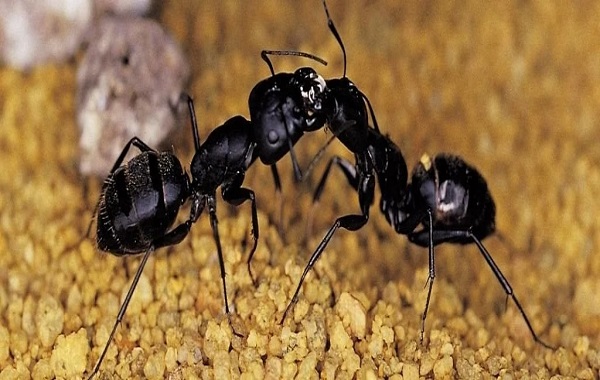
Carpenter ants give each other wet, slobbery kisses to make sure the colony keeps working like a well-oiled social ‘machine’, according to new research.
By swapping spit, this ant species (Camponotus floridanus) has created a colony-wide metabolism that ensures each individual has what they need to perform their role in the community, whether foragers, nurses, or queens.
“These fluid exchanges allow ants to share food and other important proteins that the ants themselves produce.”
The exact function of these ‘social’ fluids is still largely unstudied, although other social insects, like fruit flies, are thought to use saliva to create a social circulatory system as well, trading nutrition, immune defenses, and hormones with one another.
Exploring the phenomenon further in carpenter ants, researchers have now found evidence these social fluids can be linked to an individual’s role in the colony.
When the authors analyzed all of the proteins found in the social stomachs of carpenter ants, they found the saliva was filled with different biomarkers depending on the conditions of the colony.
Across 70 colonies and 40 individual fluid samples, researchers found 519 proteins, 27 of which appear in saliva across the board, regardless of the colony’s life-cycle, life-stage, or environmental conditions. Apart from those core proteins, the rest were quite varied.
This suggests the saliva found in more mature ant colonies acts like hormones flowing through in a body, only in this case that body is a superorganism, with the ‘hormones’ dictating what type of role an ant plays in the colony.
For example, those ants that care for the queen’s young, the ‘nurses’, appeared to have a higher abundance of oxidative stress-related proteins in their social stomachs.
This suggests other, ‘selfless’ ants are passing on live-extending molecules to the nurses, who need to live longer to raise the next generation. Some ants, in other words, are doing the hard, metabolic labor never to see the benefits themselves.
More research is needed to figure out how each shared protein ultimately impacts the colony and individual ants. But the findings of this current paper suggest kisses in ant colonies are a useful model to understand how animal societies might have evolved divisions of labor.
“It is hard to measure how metabolic work is shared between cells,” says LeBoeuf.
“Here, the ants pass things around in a way that we can easily access what they are sharing.”
Who knew so much information could be conveyed in one wet smooch?
Source: Science Alert
Gamergate: Single Molecule Controls Unusual Ants’ Switch From Worker to Queen-Like Status
Ant Colonies Can Share a Single ‘Social’ Metabolism, All Thanks to The Way They Kiss