
A Strange Thousands-Year-Old Connection Between Money and Bees
In 2022, the Royal Australian Mint issued a $2 coin decorated with honeybees. Around 2,400 years earlier, a mint in the kingdom of Macedon had the same idea, creating a silver obol coin with a bee stamped on one side.
Over the centuries between these two events, currency demonstrating a symbolic link between honey and money is surprisingly common.

In a recent study in Australian Coin Review, I trace the bee through numismatic history – and suggest a scientific reason why our brains might naturally draw a connection between the melliferous insects and the abstract idea of value.
What is currency and why is it important?
Money is a store of value, and can act as a medium of exchange for goods or services. Currency is a physical manifestation of money, so coins are a durable representation of value.
Ancient Malta was famous for its honey. The modern 3 Mils coin (1972-81) celebrates this history with images of a bee and honeycomb.
In ancient Greece, bees were used on some of the earliest coins made in Europe. A silver Greek obol coin minted in Macedon between 412 BCE and 350 BCE, now housed in the British Museum, shows a bee on one side of the coin.
Bees also feature on coins minted elsewhere in the ancient Greek world, such as a bronze coin minted in Ephesus dated between 202 BCE and 133 BCE.
The use of bees on ancient coins extended for many centuries including widely circulated bronze coins, and new varieties continue to be discovered.
Why we might like bees on coins
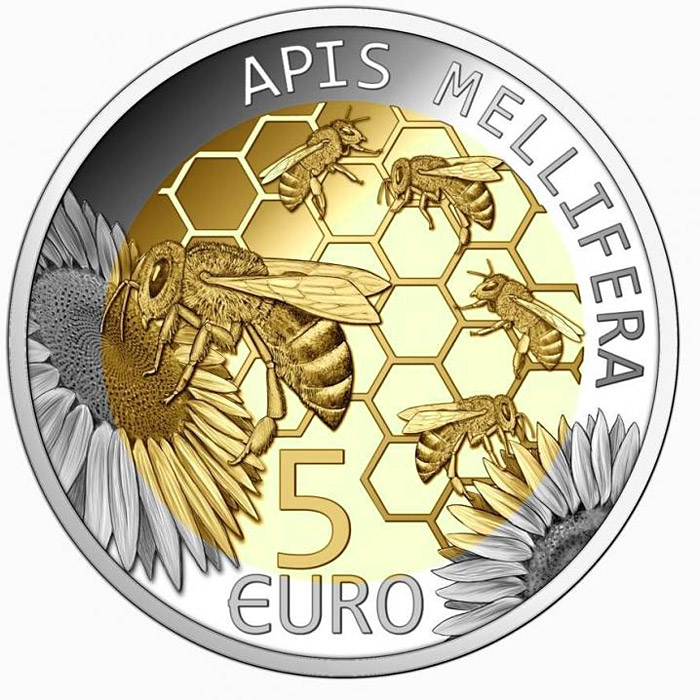
Why have bees appeared so often on coins? One approach to this question comes from the field of neuro-aesthetics, which seeks to understand our tastes by understanding the basic brain processes that underpin aesthetic appreciation.
From this perspective, it seems likely the sweet taste of honey – which indicates the large amount of sugar it delivers – promotes positive neural activity associated with bees and honey.
Indeed, primatologist Jane Goodall once proposed that obtaining high-calorie nutrition from bee honey may have been an important step in the cognitive development of primates.
Our brain may thus be pre-adapted to liking bees due to their association with the sweet taste of honey. Early usage of bees on coins may have been a functional illustration of the link between a known value (honey) and a new form of currency: coins as money.
Source: A Strange Thousands-Year-Old Connection Between Money and Bees
Maya Drag Habitat ̇Mexico and the Americas ̇Central Maya and Indigenous Peoples