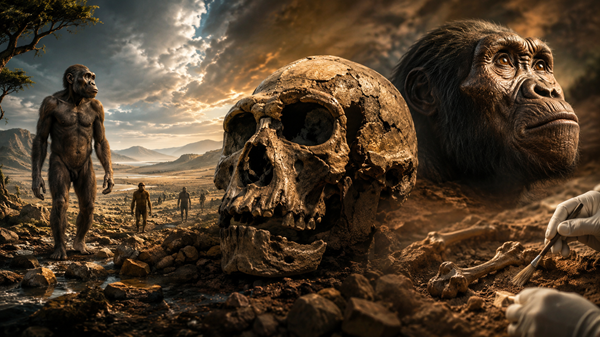
A Healed Leg and a Tall Frame: What Did This Denisovan Hunter Endure That We Still Don’t Understand?
Denisovan Fossils Reveal Tall Hunters on a Changing Ice Age Frontier
The discovery of Denisovan fossils—a femur and tibia—offers compelling new insights into the lives of these enigmatic hominins. The femur features a pronounced pilaster, a bony ridge that typically develops under sustained mechanical stress, while the tibia shows evidence of a healed injury. Together, these traits point to a physically demanding existence, likely involving long-distance travel or hunting across open terrain. However, researchers caution that these interpretations remain possibilities, not certainties. The bones do not definitively reveal the individual’s sex, and both studies are preprints that have yet to undergo peer review. As a result, the estimates and evolutionary implications presented will require validation through future discoveries. Until then, accepting these conclusions without stronger evidence would be premature.
What the Femur and Tibia Reveal About a Demanding Lifestyle
Why does the femur exhibit such a robust pilaster? This ridge forms when bones adapt to heavy loads, suggesting that this individual frequently walked long distances or carried substantial burdens. The tibia’s healed injury adds another layer of intrigue: was it caused by a fall, a conflict, or some other accident? While these clues align with a mobile hunting lifestyle, they cannot definitively confirm specific behaviors. For now, they serve as consistent indicators, not proof.
Uncertainties About Sex and the Need for Peer Review
Researchers cannot confidently assign a sex to these remains due to the absence of pelvic bones or DNA. Without such evidence, sex determination remains speculative. Furthermore, the two preprints describing the fossils have not yet undergone peer review, leaving their conclusions provisional. How many future discoveries will challenge or overturn these initial claims? Only time and more fossils will provide answers.
Broader Contributions to the Denisovan Record
Despite these limitations, the fossils add critical data to the growing Denisovan record. They provide information on body size, leg anatomy, age, and diet. According to Chris Stringer, quoted by Science, these are “the youngest well-dated Denisovans so far.” Archaeologist John Hawks wonders what other clues might be hidden in the Penghu collection, a repository of fossils from the Taiwan Strait. What secrets remain buried in those drawers, waiting to reshape our understanding of human history?
Why the Penghu Collection Continues to Intrigue Scientists
Why do researchers remain so fascinated by this collection? Because each bone has the potential to rewrite human history. These specimens, for example, suggest that Denisovans were not simply large-brained members of an elusive lineage. In one corner of Ice Age Asia, they were tall-bodied hunters navigating a shifting human frontier. The fossils also hint at complex social structures and survival strategies. Did these hunters cooperate in groups? How did they compete with other hominins, such as Neanderthals or early modern humans? The answers lie in future excavations and analyses.
Denisovans: More Than Large Brains—Tall Hunters of the Ice Age
The femur’s length indicates a tall individual, possibly over five feet ten inches, while the tibia’s shape matches that of active foragers. Combined, the evidence paints a picture of robust, mobile people. But questions about their diet remain: isotope analysis could reveal whether they consumed meat, plants, or both. Meanwhile, the healed injury shows they survived serious trauma, implying social care. Did group members help the injured individual recover? Such questions capture the imagination and underscore the need for further research. As the Denisovan record expands, each new piece of data brings us closer to understanding these elusive hominins and their place in the Ice Age world.
Source: A Healed Leg and a Tall Frame: What Did This Denisovan Hunter Endure That We Still Don’t Understand?
16 mummies and a dog reveal a hidden order inside an ancient Egyptian tomb
16 mummies and a dog reveal a hidden order inside an ancient Egyptian tomb
A Healed Leg and a Tall Frame: What Did This Denisovan Hunter Endure That We Still Don’t Understand?