113 million years: Oldest-ever fossil of ‘hell ant’ reveals ancient predatory traits
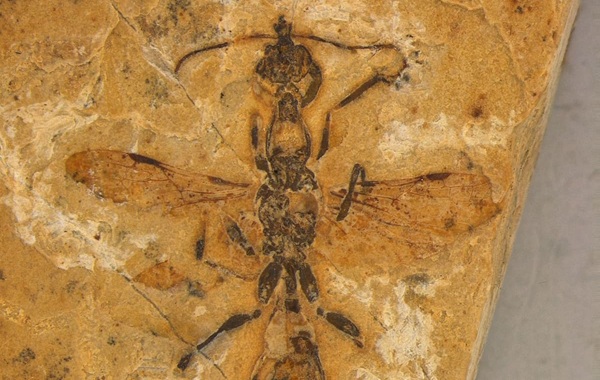
A fossilized ant unearthed in northeastern Brazil is rewriting the story of ant evolution. Preserved in limestone and dating back 113 million years, the specimen is now the oldest known ant fossil, according to a new study.
The fossil belongs to the extinct subfamily Haidomyrmecinae, informally known as “hell ants” for their fearsome appearance and unusual, vertically articulating jaws. The new species will help us better understand how ants diversified and spread globally during the Cretaceous period.
“Our team has discovered a new fossil ant species representing the earliest undisputable geological record of ants,” said author Anderson Lepeco.
“What makes this discovery particularly interesting is that it belongs to the extinct ‘hell ant,’ known for their bizarre predatory adaptations. Despite being part of an ancient lineage, this species already displayed highly specialized anatomical features, suggesting unique hunting behaviors.”
A fossil unlike any before
“Even though there have been hell ants described from amber, this was the first time we could visualize this in a rock fossil,” said Lepeco. The ant was found encased in limestone in Brazil’s Crato Formation, a fossil-rich geological deposit renowned for exceptional preservation.
“This finding highlights the importance of thorough examination of existing collections—private or in museums—and brings a spotlight to Brazilian paleontology and the underexplored fossil insect fauna of the country,” said Lepeco
The team produced a 3D reconstruction of the fossil using micro-computed tomography imaging, revealing remarkable anatomical features. Unlike modern ants with mandibles that swing side to side, this ancient hell ant had forward-projecting jaws and a horn-like projection on its head—ideal for pinning prey.
The features of this fossil resemble the jaw fossils of hell ants found in Burma, signifying that these ants were probably much more widespread during the Cretaceous than originally thought.
The existence of such a specialized hell ant in South America places it in conflict with previously defined constraints of ant biogeography in Eurasia. This suggests that there was ant dispersal across continental landmasses long before the fragmentation of Gondwana.
Implications for paleobiology and evolution
This finding provides insight into new phenomena regarding what evolutionary pressures could have acted upon early ants to develop such distinct predatory traits.
It is worth noting that these findings serve as a foundation for new research within modern imaging technologies, specifically regarding the fossil record and revealing concealed anatomical details of specimens that were previously thought to be out of reach.
“While we expected to find hell ant features, we were shocked by the characteristics of its feeding apparatus,” said Lepeco.
“Finding such an anatomically specialized ant from 113 million years ago challenges our assumptions about how quickly these insects developed complex adaptations. The intricate morphology suggests that even these earliest ants had already evolved sophisticated predatory strategies significantly different from their modern counterparts,” he concluded.
Source: Interesting Enginering
Sustainable lithium extraction gets a boost with game-changer artificial lily pads
113 million years: Oldest-ever fossil of ‘hell ant’ reveals ancient predatory traits