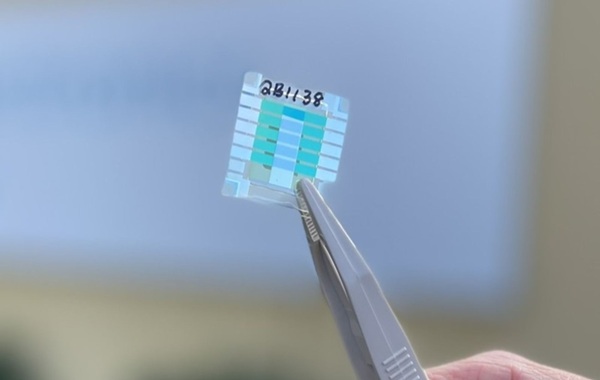
World’s First Quantum Battery: The Remarkable Device That Charges Faster as It Gets Larger
In the world of conventional electronics, a universal truth has always remained: the bigger the bucket, the longer it takes to fill. But as quantum physics enters the fray, this logic is being turned upside down. In a landmark breakthrough, scientists have unveiled a “Quantum Battery” that defies classical physics by charging faster the larger its capacity becomes.
This isn’t just an incremental upgrade to the lithium-ion batteries in our pockets; it is a fundamental shift in how humanity interacts with energy. Developed through an international collaboration involving the University of Adelaide and various global research institutes, this prototype has successfully demonstrated the principle of “Superabsorption” in a laboratory setting for the first time.
The Magic of Quantum Superabsorption
Standard batteries—like the ones in your smartphone or Tesla—rely on chemical reactions where each internal cell charges independently. This linear process means that adding more cells inevitably adds more charging time.
Quantum batteries operate on an entirely different plane of existence. By utilizing “Quantum Entanglement,” the molecules within the battery lose their individual identity and begin to act as a single, collective unit.
The Collective Effect: Because these molecules are entangled, they “work together” to drink in energy.
The Size Paradox: Here is the kicker: the more energy-storing units you add to the system, the more powerful the collective interaction becomes. This means a massive battery designed for a city could, theoretically, reach a full charge significantly faster than a tiny battery designed for a wristwatch.
Why This Changes the Global Landscape
The validation of this technology marks the end of “science fiction” and the beginning of a new engineering reality. The implications are staggering:
Instantaneous EV Charging: The primary hurdle for electric vehicles today is the “wait time” at charging stations. A quantum-powered car could potentially go from 0% to 100% in the time it takes to plug in the nozzle, effectively matching or beating the convenience of gasoline.
Wireless Light-Charging: The current prototype was charged using laser light. This suggests a future where our devices don’t need cables at all; they could harvest energy from ambient light or targeted laser beams while we are on the move.
Stabilizing the Grid: Renewable energy sources like solar and wind are often criticized for their intermittency. Large-scale quantum batteries could act as “instant sponges,” soaking up massive surges of green energy during peak production hours and releasing it precisely when needed.
The Road Ahead: From Lab to Life
While we are currently in the “proof-of-concept” stage—similar to the Wright Brothers’ first flight—the proof is undeniable: Superabsorption works at room temperature. The next challenge for researchers is to find ways to maintain these quantum states for longer periods without “decoherence” (the loss of quantum properties).
We are witnessing the birth of a new era. For decades, we have been trying to pack more chemicals into smaller boxes. Now, we are learning to rewrite the laws of the universe to ensure that energy is not just stored, but harvested at the speed of light.
Source: Interesting Engineering
World’s most advanced supercomputers decode nuclear reactor turbulence to advance safety
World’s First Quantum Battery: The Remarkable Device That Charges Faster as It Gets Larger