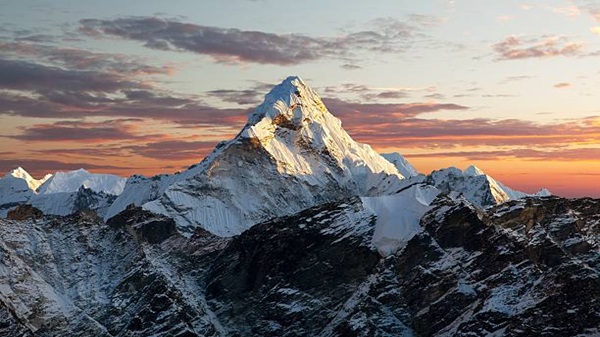
Why Is Mount Everest Growing? The Truth Behind Its Anomalous Elevation
The Uplift Mechanism of Mount Everest: Erosion Fuels Growth
Mount Everest stands between 15 to 50 meters (50 to 165 feet) taller due to uplift caused by a nearby eroding river gorge. Researchers from UCL have discovered that this uplift is continuously increasing Everest’s height. The erosion of a river network, located 75 kilometers (~50 miles) away, is carving a deep gorge, allowing the mountain to spring upward by as much as 2 millimeters a year. Over 89,000 years, this process has elevated Everest’s height significantly.
Everest’s Anomalous Elevation: The Role of Isostatic Rebound
At a towering 8,849 meters, Everest rises 250 meters above neighboring Himalayan peaks. This anomaly can be attributed to isostatic rebound, where the loss of mass from a nearby river erosion causes the Earth’s crust to “float” upwards. This gradual uplift has been pivotal in Everest’s extraordinary height, distinguishing it from other nearby peaks like K2 and Kangchenjunga.
Continuous Growth: The Impact of the Arun-Kosi River System
The ongoing uplift of Mount Everest stems from the merging of the Arun and Kosi Rivers, which carved out a massive gorge over millennia. This geological process, called drainage piracy, intensified erosion, increasing Everest’s height by 15 to 50 meters over the last 89,000 years. The study’s co-author, Adam Smith, notes that this unique river system’s erosion continues to push Everest higher.
Neighboring Peaks: How Everest’s Growth Affects Lhotse and Makalu
The uplift caused by isostatic rebound isn’t limited to Everest. Nearby peaks, Lhotse and Makalu, also experience this vertical growth, with Makalu—being closer to the Arun River—experiencing slightly higher rates of uplift. This suggests that erosion-driven uplift is playing a key role in shaping the region’s highest peaks.
Erosion and Uplift: Unraveling the Himalayan Uplift Dynamics
The researchers discovered that 89,000 years ago, the Arun River’s connection with the Kosi River network increased the erosive power of the landscape. This triggered more land loss and accelerated the uplift of Mount Everest and its neighboring peaks. Lead author Dr. Xu Han emphasized that Everest’s changing height is a direct reflection of the dynamic interactions between erosion and the Earth’s mantle pressure.
By understanding these forces, scientists have uncovered the hidden mechanism behind the ongoing rise of the world’s tallest mountain, revealing the intricacies of Himalayan uplift.
Source: Why Is Mount Everest Growing? The Truth Behind Its Anomalous Elevation
Is Earth’s Crust Secretly Oozing into the Planet’s Depths?