What Secrets Did South African Astronomers Uncover About Pluto?
When the International Astronomical Union reclassified Pluto as a dwarf planet in 2006, the world was surprised. Despite the change, Pluto continues to be a subject of intense study. Now classified as a dwarf planet in the Kuiper Belt, it’s an essential target for understanding the outer reaches of our solar system.
South African astronomers from the University of the Western Cape (UWC) are joining forces with NASA to explore Pluto further, contributing to crucial new insights into the dwarf planet’s atmosphere.
NASA’s New Horizons and Pluto’s Atmospheric Mysteries
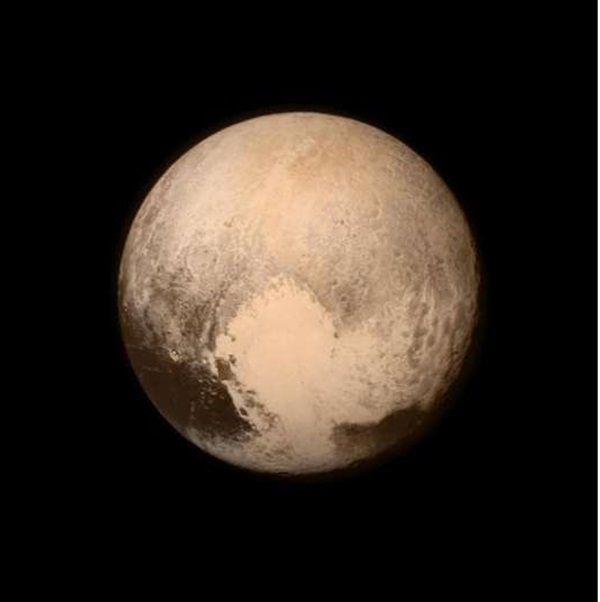
NASA’s New Horizons spacecraft first revealed close-up images of Pluto in 2015, showcasing its surface and atmosphere. However, there’s much more to learn. One of the pressing questions is how Pluto’s atmosphere will evolve as the dwarf planet moves farther from the Sun, potentially freezing over in the coming years.
Our team at UWC has been invited to observe a rare phenomenon that will offer critical data on this process—an occultation event. This unique opportunity allows us to analyze Pluto’s atmosphere as it dims the light of a distant star.
The Significance of the Occultation Event
An occultation occurs when a celestial object passes in front of a star, temporarily blocking its light. In this case, Pluto’s atmosphere acts as a magnifying lens, providing astronomers with a brief window to study it. This rare event could hold the key to understanding whether Pluto’s atmosphere is beginning to collapse and freeze.
UWC’s Role: Cutting-Edge Technology and Innovation
We utilized a state-of-the-art 0.5-meter Newtonian telescope, a significant asset generously provided by the University of Virginia. Preparation was no small task, involving telescope setup, software integration, and modifications, including the use of 3D printing technology to adapt the telescope to our specific needs.
Challenges and Triumphs in Capturing Pluto’s Atmosphere
On August 4, 2024, our team, alongside NASA and University of Virginia collaborators, set up at a remote location in South Africa’s Northern Cape province. With temperatures dipping to 0°C and clouds threatening to obscure our view, we braced ourselves. Miraculously, the sky cleared at the right moment, allowing us to capture the fleeting occultation event.
Despite an unexpected wind gust shaking the telescope during the observation, we believe the data may still provide valuable information. Processing the data to eliminate noise is our next step.
What the Occultation Tells Us About Pluto’s Atmosphere
As Pluto passed in front of the star, its atmosphere absorbed the light, causing the star to dim. A central flash—a brief brightening—revealed Pluto’s atmosphere acting as a lens, providing insights into its temperature and composition. While it’s too early to draw conclusions, this observation offers a glimpse into whether Pluto’s atmosphere is shrinking.
Looking Ahead: Future Observations and Next Steps
Though this first attempt presented challenges, we are optimistic about future observations. If the data doesn’t yield immediate results, another occultation opportunity is expected next year. This time, we’ll be fully prepared, not just for wind surges but for the exciting discoveries awaiting us.
Source: What Secrets Did South African Astronomers Uncover About Pluto?
Michio Kaku’s Warning: Could Voyager 1 Be Detecting the Key to Creation?
Michio Kaku’s Warning: Could Voyager 1 Be Detecting the Key to Creation?