Were Early Hominins Crafting Ivory Tools 400,000 Years Ago?
Unearthing Medzhibozh A: A Lower Paleolithic Ivory Workshop
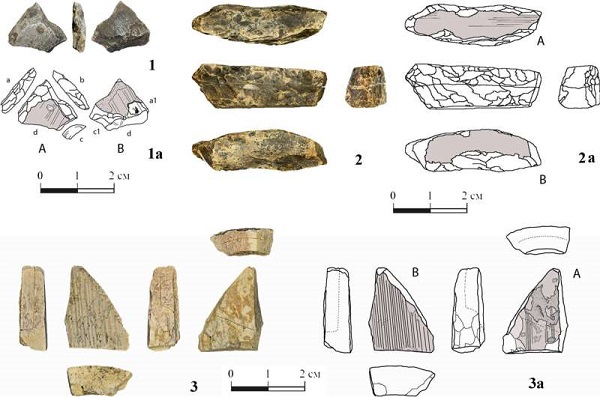
In 2011, archaeologists discovered the Medzhibozh A site in the Southern Bug River valley near Medzhybizh, Ukraine. Since then, intermittent excavations (2011–2018) have revealed a rich sequence of hominin occupation, spanning Marine Isotope Stages (MIS) 35–21 through MIS 11. Among the modest faunal remains and lithic artifacts, researchers identified 24 ivory fragments—eleven of which display clear evidence of deliberate modification.
Dating the Discovery: Electron Spin Resonance Confirms MIS 11 Age
Using electron spin resonance (ESR) dating alongside geological and paleontological analyses, the team placed the ivory-bearing layers at roughly 400,000 years ago (MIS 11). This pushes back the earliest known ivory modification by nearly 280,000 years—far earlier than the previously recognized 120,000-year-old Neanderthal context in Crimea.
Intentional Ivory Knapping: Signs of Early Experimental Toolmaking
Of the eleven modified fragments, six show knapping scars, three bear evidence of bipolar-on-anvil percussion, two qualify as flakes, one resembles a core, and one clearly functions as a point. Remarkably, these processing techniques mirror those used on contemporary stone tools at Medzhibozh A—rotation, edge trimming, retouch, and bipolar-on-anvil knapping—indicating that early hominins experimented with ivory using familiar methods.
Could this represent an adaptive response to local resource scarcity?
Ivory’s Limitations: Hardness, Fragility, and Practicality
Ivory’s Mohs hardness—2 for dentin and 3–4 for cement layers—pales in comparison to 4–5 for siliceous limestone and 7–8 for flint or quartz. Consequently, small ivory tools are fragile and inefficient compared to their stone counterparts. Why, then, would hominins invest time in producing miniature ivory implements that offered limited functional value?
Beyond Utility: Play, Practice, and Social Learning
Drs. Stepanchuk and Naumenko propose two intriguing hypotheses:
Experimental Resource Use: A situational shortage of high-quality lithic raw materials may have driven hominins to test ivory as an alternative.
Imitative Behavior and Socialization: The miniature scale and playful form of some ivory pieces suggest they might have served as “pretend” tools—perhaps crafted by children learning knapping techniques from adults.
What does this tell us about social learning and the role of play in early hominin groups?
Challenging Assumptions: Authenticity and Context
The authors acknowledge potential challenges: misdating of layers or natural processes mimicking tool marks. However, the complexity and consistency of the modification sequence strongly argue for intentional human agency. Additionally, the stratigraphic integrity of MIS 11 layers makes reworking from younger deposits unlikely.
Implications for Paleolithic Archaeology and Human Evolution
This discovery compels us to reconsider the timeline and motivations behind material innovation in early human history. If hominins in Eastern Europe were experimenting with ivory 400,000 years ago, then:
Technological Flexibility: Early toolmakers possessed the cognitive ability to adapt conventional knapping techniques to unconventional materials.
Cultural Complexity: The potential for socialized “play” tools hints at rich interpersonal dynamics and teaching practices among Lower Paleolithic communities.
Regional Resource Strategies: Local raw material scarcity may have spurred technological creativity, underscoring the importance of environmental context in human evolution.
Questions to Ponder
How widespread was ivory experimentation among other Lower Paleolithic populations?
Can we identify similar “play” or training tools in other early archaeological sites?
What does early ivory use reveal about the cognitive and social capacities of hominins 400,000 years ago?
As we continue to uncover the deep past, the Medzhibozh A ivory artifacts remind us that innovation, experimentation, and social learning have shaped our lineage for hundreds of thousands of years.
Source: Were Early Hominins Crafting Ivory Tools 400,000 Years Ago?