Was There an Advanced Civilization 10,000 Years Ago?
Could Göbekli Tepe Unlock the Secrets of a Lost Empire?
What if everything we’ve been taught about the dawn of civilization is a lie—or at least a half-truth? Imagine a world more than 10,000 years ago, when retreating Ice Age glaciers gave way to sophisticated societies. Instead of scattered bands of hunter-gatherers, picture organized communities that built stone cities, charted the stars, and harnessed nature’s power with engineering marvels rivaling later epochs like Egypt or Mesopotamia. Recent discoveries—from monuments older than history itself to submerged ruins and enigmatic artifacts—are challenging our traditional timeline. Could an advanced civilization have flourished millennia before we ever imagined? What clues have we missed?
Göbekli Tepe: Prehistoric Megalithic Marvels & Advanced Astronomical Alignments
In the rolling hills of southeastern Turkey, Göbekli Tepe emerges as a revolutionary site that shatters conventional wisdom. Unearthed in 1994, its imposing T-shaped limestone pillars—some reaching 18 feet in height and weighing up to 16 tons—date back to 9600 BCE, nearly 7,000 years before Stonehenge or the pyramids of Giza. These intricately carved megaliths, adorned with reliefs of lions, foxes, and scorpions alongside abstract symbols, suggest a complex cosmology and deliberate planning. Archaeologist Klaus Schmidt maintained that Göbekli Tepe functioned as a temple complex, a sacred hub requiring the coordinated effort of hundreds or even thousands of laborers. Could these alignments with constellations like Taurus indicate that its creators were not merely building monuments, but also mapping the heavens? What secrets remain hidden beneath its 5% exposed surface?

The Great Sphinx: Rethinking Prehistoric Advanced Civilization & Engineering
Shift your gaze to Giza, where the Great Sphinx silently guards its secrets. Traditionally dated to 2500 BCE and attributed to Pharaoh Khafre, some researchers challenge this timeline. In the 1990s, geologist Dr. Robert Schoch observed water erosion patterns—deep, vertical fissures carved by heavy rainfall—suggesting that the Sphinx could predate dynastic Egypt by thousands of years. During a period when the Sahara was a lush savanna, might a long-forgotten people have tamed the Nile and engineered these monumental structures? Moreover, precise cuts in the megalithic blocks of the Valley Temple and alignments with Orion’s Belt circa 10,500 BCE prompt us to reconsider: could an advanced precursor civilization have laid these foundations, their traces later obscured by floods and scavengers?
Drowned Worlds & Submerged Ruins: Atlantis, Yonaguni, and Lost Advanced Cities
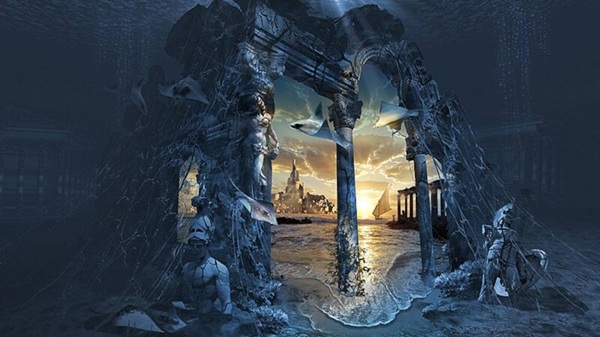
Venture beneath the waves, where the ocean conceals enigmatic remnants of past glory. Off Japan’s Yonaguni Island, divers in 1986 discovered a stepped pyramid—80 feet tall with terraces, right angles, and stairways carved into sandstone. Dated to between 10,000 and 12,000 years ago, this structure appears too geometrically precise to be a natural formation. Marine geologist Masaaki Kimura proposes that it once served as a ceremonial complex, possibly linked to the Jomon culture. Similarly, India’s sunken city of Dwarka—unearthed off Gujarat’s coast in 2001 with walls, pillars, and pottery found 120 feet underwater—echoes the legends of Lord Krishna’s golden city. Do these submerged cities signal thriving trade networks and urban centers that vanished beneath rising post-Ice Age seas? How many more lost metropolises lie waiting to be rediscovered?

The Younger Dryas Cataclysm: Cosmic Impact & the Collapse of a Lost Advanced Civilization
What catastrophic event could have eradicated such sophisticated societies? Enter the Younger Dryas—a dramatic climatic shift around 12,800 years ago. Geologists like James Kennett point to a cosmic impact—a comet or asteroid swarm—that unleashed widespread fire, floods, and a millennium-long deep freeze. Evidence such as nanodiamonds from impact melt, soot layers in Greenland ice cores, and a sudden decline of megafauna like mastodons supports this theory. Visionaries like Graham Hancock tie these events to the builders of Göbekli Tepe, suggesting that survivors of this lost advanced civilization etched their legacy into stone as a warning to future generations. Could the echoes of the Biblical deluge, the Sumerian Epic of Gilgamesh, and even Plato’s Atlantis be memories of a true cosmic catastrophe?
Ancient Tools & Treasures: Uncovering Lost Technological Mastery & Prehistoric Innovation

The clues extend beyond monumental structures to the tools and artifacts left behind. The exquisitely balanced Schöningen spears from Germany, dating to 300,000 years ago, and 12,000-year-old obsidian blades from Çatalhöyük hint at a technological prowess that challenges our current understanding of early human capability. Moreover, predynastic Egyptian vases—so thin and symmetrical that modern craftsmen struggle to replicate them—reveal a mastery of stone craftsmanship that defies our assumptions about “primitive” societies. Even the art in France’s Chauvet Cave, with its 36,000-year-old depictions of rhinos and lions, displays a sophistication in perspective and shading that rivals later artistic traditions. Do these artifacts represent isolated advances, or are they remnants of a broader, lost epoch of innovation?
The Ice Age Enigma: Uncovering Hidden Ruins & the Vanishing of Advanced Prehistoric Societies

If such advanced cultures once flourished, why does tangible evidence remain so elusive? The Ice Age itself proved a ruthless eraser; rising sea levels—up to 400 feet after 12,000 BCE—drowned vast stretches of coastline, likely swallowing entire cities. Earthquakes, volcanic activity, and centuries of decay further obscured the remains of these early societies. Moreover, the absence of widespread writing meant that their achievements were passed down orally, later transformed into myths of gods and giants. Could deliberate burial, as seen at Göbekli Tepe, have been an intentional act to hide sacred knowledge from a crumbling world? What mysteries lie hidden beneath layers of sediment, ice, and water?

A Past Unravelled: Rewriting History & Embracing the Possibility of Advanced Prehistoric Civilization
As of March 12, 2025, the accumulating evidence forces us to reconsider our historical narrative. Satellite scans hint at anomalies under Antarctica’s ice, and LiDAR studies in the Amazon reveal lost cities with plazas and canals that defy jungle growth patterns. Genetic research on 12,000-year-old skeletons from the Americas even suggests migrations from previously unknown origins. Each discovery challenges the neat 5,000-year timeline of civilization that we’ve long accepted. Rather than embracing simplistic models, should we ask ourselves: Have we underestimated the ingenuity of our ancestors? Could they have been sophisticated astronomers, master engineers, and intrepid seafarers?

The evidence—from Göbekli Tepe’s towering pillars to the water-worn mysteries of the Sphinx and Yonaguni’s submerged terraces—invites us to question everything. For every skeptic demanding a “smoking gun,” there is a curious mind asking: What if our past was far richer and more complex than we ever imagined? Grab a shovel, fire up sonar technology, and chart the stars anew. The past is a locked vault, and every new discovery might just be the key to unlocking a lost chapter of human genius.
What hidden truths will future explorations reveal about this enigmatic advanced civilization?
Source: Was There an Advanced Civilization 10,000 Years Ago?
Woman Found Buried in Chains in Jerusalem was Byzantine Nun
Was There an Advanced Civilization 10,000 Years Ago?