
Unique Human Artifacts Dating Back 430,000 Years Have Been Discovered in Greece
An international team of scientists has discovered unique artifacts in Greece dating back approximately 430,000 years. The oldest known man-made wooden tools were found at the Marathusa 1 archaeological site.
The wood not only bears the marks of skillful craftsmanship, but also shows the teeth marks left by predatory animals.
An old log . While tools from Greece are considered the earliest portable wooden tools, an even older example of wood use exists in Africa.
At the Kalambo Falls archaeological site in Zambia, scientists have found worked wood dating back approximately 476,000 years. However, these are logs. They were not used for tools or hunting, but as building materials in the construction of the earliest wooden structures.
Archaeological excavations at the Marathus I site in the Peloponnese have caused a sensation: two crafted wooden objects made by ancient people during the Middle Pleistocene period have been found.
One of the tools was made of alder, the other of willow or poplar. The find was perfectly preserved thanks to the unique conditions of the lake environment. This discovery is unique because wood, unlike stone, rarely survives to the present day.
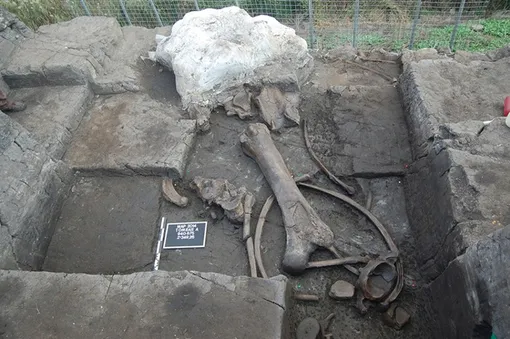
Hunters and predators on the shore of an old lake.
The findings at Maratusa 1 not only push back the chronology of woodworking technology but also shed light on the challenging daily lives of human ancestors: not all marks on the wood were made by humans.
Researchers discovered deep grooves in one of the large pieces of alder, which, according to analysis, belonged to a large predator, likely a bear.
These tracks were probably left during a fight for prey: bears. The human species was brave enough to defend itself against bears with such imperfect tools.
 discovery
Professor Katerina Harvati, one of the study’s co-authors, states : “We have discovered the oldest known wooden tools to date. This once again demonstrates the extraordinary preservation conditions in the Maratusa 1 area. The fact that large predators left their tracks next to a slaughtered elephant suggests fierce competition between bears and ancient humans.”
Findings from the Maratusa 1 excavation site have shown that ancient people not only possessed advanced woodworking skills but also constantly struggled for survival against dangerous animals, displaying extraordinary courage and intelligence.
After examining the surfaces of the pieces under a microscope, researchers noticed clear signs that the wood had been cut and chopped. The alder piece showed signs of wear, indicating heavy use.
According to experts, this tool may have been used to dig into the soft soil on the shore of an ancient lake or to strip bark from trees. Stone tools and bones of elephants and other animals were also found nearby. This suggests that this was a butchery area half a million years ago.
Source : Unique Human Artifacts Dating Back 430,000 Years Discovered in Greece