These Mushrooms Invented A Way That Made Them Immortal
In search of the reason for the longevity of these mushrooms, scientists had to look deep into their structure. Scientists have uncovered the secret of mushrooms living for hundreds of years.
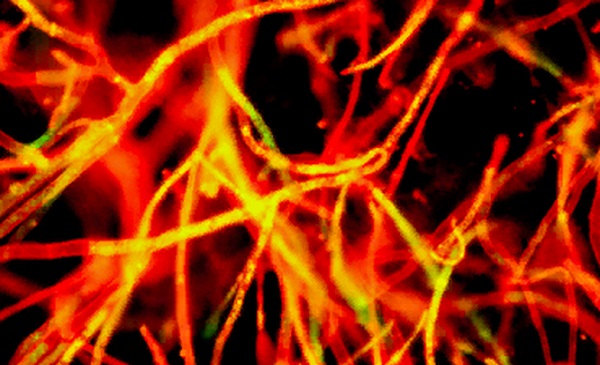
Researchers at Wageningen University in the Netherlands set out to elucidate the mechanism of multicellular growth in filamentous fungi. As a result, they came up with a new hypothesis explaining how certain types of fungi contain random mutations that accumulate in their filamentous mycelium.
How mushrooms live forever
These filamentous fungi spend most of their long lives with two separate nuclei, each containing half of the complete set of chromosomes. Only a moment before spore formation, two haploid nuclei join in a brief union for asexual reproduction.
Mutations in any nucleus deprive the affected mycelium of the ability to connect its spindle-shaped filaments to others, causing other mycelia to pay the price. Given enough time, the mutated mycelium will dominate the fungus, reducing its ability to spore at all.
First discovered in the fast growing mold Neurospora crassa in 2016, the mutated nuclei have been dubbed “tricksters” in that the mutated mycelium cannot begin asexual fusion with its own filaments to form spores, but can attach itself to another fully functioning mycelium with which they can collide.
This is somewhat similar to the appearance of cancer in other organisms, when mutant cells, obsessed with the desire to reproduce, grow so fast that they cause harm to the animal in which they originated, often causing death.
The authors of the new work compared fast-growing molds and long-lived fungal mycelium, which can live for hundreds of years. They suggest that the latter use a special type of cell division to protect themselves from selfish mutants, allowing them to live long lives without accumulating too many genetic errors.
In this form of cell division, one of the haploid nuclei of the filament is isolated until the cell can verify its quality – and fusion of the filaments becomes possible.
“Both cores are constantly testing each other for their ability to merge. This is a test in which nuclei with mutations in fusion genes fail, the scientists explain. “If a cell cannot fuse, this means a dead end for the cell and, therefore, the death of its nucleus.”
Source: These Mushrooms Invented A Way That Made Them Immortal
Enigmatic Ancient Kushan Empire Writing System Finally Deciphered