
The Secret in the Nest: Why Scientists Built a Life-Size Dinosaur Home—and the Results are Jaw-Dropping
For over 70 million years, a mystery lay buried in the sands of the Late Cretaceous. How did the bird-like, feathered Oviraptors actually hatch their eggs? Were they devoted “sitters” like modern hens, or did they leave their young to the mercy of the earth like crocodiles?
To solve this prehistoric puzzle, researchers didn’t just look at fossils—they went back in time. By constructing a full-scale, life-size dinosaur nest, complete with a model parent and resin-cast eggs, they uncovered a reproductive strategy that no one saw coming.
Reconstructing a 70-Million-Year-Old Mystery
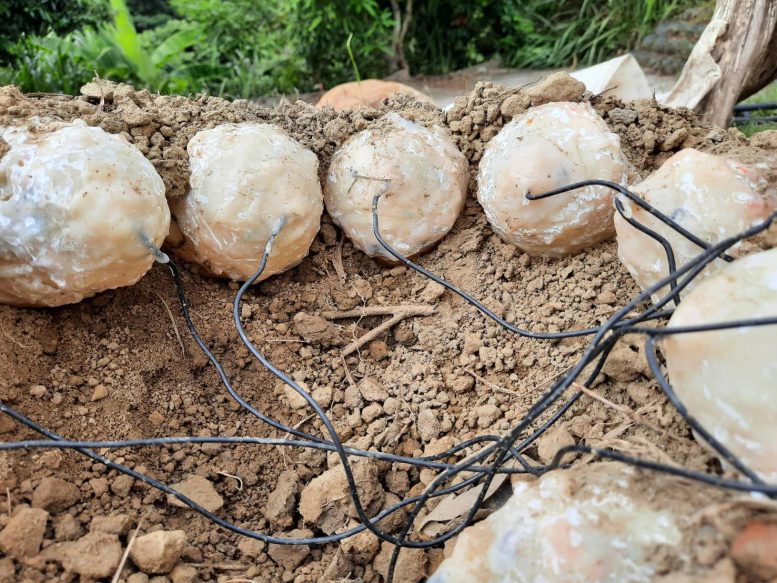
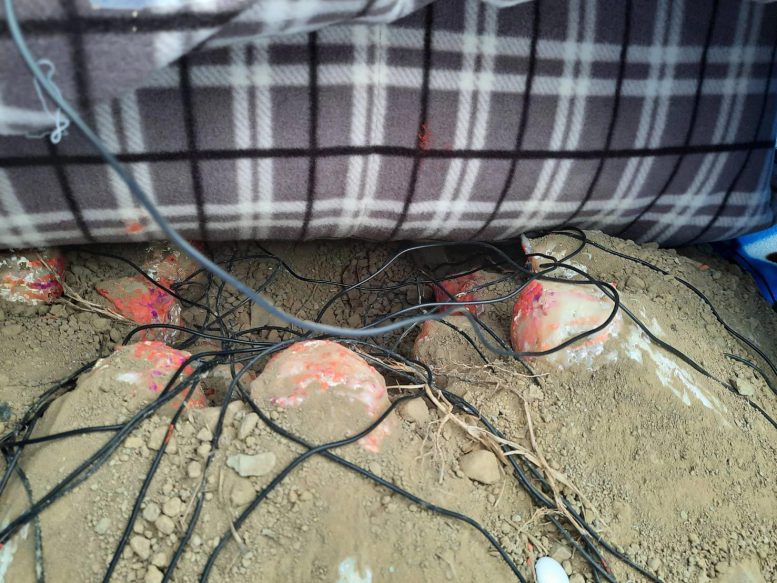
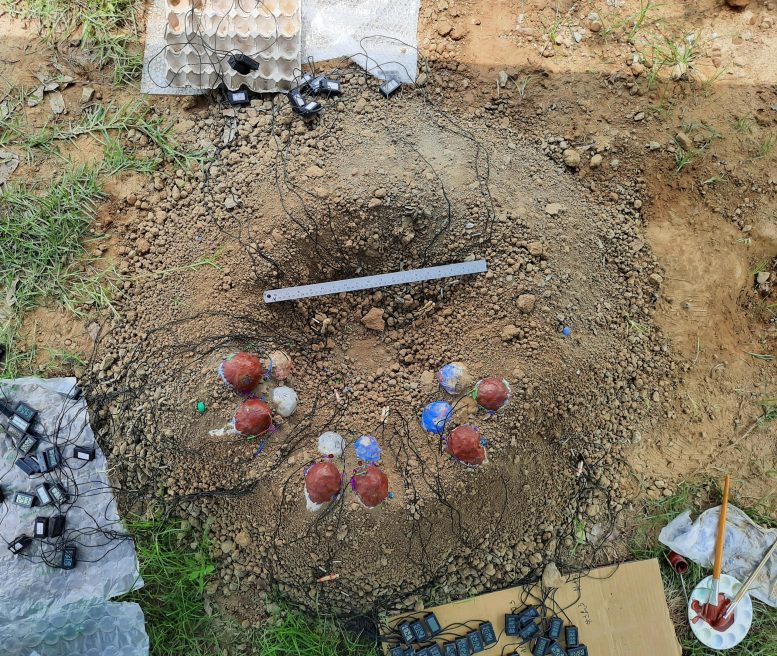
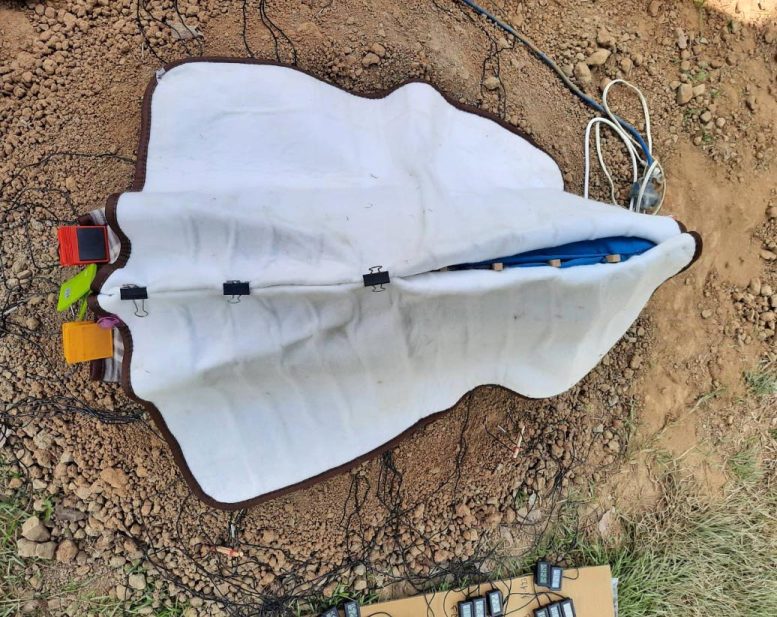
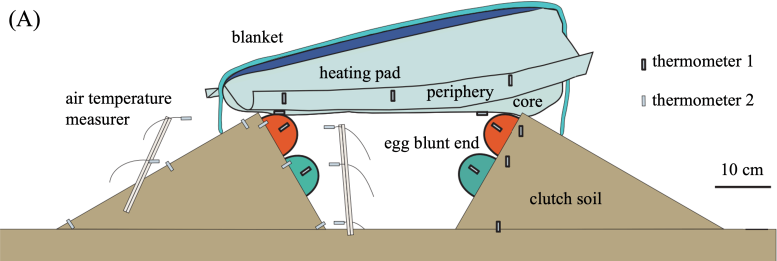
The team, led by experts from Taiwan, focused on Heyuannia huangi, a 1.5-meter-long dinosaur. They didn’t just build a pile of dirt; they recreated the complex, multi-ringed structure of an Oviraptor clutch. Using polystyrene, wood, and specialized resin to mimic the thermal properties of real dinosaur eggs, they put “parenting” to the ultimate test.
The “Inefficient” Parent?
The most surprising discovery? The Oviraptor was a “bad” incubator by modern standards. In modern birds, the parent must touch every egg to transfer body heat (a process called TCI). But the Oviraptor’s nest was designed like a donut. Because of this circular layout, the adult couldn’t cover all the eggs at once. In cooler environments, the researchers found a staggering 6°C temperature gap between the inner and outer rings.
This means that in a single nest, some siblings would be ready to hatch while others were still weeks away—a chaotic and risky way to start life.
The Sun: The Unseen Co-Parent
However, the study revealed a brilliant evolutionary trick. The Oviraptor wasn’t working alone; it was partnering with the sun. In warmer climates, the temperature difference between the eggs nearly vanished. The open-air design of the nest allowed solar radiation to do the heavy lifting. The Oviraptor wasn’t just a heater; it was a thermal manager, using a mix of its own body warmth and environmental heat to bring its young into the world.
Why This Changes Everything
As Dr. Tzu-Ruei Yang explains, “Modern birds aren’t ‘better’ at hatching eggs. They just have a different way.” This experiment proves that Oviraptors were at a fascinating evolutionary crossroads—moving away from buried reptilian nests but not yet fully committed to the intense brooding of modern birds. It’s a vivid reminder that in the world of dinosaurs, survival wasn’t just about being the strongest—it was about being the smartest architect.
Source: SciTechDaily
Did Early Farmers in Cornwall Live Alongside Mesolithic Hunter-Gatherers?
The Secret in the Nest: Why Scientists Built a Life-Size Dinosaur Home—and the Results are Jaw-Dropping