Scientists test drone with nervous system, transmits real-time data via light
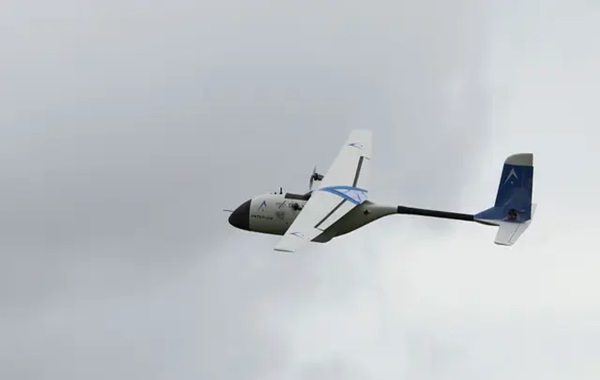
Scientists are testing a drone fitted with its own “nervous system,” which they claim can keep it operating in the sky for longer.
A team of experts at the University of Southampton developed the innovative system.
It uses advanced optical fibers designed to enhance operational efficiency in various applications.
One key benefit of this system is its ability to significantly decrease the frequency of inspections required for maintenance.
This reduction in inspection needs not only saves time and resources but also increases safety and reliability in its operational environment.
Cargo-carrying drones are required to make regular pitstops for manual safety checks, which limits their use and can increase operating costs.
Nervous system
The optical fiber system created at Southampton makes drones work better by constantly checking their structure, similar to how nerves function in the body.
The leading researchers, Dr. Chris Holmes and Dr. Martynas Beresna from the Optoelectronics Research Centre, explained this.
“This is a kind of nervous system for drones,” said Dr Holmes. “It sends back real-time information using light – rather than electricity – which avoids problems that electronic systems have with interference from radio frequencies.”
Dr Beresna added: “This system not only reduces the burden on ground crews but also ensures that drones can operate more safely and efficiently.”
The system employs an optical speckle technique that produces specific images influenced by the optical fiber nervous system signals, effectively translating emotional responses into visual representations.
Dr. Holmes said that AI algorithms can be used to check the health of the drone.
He added: “This speckle system keeps track of the stresses and strains on the drone, helping ground crews spot issues early without needing to land the drone as often for inspections.”
Making drones reliable
Recent tests have demonstrated the potential of the optical fiber system, particularly when utilized in a drone developed by undergraduate students at the University.
This project was part of their degree work under Dr. Bob Entwistle, the director of Soton UAV.
Toby King-Cline, a 23-year-old graduate in aerospace engineering, led a student team working on new drone technology.
He believes this technology could change how many industries use drones.
He added: “The drone was first developed to deliver life-saving equipment like defibrillators in emergencies, but it’s served as an excellent test platform for the optical fiber nervous system.
“What has really excited us is seeing the live data from the fibre system. It showed that the technology could keep drones operational longer without the need for extensive ground crews.”
The University of Southampton team said they hope the technology will make future drones more reliable and cost-effective.
The drone industry is expected to contribute up to £45billion across various sectors by 2030, according to PwC, with £2.8billion from transportation and logistics alone.
“There’s lots of commercial potential for this technology,” added Dr Holmes. “We’re aiming for commercialisation by 2025.”
Academics behind the technology were supported by the University’s startup accelerator program, Future Worlds.
Source: Interesting Engineering
Ultra-thin wonder material absorbs 99% electromagnetic waves with ease
Scientists test drone with nervous system, transmits real-time data via light