Scientists Harness E-Waste Gold to Convert CO2 into Useful Compounds
A novel method developed by a Cornell-led research team offers a dual solution to two pressing environmental problems: e-waste recycling and carbon dioxide (CO2) reduction.
The team’s innovation recovers gold from discarded electronics and uses it as a catalyst to transform CO2, a greenhouse gas, into useful organic materials.
With approximately 50 million tons of electronic waste generated annually—and only 20% of it recycled—this approach could help alleviate the environmental burden, according to Amin Zadehnazari, lead researcher and postdoctoral scientist in the lab of Professor Alireza Abbaspourrad at Cornell University.
Mining gold from e-waste
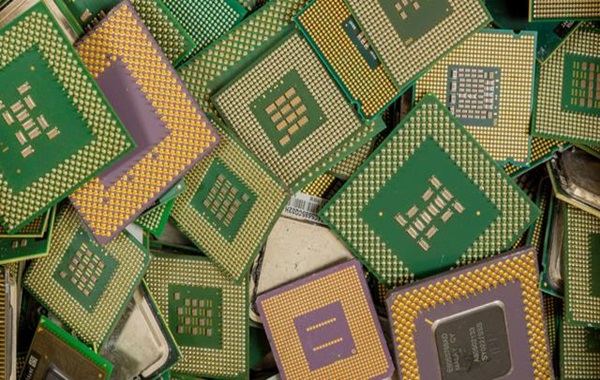
Electronics waste is a surprisingly rich source of gold, containing at least 10 times more of the metal per ton than natural gold ore. With global e-waste projected to reach 80 million metric tons by 2030, efficient recovery methods are increasingly crucial.
Zadehnazari synthesized two innovative vinyl-linked covalent organic frameworks (VCOFs), materials designed to extract gold ions and nanoparticles from discarded circuit boards. Among these, one VCOF demonstrated exceptional selectivity, capturing 99.9% of the gold while avoiding other metals like nickel and copper.
“We can use the gold-loaded COFs to convert CO2 into useful chemicals,” Zadehnazari said. “By transforming CO2 into value-added materials, we not only reduce waste disposal demands, we also provide both environmental and practical benefits. It’s kind of a win-win for the environment.”
Traditional techniques for gold recovery often rely on hazardous chemicals like cyanide, posing significant environmental risks. In contrast, Zadehnazari’s method employs chemical adsorption, a safer and more eco-friendly process.
Covalent organic frameworks, known for their porous crystalline structure, offer versatility in applications ranging from energy storage to chemical sensing. Using tetrathiafulvalene (TTF) as a building block, Zadehnazari created a TTF-COF that excelled in gold adsorption due to its sulfur-rich composition, which gold naturally binds to.
The material demonstrated impressive durability, maintaining efficiency over 16 cycles of washing and reuse.
Converting CO2 into organic compounds
The gold-loaded COF also proves valuable in tackling climate change. Under moderate conditions—ambient CO2 pressure and a temperature of 122°F (50°C)—the material facilitates the carboxylation of CO2 into organic compounds. This process not only mitigates greenhouse gas emissions but also creates value-added chemicals, enhancing the method’s environmental impact.
Published in Nature Communications, the study highlights the importance of recovering precious metals from e-waste with high selectivity and minimal environmental harm.
Professor Abbaspourrad emphasized the significance of precision in this process. “Knowing how much gold and other precious metals go into these type of electronics devices, being able to recover them in a way where you can selectively capture the metal you want – in this case, gold – is very important,” Abbaspourrad said.
As e-waste continues to pile up, innovations like this offer hope for a more sustainable future—one where valuable resources are reclaimed and environmental threats are mitigated.
Source: Interesting Engineering
Revolutionary Diamond Creation Method Eliminates the Need for Extreme Pressure
Scientists Harness E-Waste Gold to Convert CO2 into Useful Compounds