Is There More to Alien Life Than Just Oxygen and Methane?
Are Distant Worlds Teeming with Life We’ve Yet to Discover?
Researchers from the University of California, Riverside, have unveiled an innovative method to detect extraterrestrial life using methyl halides. These gases—comprising a methyl group (a carbon atom bonded to three hydrogen atoms) attached to a halogen such as chlorine or bromine—are produced on Earth by bacteria, marine algae, fungi, and some plants. Unlike typical biosignature gases, methyl halides offer a robust and detectable signal, making them a promising target in the search for life on faraway exoplanets.
Hycean Planets: Unconventional Worlds with Deep Oceans and Thick Hydrogen Atmospheres
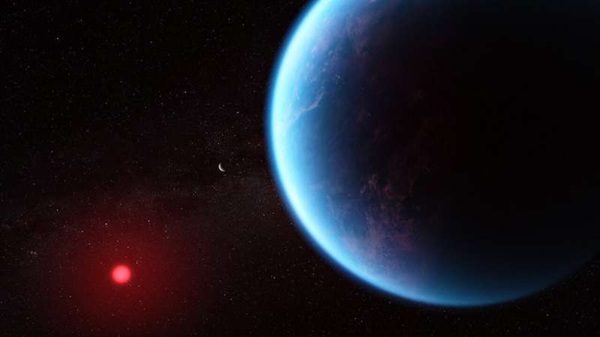
Instead of focusing on Earth-like planets, which are often too small and dim for detailed analysis with current technology, scientists are now setting their sights on Hycean planets. These larger exoplanets orbit small red stars and boast deep global oceans and thick hydrogen atmospheres. While these worlds are inhospitable to humans, they could host anaerobic microbes capable of thriving in extreme environments. Could these unique Hycean conditions be the key to revealing life beyond Earth?
JWST and Infrared Spectroscopy: Detecting Alien Biosignatures Efficiently
The James Webb Space Telescope (JWST) is emerging as a powerful tool in this new approach. By targeting the distinct infrared absorption features of methyl halides, researchers estimate that these biosignatures might be detectable in as few as 13 hours of telescope time—a fraction of the observation period required for gases like oxygen or methane. This efficiency not only reduces costs but also increases the feasibility of scanning multiple exoplanets. How might these advances in infrared spectroscopy transform our broader search for extraterrestrial life?
Future Telescopes and Expanded Research Horizons: The Role of the European LIFE Mission
While JWST currently leads the charge, future missions—such as the proposed European LIFE mission scheduled for the 2040s—promise even faster detection of biosignatures. With LIFE, confirming the presence of methyl halides on exoplanets could take less than a day, dramatically accelerating the pace of discovery. Additionally, researchers are drawing parallels from extreme environments on Earth, such as the Salton Sea, to study other halogenated gases like chloroform. In what ways could these Earth-based studies refine our search strategies for alien life?
The Road Ahead: Questions and Challenges in Exoplanetary Biosignature Research
As scientists continue to push the boundaries of exoplanet research, several critical questions remain. Direct sampling of exoplanet atmospheres is still out of reach, yet advances in telescope technology and innovative detection strategies are steadily closing the gap. If methyl halides are found on multiple exoplanets, might this indicate that microbial life is common throughout the universe? And how will these discoveries reshape our understanding of the origins and distribution of life?
By honing in on methyl halides and targeting Hycean planets, researchers not only refine the search for alien life but also establish a framework for exploring biosignatures in environments previously overlooked. Although humans may never set foot on these distant worlds, the quest to identify and understand life beyond Earth continues to inspire deeper inquiry and technological innovation.
Source: Is There More to Alien Life Than Just Oxygen and Methane?