Iron: China’s humanoid robot gets supercomputer-like brainpower, eagle-eye vision
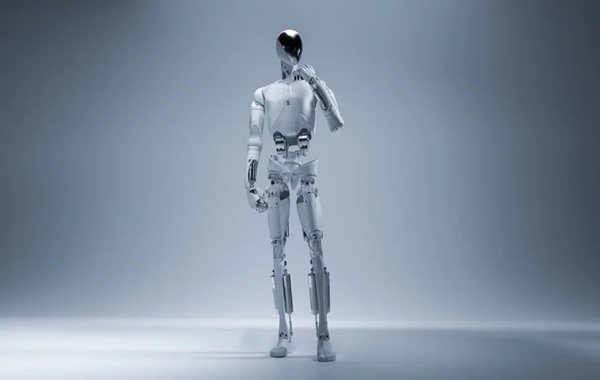
Chinese carmaker Guangzhou Xiaopeng Automotive Technology, or XPENG, has unveiled its updated humanoid robot, Iron.
The humanoid robot is powered by the Turing AI chip, with 60 joints, 200 degrees of freedom, and 3,000 TOPS of processing power.
The unveiling is part of XPENG’s AI Tech Tree strategy, which combines AI, energy solutions, and embodied intelligence to build a future ecosystem of smart EVs, humanoid robots, and flying vehicles.
In November, the electric vehicle (EV) manufacturer went the Tesla way by unveiling Iron, its first humanoid robot. XPENG reported that Iron is already active on its automotive production lines, helping assemble its upcoming EVs.
Robotics meets autonomy
The firm claims that its humanoid robot showcases cutting-edge advancements in robotics, blending design, mobility, AI, and automotive technology.
The robot stands 5’8″ tall and weighs 154 pounds (70 kilograms) it is designed with a human-like structure; Iron features 1:1 proportional hands and 22 degrees of freedom, allowing for precise and flexible object manipulation.
According to XPENG, its advanced mobility is driven by end-to-end large models and reinforcement learning, enabling smooth, natural movements and stable walking without the jerky motions typical of traditional robots.
Iron’s speech interaction system is adapted from XPENG’s intelligent cockpit, allowing for natural conversations through active reasoning and logical thinking. It also integrates XPENG’s self-driving technology, using the same core AI systems found in the brand’s electric vehicles, thereby bridging the gap between the automotive and robotics ecosystems.
Smart assistant unleashed
Under the hood, Iron runs on XPENG’s proprietary “Turing AI chip” and “Tianji AIOS” software system. Together, these deliver high-level intelligence for perception, movement, and interaction. The firm claims Iron’s system now features 3,000 TOPS of processing power.
At its 2024 launch, the firm stated that the Turing chip can process AI models with 30 billion parameters and complete over 2,700 functional verifications within 40 days—three times faster than the industry standard. This level of performance enables Iron to think, adapt, and respond to a variety of tasks with flexibility and human-like decision-making.
The robot’s “Eagle Eye” visual system, powered by advanced cameras, ensures precise environmental awareness and decision-making capabilities. “It also features a 720° AI vision system that can also be found in XPENG’s autonomous driving technology,” said the firm in a statement.
Iron also boasts high levels of dexterity through XPENG’s custom high-degree-of-freedom robotic hands. Its mechanical and electronic systems are fully customized, featuring self-developed actuators and joints, which provide high mobility and adaptability.
According to XPENG, Iron represents its vision for a deeply integrated future of smart mobility and intelligent robotics. XPENG’s ambitions extend well beyond manufacturing. The company envisions Iron serving as a personal assistant, handling tasks such as administration and customer service across retail spaces, offices, and even homes.
With this broad vision, XPENG enters a competitive landscape alongside major tech players like Tesla, whose Optimus robot also leverages autonomous driving technologies. However, XPENG has faced industry criticism, with some observers noting similarities between Iron’s design and those of other existing robotics platforms.
Source: Interesting Engineering
Chinese scientists’ AI tool generates, edits lifelike human actions in 3D motion
Iron: China’s humanoid robot gets supercomputer-like brainpower, eagle-eye vision