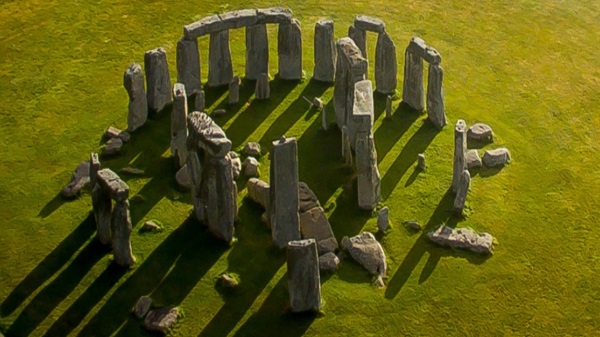
How Did Stonehenge’s Altar Stone Make a 500-Mile Journey?
New research has revealed that the so-called Altar Stone was transported all the way from Scotland, a journey of over seven hundred fifty kilometers (four hundred sixty-six miles), to be installed in the monument located in southern England.
We still don’t know how the Neolithic humans who erected Stonehenge managed to carry such a heavy block over hills and valleys some five thousand years ago, but this discovery suggests that the ancient marvel may be even more significant than previously believed.
“These findings are truly remarkable – they overturn what has been thought for the past century,” says geologist Richard Bevins of Aberystwyth University in the UK. “We have succeeded in determining the age and chemical composition of perhaps one of the most famous stones in this world-renowned ancient monument.”
Stonehenge, ancient and mysterious in the British landscape, has fascinated humans for centuries. Although we’re not certain who built it or what its exact purpose was, we can study the stones themselves to uncover more about the monument.
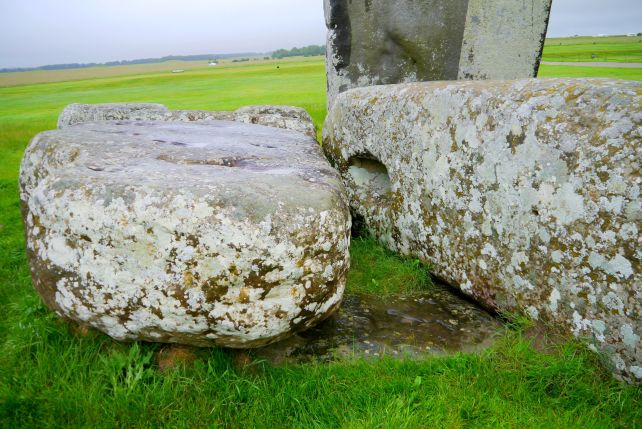
Many of the stones that make up Stonehenge are igneous bluestones, while others are sarsen sandstone. The inner ring of bluestones has been traced to a quarry in Wales, approximately two hundred thirty kilometers away. However, the Altar Stone at the center is a purplish-green slab of sandstone whose origin has been more difficult to trace.
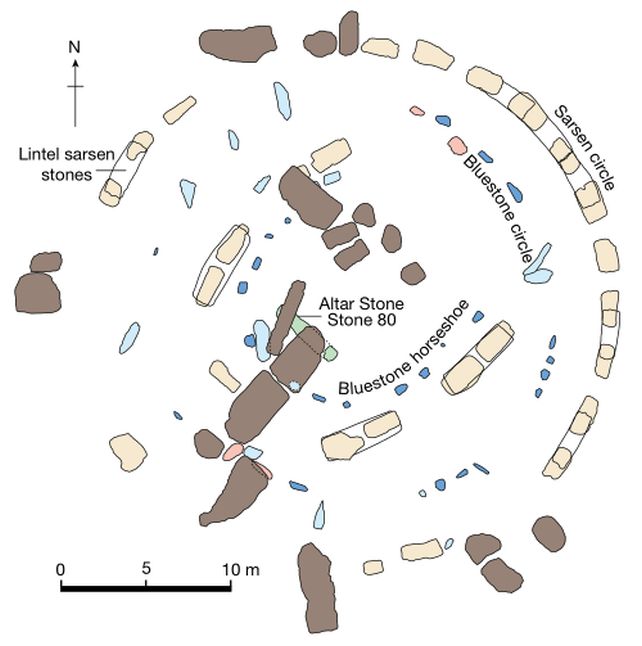
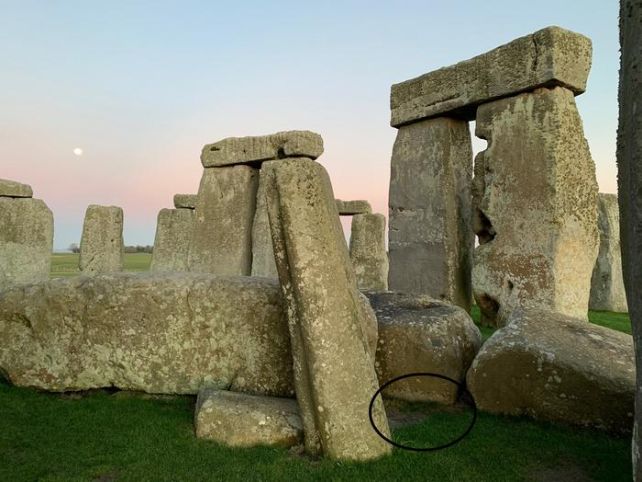
The Altar Stone, also known as Stone 80, is unusual. It’s sunken into the ground, with two other stones laying perpendicularly on top. Archaeologists aren’t sure whether it was installed this way or if it once stood upright before toppling over. If it did stand, it would have weighed around six tonnes (6.6 US tons) and measured about 4.9 meters (sixteen feet) long, consistent with the other stones.
The stone’s position is aligned with the Sun at the solstices, suggesting its importance. Its value is also indicated by the unique rock from which it was carved, differing significantly from the surrounding monoliths.
Previously, a team of researchers conducted a chemical analysis of the sandstone that makes up the Altar Stone to see if its composition could be traced to nearby locations. They discovered that the stone’s unusually high barium content didn’t match any sandstone in the surrounding landscape.
Expanding their search, the researchers, led by geologist Anthony Clarke of Curtin University in Australia, analyzed mineral grains within the sandstone, specifically focusing on grains of zircon, apatite, and rutile from two samples of the stone.
Isotopic dating of these grains allowed the researchers to construct an age profile for the stone. For instance, some of the zircons formed between four and two and a half billion years ago, with younger grains dating between one point six to one billion years ago. The apatite and rutile, by contrast, formed between four hundred seventy and four hundred fifty-eight million years ago.
This age profile bore a remarkable similarity to the old red sandstone deposits in the Orcadian Basin, Scotland, at least seven hundred fifty kilometers away from Stonehenge.
“This distinct chemical fingerprint suggests the stone originated from rocks in the Orcadian Basin, Scotland,” Clarke explains. “Given its Scottish origins, the findings raise fascinating questions about how such a massive stone was transported over vast distances around two thousand six hundred BCE.”
While we still don’t know exactly how the stone was transported, the challenging terrain across that vast distance indicates a remarkable feat of ingenuity and determination. It also suggests that Neolithic people may have had some form of marine transportation and that sophisticated trade networks were in place. Although more research is needed to understand the methods and reasons behind the stone’s journey, the mere existence of the Altar Stone at Stonehenge remains astonishing.
“The distance traveled is astonishing for the time,” says geochemist Nick Pearce of Aberystwyth University. “This Scottish origin points to a high level of societal organization in the British Isles during this period. These findings will significantly impact our understanding of Neolithic communities, their connectivity, and their transportation systems.
“Hopefully, this research will lead to new perspectives on the Altar Stone, its journey to Stonehenge, and its origins. I’m sure it will prompt fresh thinking about the development of Stonehenge and its connections to the rest of Neolithic Britain.”
Source: How Did Stonehenge’s Altar Stone Make a 500-Mile Journey?
Collapse Of 1,000-Year-Old Pyramid Sparks Fears Of ‘Impending Doom’
Collapse Of 1,000-Year-Old Pyramid Sparks Fears Of ‘Impending Doom’