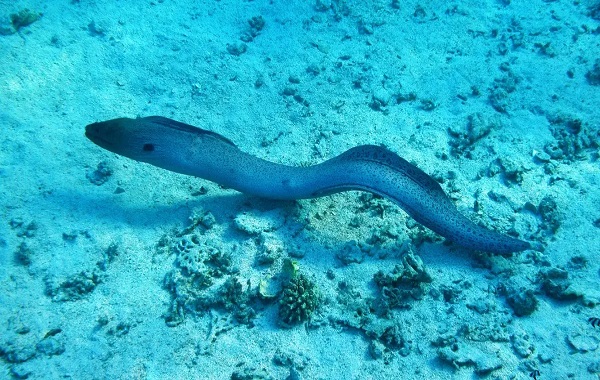
Eel-inspired ‘droplet’ battery could power tiny bio-devices
Researchers at Oxford University have created a “droplet battery” that is capable of stimulating cells directly, according to a recent study published in Nature on August 30. Inspired by how eels generate electricity, the researchers turned to ion gradients to generate current.
For years, researchers have been trying to design small devices that integrate directly with cells in our body. The ability to do so opens new ways in treatments, such as drug delivery directly into cells. However, developments in this area have been hampered by the lack of a suitable power source.
Conventional battery technology cannot be designed to operate at a microscale level, but researchers at the Department of Chemistry at Oxford have now developed a miniature power source which they refer to as a droplet battery.
What is the droplet battery?
The team turned to eels for inspiration since the biological animal is capable of generating electricity with the help of internal ion gradients.
In their own battery design, the team used a chain of five nanoliter-sized droplets of a conducive hydrogel. A hydrogel is a 3D network of polymer chains that can absorb and retain large quantities of water. Each of these droplets contained a different composition so that a salt gradient could be created along the chain.
The droplets were separated from each other using lipid bilayers which not only prevented the flow of ions between them but also provided mechanical support.
To start the battery, the structure was cooled to a temperature as low as 39 Fahrenheit (four degrees Celsius), and the surrounding medium was changed. This leads to the disruption of the lipid bilayers and the formation of a continuous hydrogel.
The high salt droplets are at either end, while the low salt droplet is located in the middle. If electrodes are connected to either end of the droplets, the researchers succeeded in using the ionic gradient to generate electricity.
When using 50 nanoliter droplets, the researchers were able to generate a maximum power output of 65 nanowatts (nW), which lasted a little over 30 minutes. Interestingly, the device could also be stored for a period of 36 hours and still generate a similar amount of current.
To demonstrate the droplet battery could be used with human cells, the researchers attached them to human progenitor cells that were stained with a dye. When the battery was turned on, the cells displayed intercellular signaling.
“The miniaturized soft power source represents a breakthrough in bio-integrated devices,” said Yujia Zhang, the lead researcher of the work, in a press release. “By harnessing ion gradients, we have developed a miniature, biocompatible system for regulating cells and tissues on the microscale, which opens up a wide range of potential applications in biology and medicine.”
The team added that their battery design was modular and multiple units created using a droplet printer could be combined together to increase the voltage or current output. 20 units of five droplet battery systems were sufficient to generate an output of two volts, which could power a light-emitting diode. Even a system containing thousands of power units was not far away.
Source: Interesting Engineering
3000 Years Old – Scientists Discover Hundreds of Mummified Bees From the Time of Pharaohs
3000 Years Old – Scientists Discover Hundreds of Mummified Bees From the Time of Pharaohs
Eel-inspired ‘droplet’ battery could power tiny bio-devices/Eel-inspired ‘droplet’ battery could power tiny bio-devices