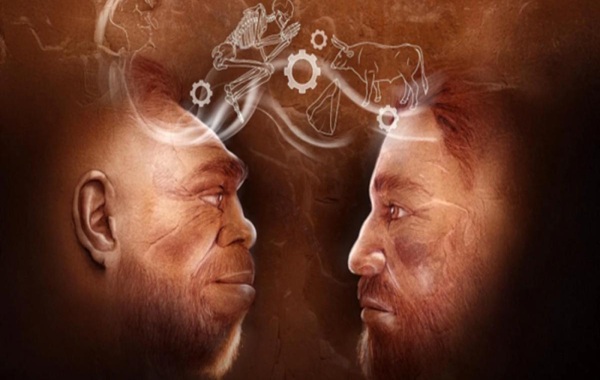
Discovery Shows Neanderthal and Homo sapiens Worked Together
Deep in the hills of central Israel, a new discovery is rewriting the history of human cooperation. For decades, scientists have debated the nature of the relationship between Neanderthals and early modern humans. Now, evidence from Tinshemet Cave reveals that Neanderthal and Homo sapiens populations did not just coexist in the Levant, they actively interacted, shared technology, and even developed similar cultural and burial practices. This 110,000-year-old discovery provides compelling proof that cooperation, rather than conflict, may have been a key driver of early human development.
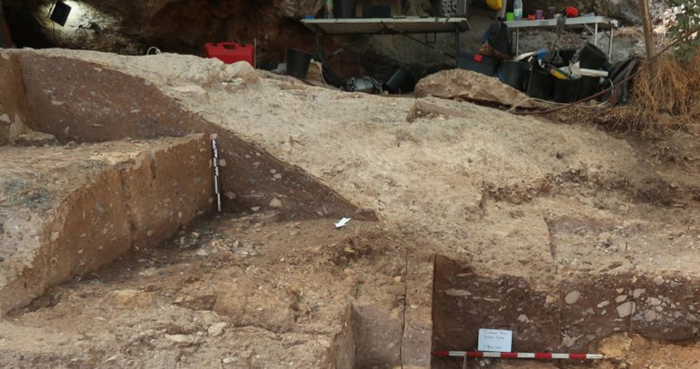
The findings, recently published in the journal Nature Human Behaviour, are the result of excavations that began in 2017 led by Professor Yossi Zaidner of the Hebrew University of Jerusalem, alongside Professor Israel Hershkovitz of Tel Aviv University and Dr. Marion Prévost. The site has yielded an exceptional collection of archaeological remains, including five human burials, the first mid-Middle Paleolithic burials discovered in over fifty years. These remarkable finds challenge the long-held assumption that different human species remained isolated or strictly competitive.
A Melting Pot of Human Evolution
The Levant region has long been recognized as a crucial crossroads for human migration out of Africa. According to Dr. Prévost, climatic improvements during the Middle Paleolithic increased the region’s ability to support life, leading to demographic expansion and intensified contact between different human groups. It was here that Neanderthal and Homo sapiens populations encountered one another, creating what Professor Zaidner describes as a “melting pot” of human evolution.
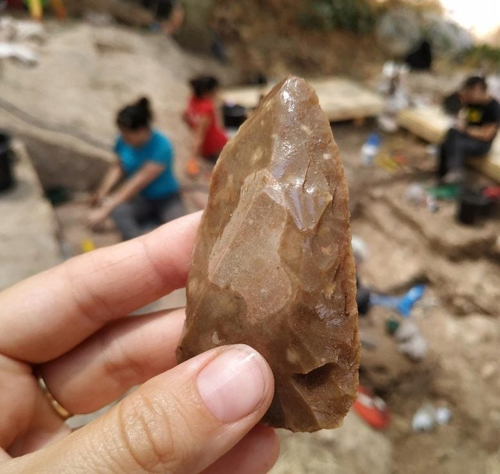
Researchers analyzed evidence across four main areas: stone tool production, hunting strategies, symbolic behavior, and social complexity. They found that both groups utilized the sophisticated Levallois technique to craft stone tools, and they shared similar strategies for hunting large game such as aurochs, horses, and deer. This transmission of knowledge suggests a profound level of cultural exchange that gradually homogenized the populations over time.
“Our data show that human connections and population interactions have been fundamental in driving cultural and technological innovations throughout history,” explained Professor Zaidner in a Hebrew University of Jerusalem release.”
Shared Rituals and Symbolic Behavior
Perhaps the most striking evidence of Neanderthal and Homo sapiens interaction comes from the burial practices uncovered at Tinshemet Cave. Around 110,000 years ago, formal burials began to appear in Israel for the first time anywhere in the world. The clustering of five human burials at the site raises the intriguing possibility that the cave functioned as a dedicated burial ground or early cemetery, indicating organized rituals and strong community bonds.
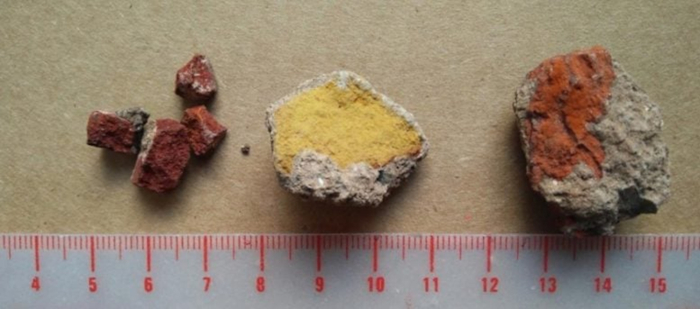
The deceased were placed in a fetal position, often accompanied by significant artifacts such as stone tools and animal bones. Furthermore, the extensive presence of mineral pigments, particularly red ochre, suggests early beliefs in an afterlife and the use of symbolic expression. Ochre may have been used for body decoration to define social identities among the interacting groups. This level of symbolic behavior, shared across different human lineages, highlights a complex social structure previously unrecognized in this era.
Rewriting the History of Early Humans
The discoveries at Tinshemet Cave offer a fascinating glimpse into the daily lives and social structures of our ancient ancestors. By proving that Neanderthal and Homo sapiens groups engaged in meaningful cultural exchange, scientists are painting a new picture of dynamic interactions shaped by both cooperation and competition. As excavations continue, researchers hope to uncover more about the genetic relationships between these groups and whether they interbred at this site, further illuminating the complex web of connections that shaped the modern human lineage.
These findings not only challenge the narrative of isolated human species but also emphasize that the sharing of ideas, technology, and culture has always been a cornerstone of human progress. The legacy of Neanderthal and Homo sapiens cooperation at Tinshemet Cave serves as a powerful reminder of our shared, intertwined history. The Levant’s role as a hub of interaction also helps explain why Neanderthal DNA persists in the genomes of modern non-African populations today.
Source: ancient-origins
Mammal ancestors laid eggs—and this 250-million-year-old fossil proves it
Discovery Shows Neanderthal and Homo sapiens Worked Together