Could New Methods Reveal the Hidden Planets in Our Known Universe?
Over the past few decades, we’ve learned that exoplanets are astonishingly common. Today, nearly 6,000 exoplanets are confirmed, with evidence for thousands more waiting to be fully investigated. While most of these planets have been detected via the transit method, where a planet passes in front of its star as seen from Earth, other methods are also providing insights. Multi-planet systems are not uncommon, as exemplified by the TRAPPIST-1 system, which has seven Earth-sized planets. Yet, even within these well-known planetary systems, there might be planets we’ve overlooked. Some orbits may not align with our view, and some planets might be hidden in the data’s noise. How might we reveal them?
Looking Beyond Observational Limits
Instead of revisiting vast amounts of observational data in search of faint signals, a recent paper on arXiv proposes a unique approach: using orbital dynamics to evaluate the likelihood of undiscovered planets within established systems. Since most of these systems have existed for millions or even billions of years, their planetary orbits are stable. If the system is “closely packed,” adding more planets would disrupt this balance. Conversely, if it’s “loosely packed,” additional planets could fit without destabilizing the system.
Testing Hypotheses in Known Two-Planet Systems
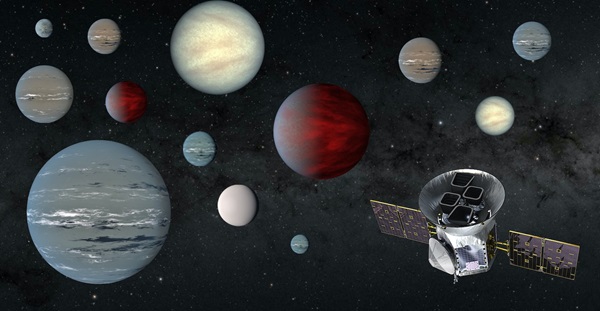
To demonstrate this approach, the study examined seven planetary systems with two known planets, as discovered by the Transiting Exoplanet Survey Satellite (TESS). Given that two-planet systems are relatively rare, there is a high chance that these systems host more planets. Thousands of simulations were run with hypothetical planets added to these systems to check if they could remain stable over millions of years. The results showed that for two systems, additional planets were likely to destabilize the orbits, effectively ruling out more planets. However, in five systems, added planets could still allow for a stable configuration, meaning they may indeed host yet-undiscovered worlds.
Uncharted Potential in Exoplanetary Systems
The findings indicate that many exoplanetary systems we know likely harbor undiscovered planets. This method can also help prioritize systems for further investigation, streamlining our approach to the rapidly growing exoplanet data. As our discoveries accelerate, this tool offers a strategic way to manage and interpret the influx of new information, ensuring we’re prepared to uncover hidden worlds without becoming overwhelmed by data.
Source: Could New Methods Reveal the Hidden Planets in Our Known Universe?
Voyager 1 Just Phoned Home From 24 Billion Kilometers Away On A Transmitter Not Used Since 1981
Voyager 1 Just Phoned Home From 24 Billion Kilometers Away On A Transmitter Not Used Since 1981