China’s humanoid robot sets 4.6-foot record for longest standing jump ever
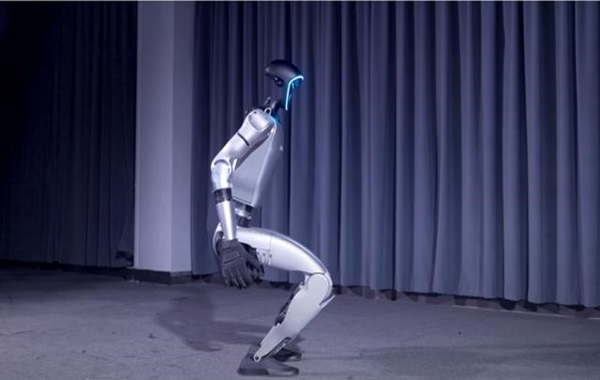
Unitree’s G1 humanoid robot has set a new record for the standing long jump, showcasing advanced robotics capabilities in the field of agility and performance.
In a video, the G1 humanoid is seen achieving a 4.6-foot standing long jump, powered by its advanced joints, which offer 23 to 43 degrees of freedom and produce up to 120 Nm of maximum torque. This video also showcases some of the new features of the firm’s popular Go2 robot dog.
“The G1 robot can perform a standing long jump of up to 1.4 meters, possibly the longest jump ever achieved by a humanoid robot of its size in the world, standing only 1.32 meters tall,” according to a video posted by the firm on YouTube.
In March, Unitree’s H1 V3.0 Evolution broke the Guinness World Record for the fastest full-sized humanoid robot. Latest enhancements to the firm’s first humanoid allow it to sprint at 7.38 mph on level ground.
Versatile capabilities
Unitree Robotics, a rising player in the humanoid robot market, is making significant strides with its $16,000 G1 model. Unitree is already retailing the robot, but only for “purposes of education and research or industrial applications.”
Unitree’s main competitor, Tesla, aims to reduce Optimus’ price to around US$20-30,000 per unit once mass production begins.
Previously focused on four-legged robotic companions like the Go2 and B2, Unitree shifted gears in December last year to debut its first bipedal humanoid. Competing against industry leaders like Tesla and Boston Dynamics, the G1 has quickly caught attention for its impressive performance and affordability.
Originally launched as a $90,000 prototype, the G1 has evolved into a more refined and production-ready version. Engineers have been working intensively since its May reveal, enhancing the robot’s design for mass production.
The G1 now sports a sleek visor-like face, upgraded from its earlier air-gap design, and functional three-digit hands, replacing previous stumps. These improvements, along with advanced capabilities, position the G1 as a strong contender in the competitive humanoid robot market, with Unitree preparing for mass production in the near future.
The G1’s speed and fluidity as it walks, jogs, climbs stairs, dances, recover from falls, and even performs karate warmup stretches are incredibly impressive and fun to watch. It appears fast and agile, even in real-time video playback at normal speed.
Form the looks of it, the G1 focuses on athleticism and fun, while Tesla’s Optimus prioritizes practical factory tasks and safety, aiming for efficiency over flashy moves.
Robotic leap
The Unitree G1 humanoid robot maintains its impressive specifications with notable performance improvements.
Standing 4.33 feet tall (1.32 meters), the G1 folds down to a compact 27 x 17.7 x 11.8 inches for easy storage, despite weighing 77 lbs (35 kg). Equipped with 3D LiDAR, a RealSense depth camera, and a noise-canceling microphone array, it responds to voice commands and provides audio feedback through a 5-W stereo speaker.
Its sleek design includes internally routed cabling to prevent snags during operation. Powered by a quick-release 9,000-mAh battery, the G1 offers around two hours of use per charge, with quick battery swaps enabling extended operation.
The robot‘s joints feature 23 degrees of freedom, allowing for agile movement and walking speeds of up to 2 m/s (4.5 mph). Its three-digit hands enhance dexterity, making the G1 suitable for tasks requiring precision and bringing it closer to practical applications in various industries.
Source: Interesting Engineering
Sperm unlocks egg with the help of 3 hidden protein matchmakers, reveals AI
China’s humanoid robot sets 4.6-foot record for longest standing jump ever