Centuries-Old Tunnels Linked To Secret Freemason Rituals Excavated
Dating back to the 17th century, Warsaw’s tunnels known as the “Masonic graves” have sparked archaeological curiosity in recent years — and new research could reveal a connection to the Freemasons and their rumored catacombs.
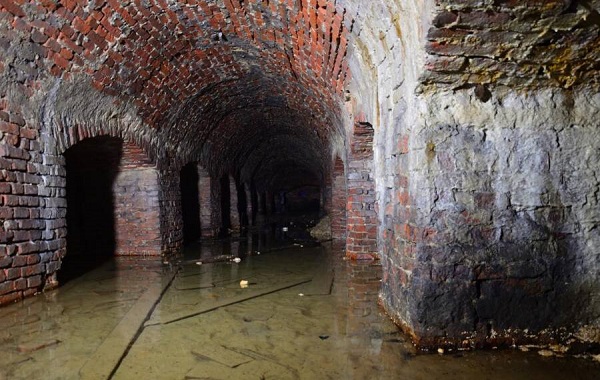
Archaeologists recently excavated part of a mysterious tunnel system located beneath Gucin Gaj, an historic park complex located in Warsaw, Poland’s Mokotów district. Found near Wilanów Palace and St. Catherine’s Church, this barrel-vaulted U-shaped tunnel extends for more than 200 feet, but until now, much of its history has remained shrouded in mystery.
However, initial excavations suggest that the corridor may have once been used as a Freemason meeting spot and perhaps used as catacombs as well. In the early 19th century, Wilanów was owned by a Polish noble named Stanisław Kostka Potocki, a prominent Freemason who earned the title of Grand Master of the Grand National Orient of Poland.
While no contemporary sources or written accounts can definitively link this corridor to the Freemasons — so far, at least — the country’s official register of monuments refers to the tunnel as the “Masonic graves,” providing some more evidence for this intriguing theory.
Stanisław Kostka Potocki And His Connection To The Freemasons
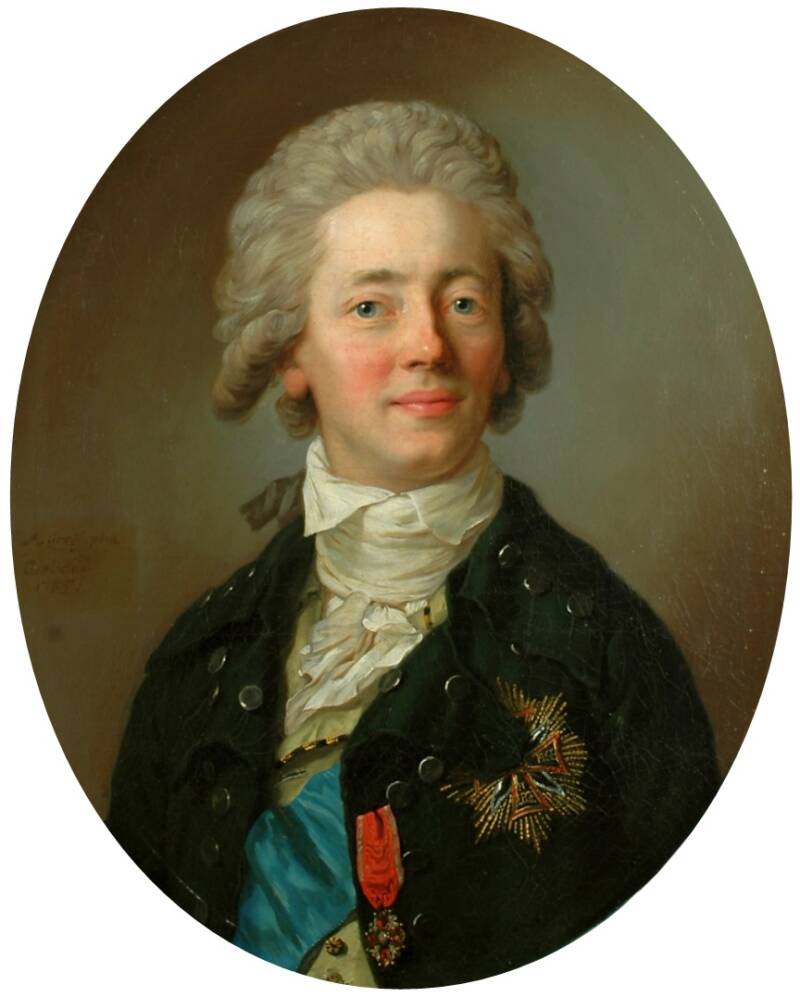
Stanisław Kostka Potocki was a prominent Polish statesman, writer, and art patron during the late 18th and early 19th centuries. His political career included pivotal roles such as the President of the Council of State in the Duchy of Warsaw and Minister of Religious Denominations and Public Education, positions where he actively promoted social reform and education in Poland.
Parallel to his political pursuits, Potocki held a deep commitment to Freemasonry, eventually ascending to the esteemed rank of Grand Master of the Grand Orient of Poland. His Masonic affiliation aligned with his progressive ideals, reinforcing his dedication to Enlightenment values like reason and tolerance.
His involvement in Freemasonry was instrumental in shaping his advocacy for educational advancement and broader social reforms. It also positioned him in opposition to conservative forces, particularly the Catholic Church, which harbored suspicions toward Freemasonry due to its perceived secrecy and endorsement of secular values.
Potocki initiated the development of the Gucin Gaj park complex after purchasing the land in the early 19th century, naming the site Gucin in honor of his grandson, August (Gucio was his nickname). Initially, the site consisted of a small manor house, an ornamental garden, a landscape park, a pond, and a collection of farm buildings.
However, upon his death in 1821, his wife Aleksandra transformed the site into a sprawling grove, each tree holding its own symbolic meaning and serving as a memorial to her late husband’s legacy.
Today, little remains of the original layout of Gucin Gaj, though one thing does remain: the hidden tunnel system built beneath it.
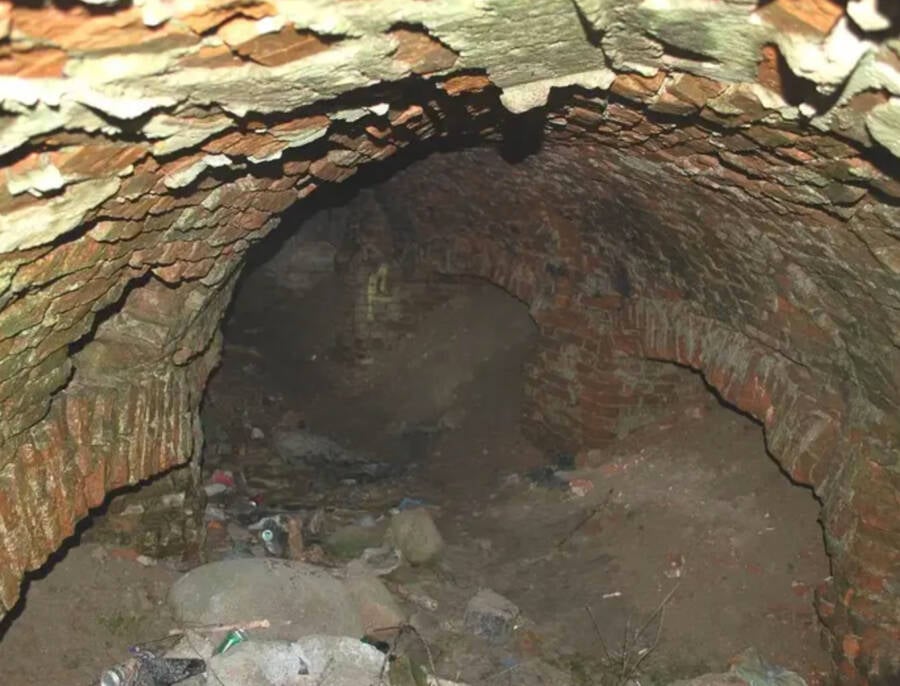
For now, much about the tunnel system remains a mystery. Without actually investigating the interior, researchers can still only make educated guesses about the site’s history.
According to an earlier statement from the Office of the Capital City of Warsaw in 2021, there are a few things that are known for certain. The tunnel was likely built during the 17th century, as evidenced by letters written by court architect Augustyn Locci to King Jan III.
The letters revealed that the area was a rich source of clean drinking water and also made mention of an icehouse and the planned construction of a water intake system.
It’s also clear that Potocki was the next owner of the property, and that he attained high-ranking status with the Freemasons. It is less clear if he actually held secret meetings within the tunnel system. In any event, in 1989, the country’s official register referred to the tunnel as the “Masonic graves,” and the name has stuck ever since.
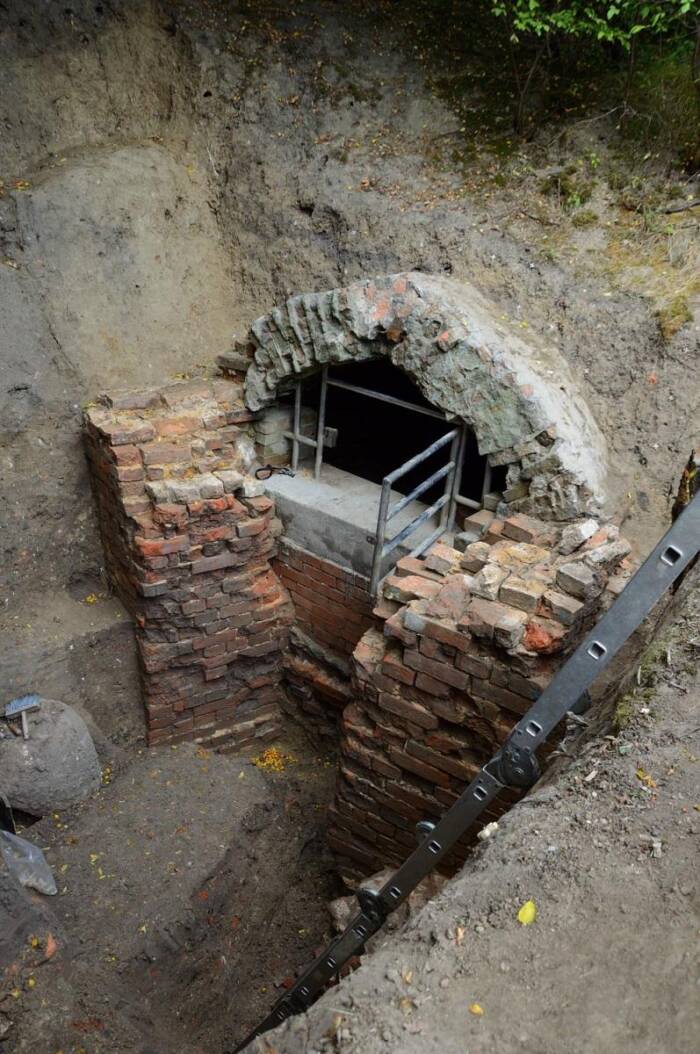
In the second half of the 19th century, more work was done on the tunnels. Specifically, they were lined with furs that served as insulation, and certain parts of the tunnels were reinforced. This suggests that it could have been used as an ice house after Potocki’s death. It was also meant to be used as a shelter during World War II — much like another, similar tunnel found in Warsaw in 2023. Today, it is a hibernation site for bats.
So, while this new excavation certainly confirms some previous assumptions about the site, there is still much more to be learned about the tunnels’ historical purpose. Hopefully, as researchers investigate further, new information will provide definitive answers.
Source: Centuries-Old Tunnels Linked To Secret Freemason Rituals Excavated
Odd-Looking Table At Beach Bar Turns Out To Be 1,700-Year-Old Roman Coffin