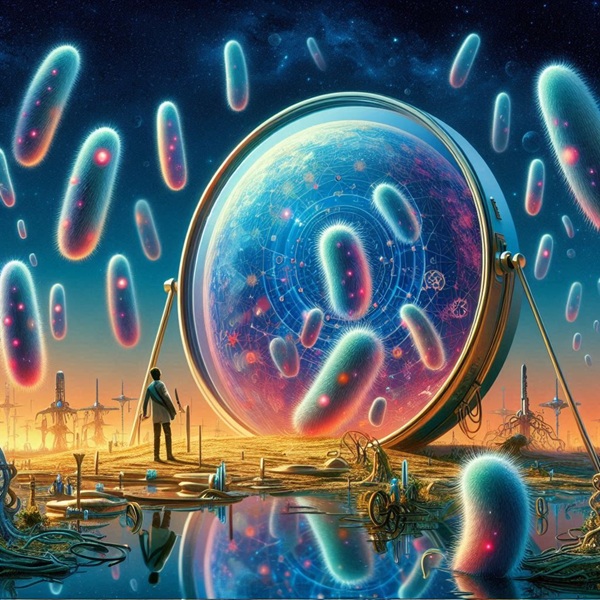
Can Scientists Control the Monsters They Create in the Lab?
What Happens When Science Creates a New Form of Life?
Life as we know it is fundamentally built upon chiral molecules—compounds that exist in either a left-handed (L) or right-handed (D) orientation. Just as a left glove fits only a left hand, chiral molecules interact exclusively with others of compatible handedness. In nature, all life forms, from the simplest bacteria to complex organisms, rely on L proteins and D sugars.
This uniformity extends even to the archaea, a group of microorganisms known for their unique chemical compositions. Despite their distinctiveness, archaea adhere to the same chirality rules.
The Scientific Pursuit of Mirror Molecules
For years, scientists have theorized about creating biopolymers with the opposite chirality—using D proteins and L sugars—to form mirror versions of natural biomolecules. Recent breakthroughs have enabled researchers to synthesize mirror RNA and mirror DNA. These advancements have raised the tantalizing possibility of constructing entirely new living cells made from these mirror molecules.
Mirror bacteria, in particular, offer exciting potential for fundamental biological research. They could help scientists explore a hypothetical “mirror tree of life” and unlock new solutions in bioengineering and medicine. However, as captivating as this idea may be, it carries profound risks.
Potential Dangers of Mirror Life in the Environment
Unchecked Proliferation Without Natural Predators
One of the defining characteristics of mirror bacteria is their immunity to natural biological control mechanisms. In natural ecosystems, bacterial populations are regulated by predation and viral infections.
Bacteriophages—viruses that specifically target bacteria—bind to bacterial surface receptors to infect and replicate within them. However, due to their opposite chirality, mirror cells would be invisible to these viruses, much like how a left glove can’t fit a right hand.
Additionally, microbial predators rely on chemical receptors to differentiate food from nonfood. Mirror bacteria, with their reversed chirality, would likely be unrecognizable as food, allowing them to evade predation entirely. This protection from natural threats would enable mirror bacteria to replicate freely and outcompete natural organisms for resources.
Ecological Disruption
The unchecked growth of mirror bacteria would have devastating consequences for ecosystems. Even if they did not directly harm other organisms, their consumption of shared nutrients would deprive native species of vital resources. Their lower mortality rate, due to the absence of natural predators, would only exacerbate this problem over time.
Insufficient Immune Responses to Mirror Bacteria
Evasion of Host Immune Systems
The human immune system is a vigilant defender against foreign invaders. It distinguishes between “self” and “non-self” entities, mounting an attack against anything identified as a threat. However, mirror cells would likely escape detection altogether. Their chiral antigens would not bind to immune receptors, rendering them effectively invisible to the immune system.
Limitations of Antibiotic Treatments
In theory, mirror-specific antibiotics could be developed to combat infections caused by mirror bacteria. Such treatments might even spare the gut microbiome, as traditional antibiotics would not affect mirror cells and vice versa.
However, while this might address human infections, the problem becomes insurmountable at the ecosystem level. Developing and deploying mirror antibiotics for every plant and animal species is simply impossible. The spread of mirror pathogens across the natural world would be unstoppable, posing an existential threat to biodiversity.
Weighing the Risks Against the Benefits
Exciting Research Applications
Mirror life offers unique opportunities for scientific discovery and practical innovation. Researchers could study fundamental biological processes in a new context, potentially leading to breakthroughs in medicine and biotechnology.
Environmental and Health Risks
Despite these potential benefits, the risks associated with mirror life are significant. The possibility of accidental or deliberate release into the environment poses a grave threat to ecosystems and human health. The inherent resistance of mirror cells to natural controls makes containment extremely challenging.
The Case for Caution: Keeping Mirror Life in Check
The Need for Responsible Research
As a synthetic biologist and bioengineer, I initially saw mirror life as a fascinating frontier for research and innovation. However, after studying the ecological and health implications, it became clear that the potential dangers far outweigh the benefits.
A group of researchers, including experts in immunology, ecology, biosafety, and security, conducted a thorough analysis of the risks associated with mirror life. The conclusion was unanimous: the potential benefits do not justify the dangers.
The Importance of Global Scientific Dialogue
To safeguard the planet, it is crucial for the global scientific community to engage in open discussions about the safety and regulation of research involving mirror biomolecules. Establishing clear guidelines and safeguards can help mitigate potential harms.
Conclusion: Choosing Safety Over Speculation
The prospect of mirror life is undeniably intriguing. However, the environmental and health risks it poses are too significant to ignore. By refraining from creating mirror cells, scientists can prioritize the safety and security of our planet. Keeping mirror life confined to the realm of scientific fantasy is the most responsible choice for humanity and the natural world.
Source: Can Scientists Control the Monsters They Create in the Lab?
Quantum Experiment Reveals Light Existing in Dozens of Dimensions
Quantum Experiment Reveals Light Existing in Dozens of Dimensions
Can Scientists Control the Monsters They Create in the Lab?