Can Mushrooms and Robots Build Future Space Habitats?
Is the Future of Space Habitats Hidden Beneath the Surface?
Exploring long-term human space exploration demands innovative habitats that support extended stays. Traditionally, plans have focused on surface habitats enhanced by in-situ resource utilization (ISRU) techniques. However, emerging research now highlights the promise of subsurface habitats in lava tubes and dike tip voids—features identified on the Moon, Mars, and even Mercury—that offer natural thermal regulation and protection from cosmic radiation, meteorites, and surface dust.
Unveiling Subsurface Habitats on the Moon and Mars: Lava Tubes, Dike Tip Voids, and In-Situ Resource Utilization (ISRU)
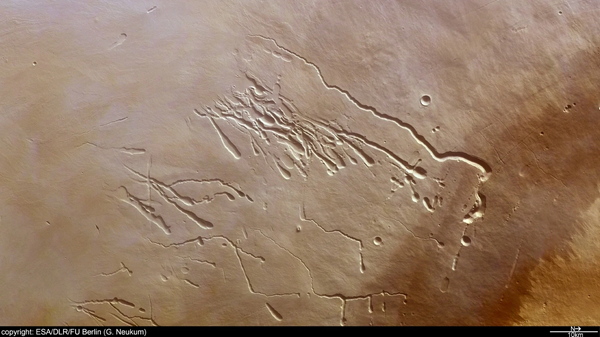
Recent planetary studies reveal that lunar and Martian lava tubes far exceed Earth’s typical 10–100 meter diameters. In fact, observations indicate Martian tubes can be 100 times wider and lunar tubes up to 1000 times wider—dimensions large enough to house entire cities. Likewise, eruptions on these bodies form “linear dike-tip voids” that extend several kilometers long and reach heights of about 250 meters. These naturally occurring recesses offer substantial advantages, such as consistent interior temperatures and robust shielding, and they provide abundant opportunities to leverage ISRU techniques like 3D-printing with regolith feedstock.
What design challenges arise when repurposing these ancient geological features for modern habitats?
Innovative ISRU Techniques: 3D-Printed Regolith, Lunacrete, and Bio-Engineered Myco-Architecture
ISRU approaches have traditionally relied on mixing lunar or Martian regolith with bonding agents to create “lunacrete” or sintering regolith into a molten ceramic. Yet, the latest NIAC-funded research delves into alternative methods that further reduce the mass transported from Earth. The focus has shifted toward “Myco-architecture”—the use of fast-growing fungal mycelium to produce thermal and radiation-insulative materials. Researchers, including Christopher Maurer, Prof. James Head, and Lynn J. Rothschild Maurer, have demonstrated that these bio-materials can outperform traditional building solutions. Their work leverages the multifunctional capabilities of fungi, paving the way for structures that not only insulate but also offer enhanced radiation attenuation.
How might bio-engineered materials revolutionize off-planet construction compared to conventional ISRU methods?
Inflatable Robotics and Fungal Hyphae: Merging Soft Robotics with Bio-Engineered Solutions
In tandem with myco-architecture, advances in soft robotics offer promising solutions for constructing subsurface habitats. Researchers have developed inflatable tube robots—capable of expanding up to 250 times their original size at speeds reaching 10 meters per second—to serve as both a protective barrier and a framework for further construction. The proposed method involves releasing an outer inflatable shell, coating it with UV-curable resin (akin to cured-in-place pipe technology), and then integrating it with a bioengineered, radiation-resistant fungus grown within a water and hydrogel matrix. Once fully integrated, this composite structure can be frozen to form an aerogel, combining structural integrity, thermal insulation, and radiation shielding.
Can the combination of inflatable robotics and fungal growth overcome the formidable challenges of deep-space habitat construction?
Addressing Structural Challenges and Future Questions for Subsurface Lunar and Martian Habitats
Despite the many benefits, creating underground habitats presents significant challenges. Concerns about wall and ceiling collapse, potential regolith intrusions, and the necessity for effective airlock systems at skylights remain critical. The research emphasizes the need for further innovation in inflatable structures and bio-inspired robotics to reinforce these habitats. By using a dual-layer approach—an outer inflatable shell for immediate structural support and an inner bioengineered lining—the approach echoes techniques used in terrestrial plumbing repairs, such as the cured-in-place pipe (CIPP) method.
What further advances are needed to ensure long-term stability and safety in these extraterrestrial habitats? How might future missions integrate these technologies seamlessly into NASA’s “Moon to Mars” architecture?
This synthesis of subsurface habitat design demonstrates how leveraging natural lunar and Martian features, combined with cutting-edge ISRU, myco-architecture, and soft robotics, could dramatically reduce the need for mass transport from Earth. As we look ahead, the integration of these bio-inspired and inflatable solutions prompts us to reimagine how humans can sustainably live and thrive in the harsh environments beyond our planet.
Source: Can Mushrooms and Robots Build Future Space Habitats?