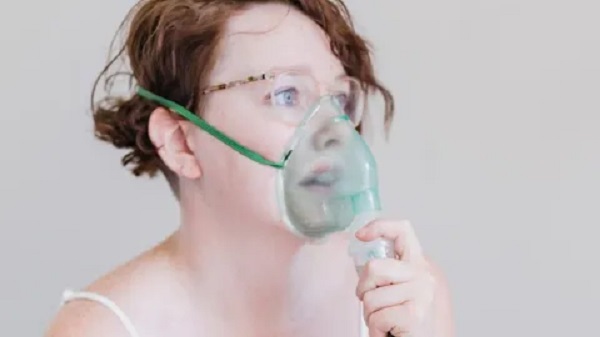
Breath Test Detects Liver Disease Early
A British company has developed a test that selects compounds from the breath that reveal whether or not a person has liver disease.
Each year, about 2 million people worldwide die from liver disease. Although some people inherit the disease, it is most commonly caused by hepatitis, obesity, and alcoholism. Since 1979, deaths from liver disease have increased by 400%.
The earlier the disease is detected, the more effectively it can be treated. However, by the time symptoms appear, the liver is already damaged. About 50 percent of cases are diagnosed late in life, when treatment is largely ineffective.
To address this problem, Owlstone Medical, a British biotechnology company, has developed a breath test that can detect liver disease earlier than conventional approaches. Human breath contains volatile organic compounds (VOCs), which change in the early stages of liver disease; Owlstone’s breath test can reliably collect, store, and detect VOCs, while simultaneously picking out specific compounds that reveal liver disease. We need to screen a wider population of patients with early-stage liver disease.” Equally important is to have tests that are noninvasive, cost-effective, and can be performed in primary care.”
The standard means of detection is biopsy. This test is invasive and expensive, making it impractical to use in people who have not yet developed symptoms. Blood tests, on the other hand, are less invasive but can be inaccurate and cannot distinguish between stages of disease.
Until now, breath tests have not been widely used because of the difficulty of reliably collecting and storing breath samples. However, Owlstone’s technology could change that.
The team is testing patients with advanced liver disease, or the early stages of cirrhosis, to identify and detect these biomarkers. In an early study, Owlstone’s breath analyzer was able to detect patients with early cirrhosis with 83% sensitivity.
Boyle’s research is personally motivated. His wife died after being diagnosed with an advanced form of colon cancer. That, he says, “was a big impetus for me to see if this technology could help with early detection.” As a company, Owlstone is interested in the early detection of various diseases. As a company, we are interested in the early detection of various diseases because we believe it is a way to save lives and reduce costs.
How it Works
Until now, breath testing has not been widely used because of the difficulty in reliably collecting and storing breath. However, Owlstone’s technology could change that.
Study participants breathe into a mouthpiece attached to a breath sampler developed by Owlstone. The cartridge is designed and optimized to collect gases. The sampler specifically targets VOCs, extracting them from exhaled atmospheric gases and ensuring that even low levels of compounds are captured.
The sampler can stably store compounds before they are evaluated by a method called mass spectrometry. In this method, compounds are converted to charged atoms, filtered by an electromagnetic field, and identified in trace amounts according to the weight and charge of the charged atoms.
The top four compounds in exhaled breath
In the first study, Owlstone captured VOCs in exhaled breath and looked for VOCs that could help determine the presence or absence of liver disease. He tested the exhaled breath of 46 patients with liver disease in the early stages of cirrhosis and 42 healthy individuals. This data was used to create a diagnostic model. Individually, compounds such as 2-pentanone and limonene performed well as markers of liver disease; Owlstone achieved even better performance by examining levels of the top four compounds together, distinguishing liver disease patients from controls with 95% accuracy.
Says Boyle, “This was a good proof-of-principle result, since it appears that there are exhaled biomarkers that can identify disease.” This was a bit of a stepping stone to try administering the identified probes at specific concentrations.” This is part of building evidence for susceptibility to liver disease and steering clinical trials.”
Sabine Snellitz, professor of chemistry at the Institute of Electronics at the University of Lille, sees the potential of Owlstone’s technology.
‘Breath analysis is a promising clinical diagnostic tool. Owlstone Medical’s technology is very effective at collecting small volatile organic biomarkers in exhaled breath. Combined with pattern recognition, it can tell us the severity of liver disease. I see this as a very promising way to give patients a new chance at healing. “
Improving the Breath Sampling Process
Challenges Remain Because there are more than 1,000 different VOCs detected in breath, it is difficult to identify consistent markers of liver disease in many patients.
Julian Gardner is a professor of electrical engineering at the University of Warwick who studies electronic sensing devices. Every person’s exhaled breath contains different levels of VOCs,” Gardner says, “and different VOCs depending on gender, diet, age, etc. ‘Selectively detecting biomarkers of liver disease in exhaled breath is a real challenge.’
So Owlstone puts chemicals into the body that are known to interact differently with patients with liver disease and uses a breath sampler to measure these specific VOCs. The chemicals administered are called Exogenous Volatile Organic Compound (EVOC) probes, or EVOCs.
Recently, limonene was used as an EVOC probe to test 29 patients with early cirrhosis and 29 control subjects. Specific amounts of limonene were given to the subjects and how the concentration in their breath changed was measured. The goal was to see what was happening in their livers.
Says Gardner, “We are concerned about the sensitivity and selectivity of this method, so we are suggesting the use of a signal-enhancing agent.” The approach of EVOC probes is probably necessary because it eliminates the individual variability in the soup of VOCs in the exhaled breath.”
With these probes, Owlstone was able to identify patients with liver disease with 83% sensitivity. By targeting a known mechanism of disease, they were able to amplify the signal. The company has begun larger clinical trials and plans to eventually use a panel of EVOC probes to more clearly identify divergent VOCs.
Roger Yazbeck, head of the South Australian Breath Analysis Laboratory (SABAR) at Flinders University, says, “I think the approach of using probes that amplify the VOC signal will ultimately increase the specificity and utility of any VOC breath test. While these results are interesting, this is still just one small patient cohort.”
The Future of Breathalyzer Diagnostics
Owlstone hopes to partner with pharmaceutical companies that want to know if their drugs work for liver disease. They have also developed a microchip (a miniaturized version of a mass spectrometer) that can be used in conjunction with a breathalyzer. It is less sensitive, but allows for more rapid detection. According to Boyle, the company’s mission is to save 100,000 lives. There are a lot of risks and challenges,” he said. I see an opportunity to establish breathing as a new diagnostic class.”
Source: Breath Test Detects Liver Disease Early
Washington University surgeons perform first-ever robotic liver transplant in the US
Breath Test Detects Liver Disease Early