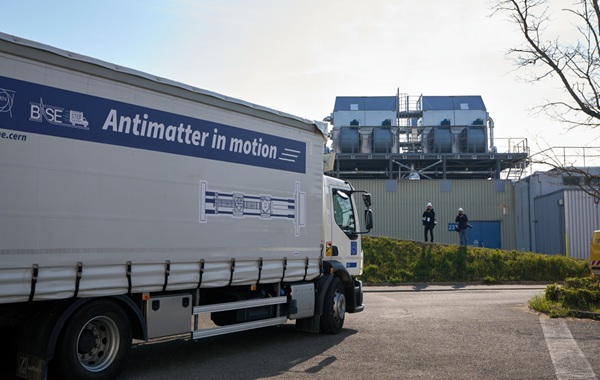
Scientists at CERN have achieved a historic first in antimatter research, after they successfully transported antiprotons across their Geneva campus using a specially designed portable trap.
The BASE experiment researchers first accumulated a cloud of 92 antiprotons in an innovative portable cryogenic Penning trap. They then disconnected the trap from the experimental site, loaded it onto a truck, and transported it across the laboratory’s main site.
Following the 6.2-mile (10-kilometer) trip, the team resumed operations. Gautier Hamel de Monchenault, CERN director for research and computing, hailed the feat as remarkable, as antimatter is difficult to preserve and annihilates on contact with matter.
“Transporting antimatter is a pioneering and ambitious project, and I congratulate the BASE collaboration on this impressive milestone,” he reported. “We are at the beginning of an exciting scientific journey that will allow us to further deepen our understanding of antimatter.”
A historic transport test
Antimatter is a form of matter comprised of antiparticles, which possess the same mass as normal particles, but opposite electric charges and magnetic properties. Once antimatter meets normal matter, both are destroyed instantly and release pure energy. This process is called annihilation.
According to this, the Big Bang should have created equal amounts of matter and antimatter, which would have destroyed each other, leaving an empty universe. Yet the universe is mostly matter, suggesting subtle differences allowed it to survive.
Storing and transporting antimatter is one of the most challenging engineering tasks in physics, as it requires the isolation of particles from ordinary matter.
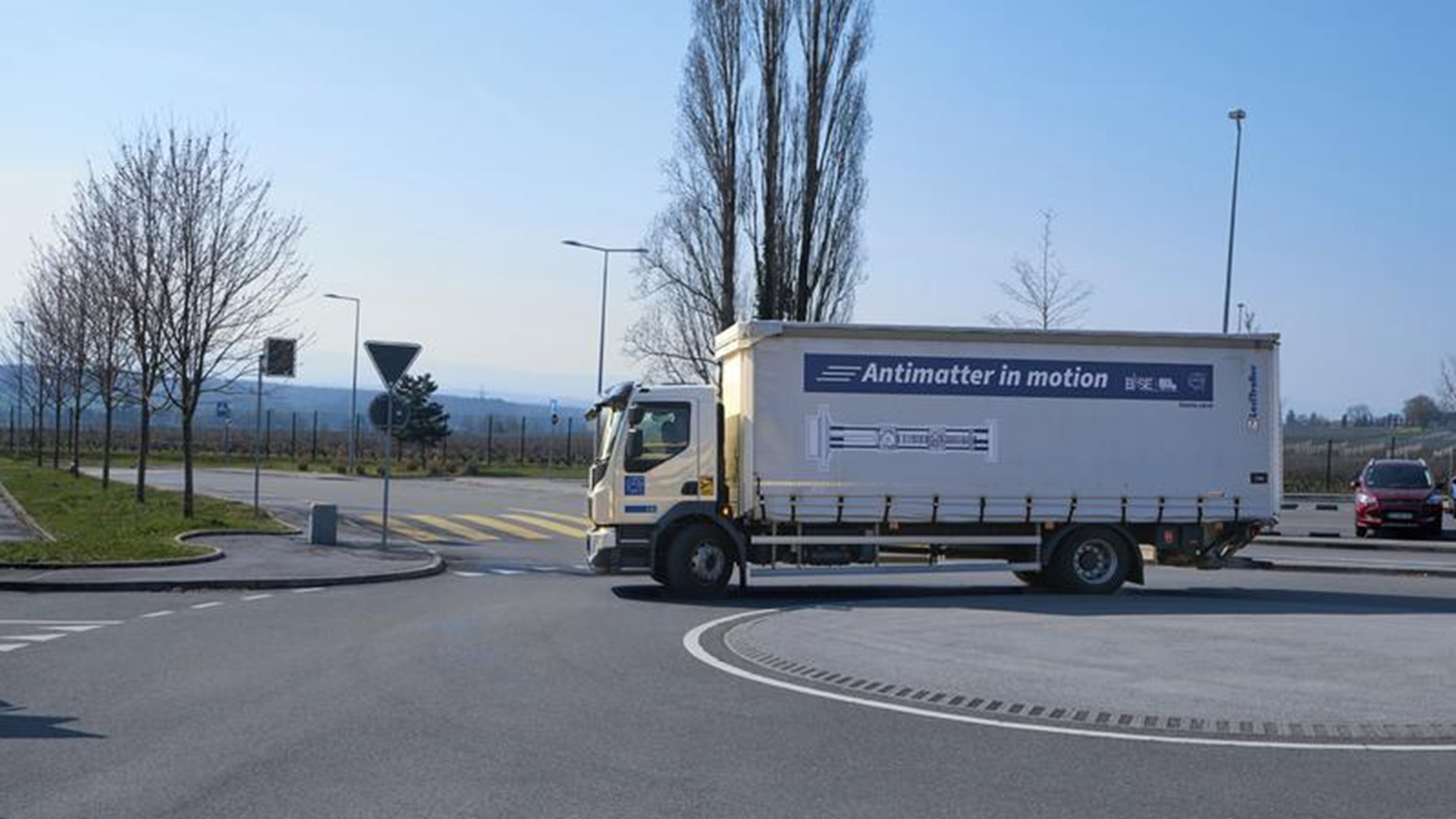
To overcome the challenge, the team used a highly specialized portable Penning trap. This device is capable of holding antiprotons in a near-perfect vacuum using magnetic and electric fields.
The particles were first cooled to around 8.2 Kelvin, or -428 degrees Fahrenheit, in order to stabilize them during the journey. In the trap, the cloud of 92 antiprotons remained intact as the system (the size of a large cabinet and weighing more than 1,873 lbs was loaded onto a truck and driven across CERN’s site.
Despite concerns over road vibrations, the particles survived the journey without annihilation. This showed that antimatter can be safely moved outside the lab.
Why it matters
CERN’s antimatter factory is the only site in the world that produces, stores, and studies low-energy antimatter. Two decelerators, the Antiproton Decelerator (AD) and the Extra Low Energy Antiproton ring (ELENA), slow down antiprotons for easier studies. Lower energy makes them easier to store.
However, the accelerators used to produce them also introduce electromagnetic noise. This, as a result, limits measurement precision. Transporting antimatter to quieter environments could boost experimental accuracy by 100 to 1,000 times.
The transport system, BASE-STEP, is the result of nearly a decade of development. It combines cryogenic cooling, a superconducting magnet, and ultra-high vacuum conditions into a mobile platform that can run autonomously for several hours.
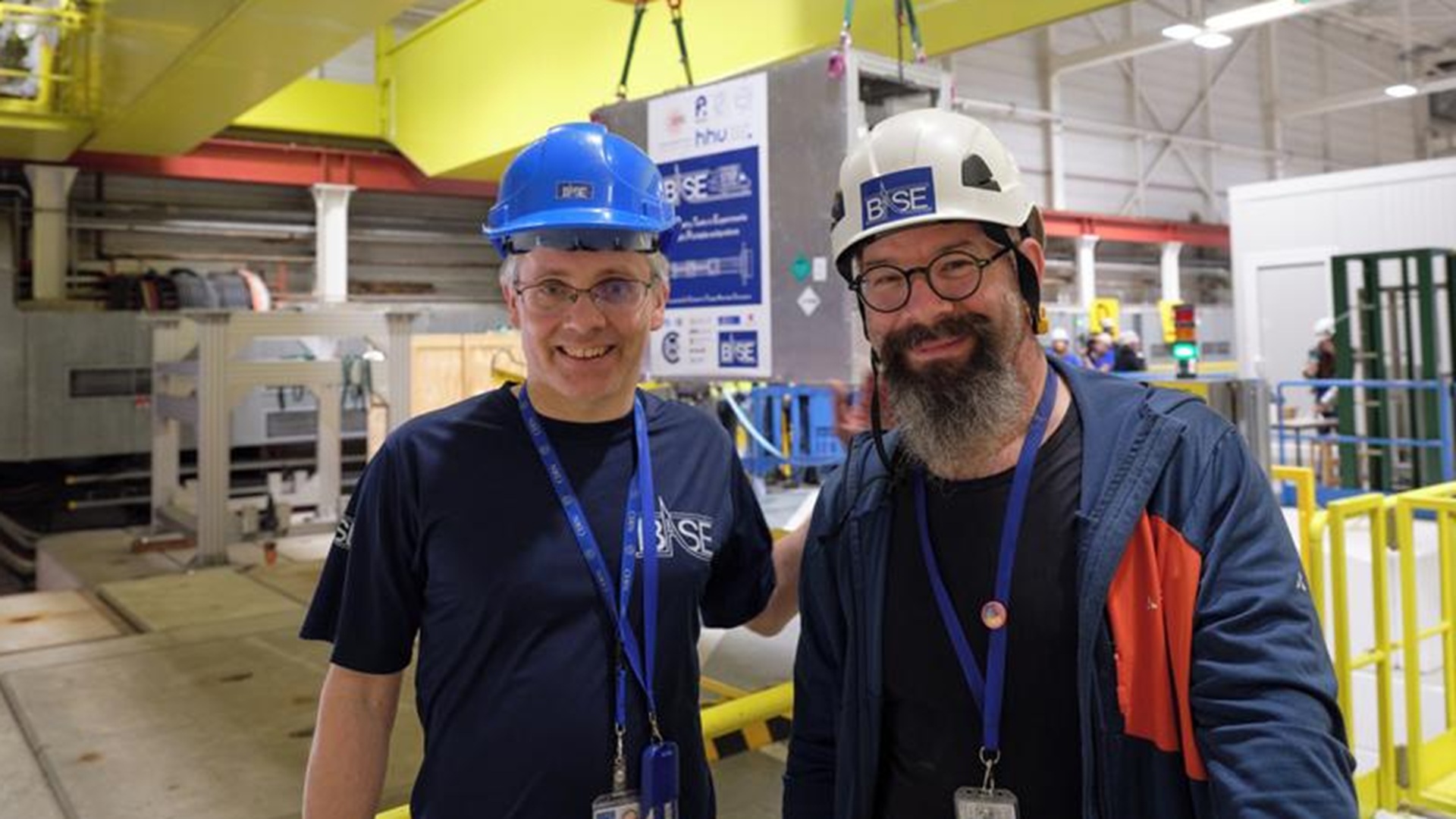
The team stored antiprotons in the system for up to two weeks without loss and transported them for about four hours. Next, they aim to manage longer journeys, including an eight-hour trip to Düsseldorf, Germany.
“To reach our first destination – our dedicated precision laboratory at HHU in Germany – would take us at least eight hours,” Christian Smorra, PhD, a physicist and BASE deputy spokesperson, said.
This would require keeping the trap’s superconducting magnet below 8.2 Kelvin for the whole journey. “So, in addition to the liquid helium, we’d need to have a generator to power a cryocooler on the truck,” Smorra concluded in a statement. “We are currently investigating this possibility.”
Source: Interesting Engineering
This floating time crystal breaks Newton’s third law of motion
World’s first antimatter transport by truck could decode why matter survived Big Bang