
The revelation of physics may mean that we all live in simulation
The smell of coffee. Transparency of sunlight scattered among the trees. The wind howling in the darkness of the night.
All this, according to a philosophical discussion published in 2003, may not be more realistic than the pixels on the screen. This is called the simulation hypothesis, which suggests that if a human is alive on 1 day, it can repeatedly simulate the universe using a computer.
If so, everything we experience is a model of something else, removed from some kind of reality.
It’s more like a thought experiment than anything else – but scientists love to poke it to see if something squirms. And a new poke suggests that something wriggles.
Devised by physicist Melvin Vopson of the University of Portsmouth and mathematician Cervantes Lepadatu of the Jeremiah Horrox Institute of Mathematical Physics And Astronomy in the UK, the 2nd law of infodynamics supports the notion that all of these are rather fancy sophisticated models on computers.
“The discovery of the 2022 2nd Law of Information Mechanics (Infodynamics) facilitates new and interesting research tools at the intersection of physics and information,” Vopson writes in AIP Physics.
“This article revisits the second law of information mechanics and its applicability to digital information, genetic information, atomic physics, mathematical symmetry, and cosmology, and supports the simulated cosmic hypothesis.”
The second law of information mechanics of Vopson and Lepadatu is based on the second law of thermodynamics, which states that processes that occur naturally in the universe result in loss of energy and increase the measure of system failure or entropy.
Vopson, who suggested that information could actually be seen as a form of substance, expected the same to apply to information systems as well.
However, when we studied 2 different information systems: digital data storage and RNA genome, we found that they were not. The second law of information mechanics requires that “information entropy” stay at the same level or even decrease over time.
“I knew that this revelation had far-reaching implications across different scientific disciplines,” says Vopson. “What I wanted to do next is test the law and see if we can further support the simulation hypothesis by moving from the philosophical realm to mainstream science,” he said.”
In his new paper, physicists explore what this new law means for different disciplines such as genetics, cosmology, atomic physics and symmetry.And of course, the simulation hypothesis.
For genetics, Vopson analyzed the RNA sequences of different variants of SARS-CoV-2. He found that all the mutants analyzed showed a decrease in information entropy when they received the mutation. The findings also suggested that there are several mechanisms that govern mutations under the second law of information mechanics, rather than simply random chance.
He also discovered that electrons in atoms are arranged to minimize information entropy, and that for the universe to continue expanding, a balance between an increase in physical entropy and a corresponding decrease in information entropy is necessary.
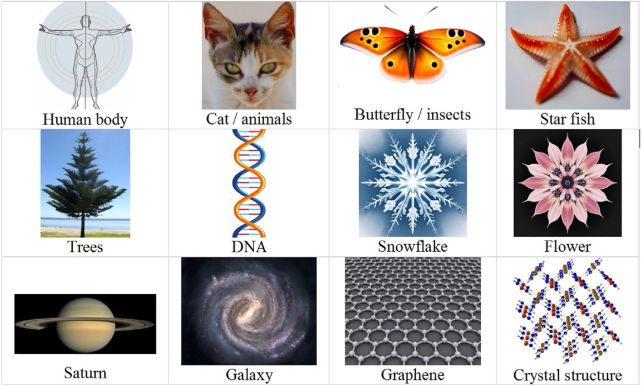
And the prevalence of symmetry in the universe, from tiny snowflakes to stunning spiral galaxies, can also be explained by the 2nd Law of infodynamics.
The revelation of physics may mean that we all live in simulation
“The principle of symmetry plays an important role in terms of the laws of nature, but until now there has been little explanation as to why it can be done. My findings show that high symmetry corresponds to the lowest information entropy state and potentially explains the natural slope to it,” says Vopson.
“This approach to removing extra information allows computers to remove or compress discarded code to save storage space and optimize power consumption.”
The next step is to test these findings experimentally. If we live in simulation, information is a fundamental component of our universe, and bits like bits are a fundamental unit of information in computing, and, as Vopson suggested earlier, can have mass.
In this case, it can be detected by the loss of information in the particle-antiparticle collision.
Of course, as a compressed and optimized simulation, the modeled universe needs to be programmed by deeper, more complex systems.
Perhaps one day someone could even come up with a program we could run to answer them.
Source: The revelation of physics may mean that we all live in simulation
Matter found to comprise 31% of the total amount of matter and energy in the universe